Author: the author

  • Between Here and Nowhere

    Living on the Fault Line of Love and Logistics

    Thank you for coming back, or for finding your way here for the first time. However you arrived—I’m so glad you’re here.
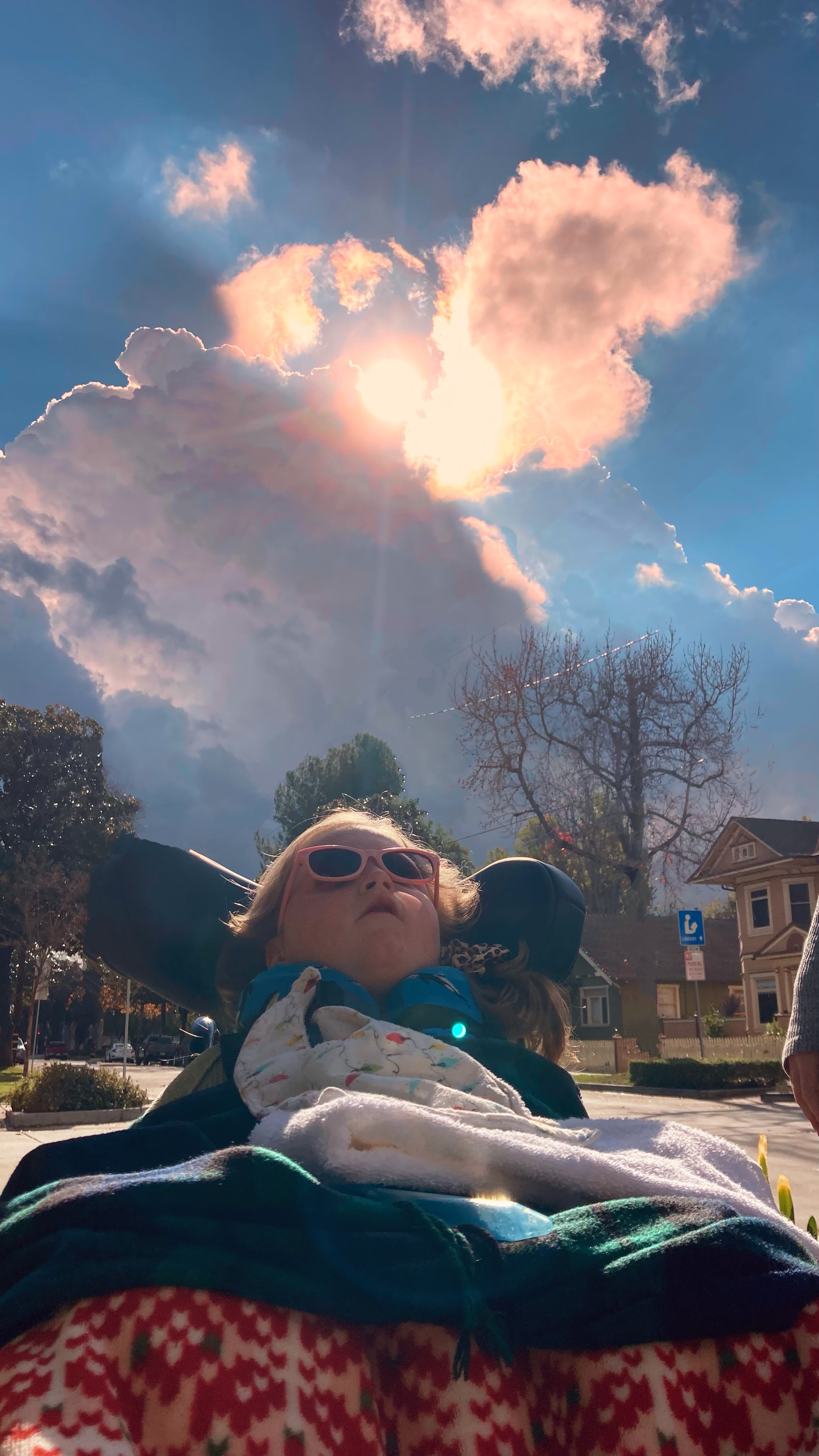
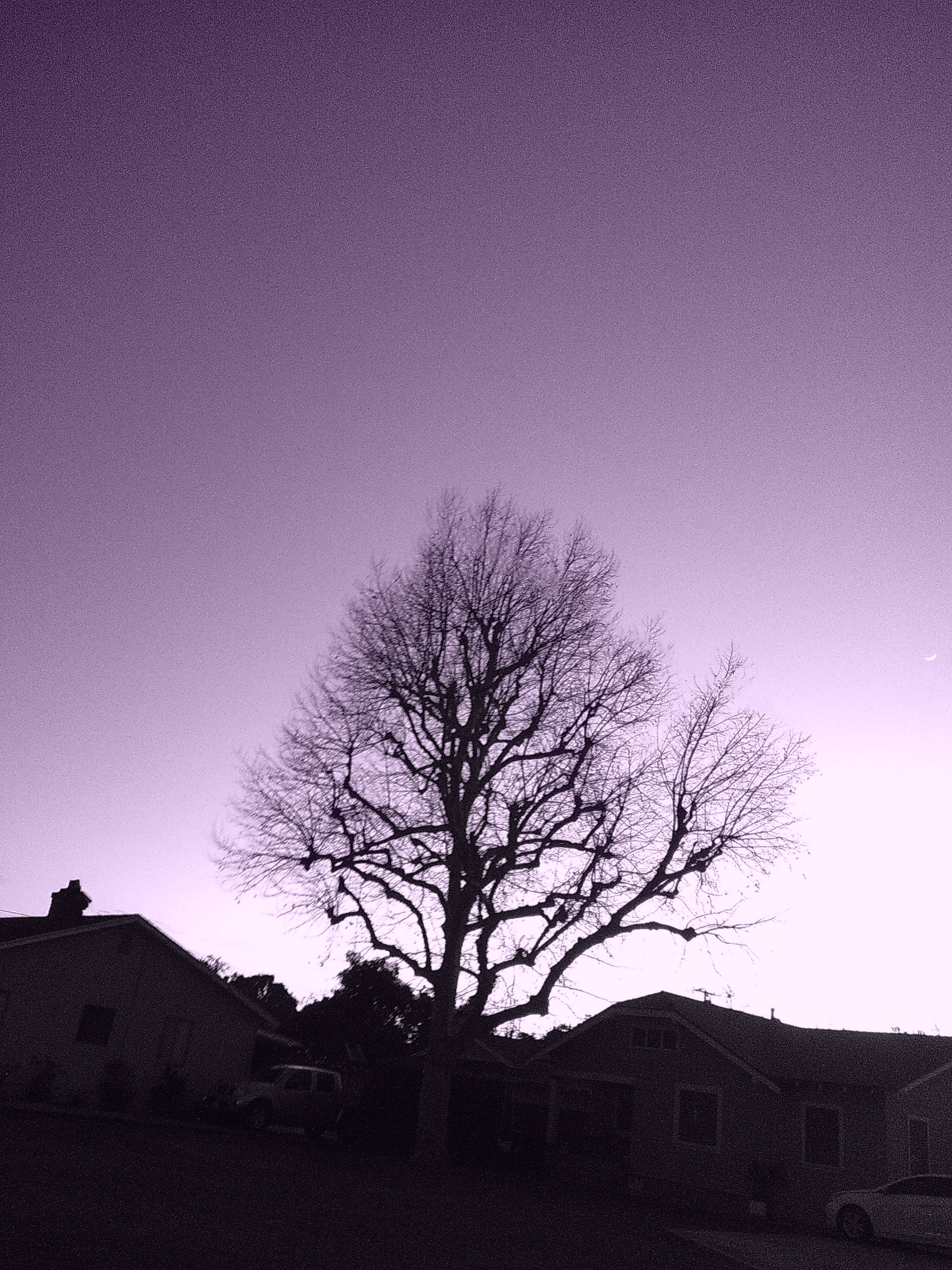
    Photo by Author

    Hallo Kartoffelkumpel,

    I had a few thoughts I’d like to share before the end of the year but they aren’t quite ready yet. So today I’m sending out a piece that was originally published over at The Courageous Parents Network. It explores the universal human tension between the subjective experience of living in the moment, called “Here,” and the objective world of data and measurement, called “Nowhere”. This tension is profoundly intensified for parents of medically complex children and so in a roundabout it discusses pediatric palliative care (PPC). Unfortunately, most parents aren’t aware of or misunderstand PPC and so don’t benefit from having them on service. It doesn’t help that when you do get on service and tell people there’s a moment where their response catches in their throat, as if they aren’t sure to be congratulatory or consolatory (I call this the Palliative Pause™) and so you are left wondering if you’ve made the right choice for your child. While by no means an expert on PPC it is something we’ve experienced, and so if you have questions I would be happy to answer as best I can. It was a fantastic service for us that I wish we had fully utilized sooner.

    And now, on with the show…


    Each morning begins in the small sensations

    Small things that remind us we are alive. The bubble of the kettle. The smell of coffee. The way light catches the rim of the mug, making even the ordinary seem briefly radiant. These are moments that belong wholly to the inside of our experience. We feel them before we ever name them. The warmth against our palms, the hum of a refrigerator, a child’s distant cough in another room. All of it arises in sensation before thought can measure or assign meaning.

    And yet, we are never only inside. Coffee is a compound of molecules; that light is a frequency; that coughing can be plotted as sound waves measured in decibels. We live, always, in this doubleness, moving between the world as it feels and the world as it is recorded. We live in a body that aches, stumbles, delights and then we invent the abstractions that allow us to make sense of what the ache or the joy might mean. Between these two is the tension of knowing we can never live entirely in either space. We are tethered to changing sensation just as we are ever compelled to find static language for our senses.

    Perhaps this oscillation between immersion and distance, heartbeat and calculation is what makes us human: we are the creatures who measure what we feel and feel what we measure.

    It is in moments of extremity where we find that measuring either side becomes difficult.

    Exploring this tension, philosopher Thomas Nagel once wrote about what he called the view from Nowhere. It’s an impossible vantage point where one sees the world stripped of all subjectivity, rendered in pure, detached clarity. From such a height, emotion and circumstance fall away; all that remains are facts, patterns, causes. Against this, there stands the view from Here with its thick, gauzy embodied immediacy of our personal lives, from which every sound, texture, and heartbeat is felt before it’s understood. The view from nowhere seeks precision and coherence. The view from somewhere clings to meaning, to what it feels like to be a person in a body, loving another person in theirs.

    Both views are real, but they speak different dialects. We spend our lives crossing the invisible bridge between these two, wanting to know what’s true, yet unable to let go of what’s ours.

    For parents of medically complex children, this tension becomes more than philosophical. It almost becomes the air we breathe. What’s more, we can never rest fully in either. The Here demands tenderness and attention, the kind that can feel the weight of her trust as she melts into your arms. This is the precious ground that friends, family, and fleeting visitors get to stand on. Holding a hand or singing a song, with love unburdened by the brutal calculus of a medication schedule or the terrifying consequence of waiting too long into a seizure to give oxygen. Then there is the Nowhere, which pulls just as hard, insisting only on the cold, unblinking precision of milligrams, milliliters, and flow rates. This is the domain of the provider, where the body is viewed through the necessary lens of protocol and data. Both places, populated by both peoples, are necessary.

    To parent a medically fragile child though is to live on the fault line between love and logistics, between the memorable and the measurable. We are forever translating, reading the body as data and the data as life. Always feeling so burdened to find answers in order to make the right decisions.

    It is exhausting.

    Each step further into the dark brightness of medical parenting feels like an ascent up the mountain into the cloud of unknowing. A climb into thinner air where what once seemed solid begins to shimmer and blur. The higher we go, the ground of the everyday where we once believed love and reason could coexist without fracture begins to erode, and more distance stretches between the Here and the Nowhere.

    This widening itself isn’t a problem. All parents, in one form or another, live within the tension between presence and abstraction. We watch our children play, delight in their laughter, then measure their growth on a chart and calculate hours of sleep or minutes of screen time. With enough community, family, and practical support, this balance holds. But for parents of disabled, medically complex, or fragile children, the gap widens until the span feels unbridgeable. Sustaining both perspectives can stretch even the most resilient heart past what ordinary networks can hold. The oscillation that once felt like breathing begins to feel like gasping.

    When the ground between Here and Nowhere begins to quake, what parents need most is not to choose a side but to find a companion who can walk the fault line with them. And for parents like us we have guides like Pediatric Palliative Care.

    Unfortunately, many of those who could benefit from palliative care enter into it too late, often because palliative care is often misunderstood. However, its most powerful role begins at the moment of diagnosis and especially whenever the medical complexity starts to cause significant family strain, regardless of prognosis.

    Its work is not to collapse the Here and Nowhere, but to reveal their interdependence and to steady the traveler caught between them. It does not dissolve medical demands—the Nowhere remains—but what it does is gently make room for the Here.

    Neither the Here nor the Nowhere is sufficient alone. The child’s life insists on both. And yet this tension is also strangely clarifying, as though the tension itself sharpens what love means.

    If you find yourself constantly translating data and gasping for breath, remember that seeking palliative care is not a failure but an act of self-preservation that will help medical precision to become a form of care, and tender presence to become a form of healing.

    It is love learning to breathe again.

    Until next time, stay safe, stay kind, and know that you are appreciated.

    Cheers,
    [kartoffelvater]


    Did this newsletter resonate with you? Let me your thoughts or share your own story. And if you know someone who might need these words today, please forward this along.

    We wouldn’t be here without you. Every bit of support helps and we appreciate it more than words can say!

    I hope you enjoyed this post. Don’t forget to check out the original article over at The Courageous Parents Network, a fantastic resource for exploring the world of raising children with disabilities and rare genetic disorders. Be sure to visit their site for more insights!

  • The Parent of Peace

    Guiding a Version of Yourself That Doesn’t Need to Ask for More

    Thank you for coming back—or for finding your way here for the first time. However you arrived, I’m glad you’re here.

    Just a moment, cracked open wide enough to hold everything.

    Hallo Kartoffelkumpel,

    November has a way of softening the air. The sky dims early, and the world feels peeled down with what remains of the day. And so, on this, the last day of this cozy gothic month, I think it’s the right season to talk about gratitude without polishing it. Because as it turns out, you can’t gratitude your way out of reality…


    It was just after 6:00 a.m.

    The sound of the suction machine was still sloshing in my ears. Emma had slept in twenty-minute bursts, each one interrupted by a cough that threatened to spiral, by the low wheeze I’ve learned to hear even across the house. I’d spent the last few hours half-upright on the makeshift bed on the floor of her room, one leg tucked under me, holding her hand while we oscillated between treatments. Nebulizer, suction, reposition, wait, repeat. That strange choreography we know by heart.

    The text came in just as I was wiping off the thermometer with an alcohol wipe:

    At least she didn’t have to go to the hospital!

    Exclamation mark and all.

    I stared at it longer than I should have. The screen still lit in my hand, the glow feeling too bright in the dim of her bedroom. It wasn’t a cruel message. It wasn’t wrong, even. But it landed with all the elegance of last month’s soggy pumpkins.

    This is what we do, isn’t it? We hunt for a silver lining like it’s the price of entry for conversation. We tell ourselves quietly (and each other not so quietly) that to be grateful means seeing the good. What monster sees good things and then is mad about them? This flavor of gratitude exists to reframe. You didn’t get the worst-case scenario, so you should be thankful. You didn’t drown, just swallowed half the ocean so please be happy with all that saltwater in your lungs.

    But sometimes salt is all you taste.

    I’ve become practiced at saying thank you. I say it to the case manager who cancels because of a scheduling mix-up. I say it to the friend who doesn’t call for six weeks but sends a meme. I say it to the doctor who shrugs after delivering uncertain results. And of course I say it to the stranger who tells me I’m such a good dad, as if they know, as if they’re watching me do anything but try to keep my daughter breathing.

    There’s a dishonesty about it. Not the lying kind, more the kind that leaves things out, a lie of omission. The dishonesty that happens when gratitude becomes armor, when you start using it to fend off your own ache.

    In the early days, I thought I had to be grateful. That if I could just focus on the bright I’d survive the dark. So I began saying things I didn’t always believe. I began accepting the framing that gratitude meant being glad it wasn’t worse, for small mercies, glad even when I wasn’t.

    But I’ve started to notice the corners of my home, as in the literal corners. One holds the feeding pump and the IV pole. Another, the portable suction machine and a backup in case that one fails. Half of our living room is all machines meant to help her breathe better. Her closet doesn’t have cute winter coats and sports gear but a hoyer lift and medical gloves and distilled water for the BiPAP. The shelves in her room don’t have her favorite books and toys on them but extra tubes and spare syringes and vent filters in neatly labeled bins. We didn’t clear space for these things. They simply multiplied until they filled the margins, reshaped the outline of what used to be ordinary.

    There is no neutral space anymore. Every room bears some trace of survival.

    Gratitude, in this context, feels like a clean shirt I’m supposed to put on for visitors. It doesn’t account for the midnight panic or the fatigue that settles into my molars when there’s nothing to fix. It can’t hold the contradiction of loving someone so much it breaks you while also wanting, in moments too raw to admit out loud, for things to be easier.

    You hear it often—at least she’s home or at least you caught it early or at least you have support—like gratitude was a form of math. As if by adding enough “at leasts” you could subtract the weight of this life.

    But you don’t get to trade. You don’t get to round down the suffering just because someone else’s is more visible.

    What nobody says is that sometimes looking at gratitude like this makes you lonelier. That it can become a script people recite to avoid sitting with what’s real. They want you to be okay. They want the story to make sense. But the story doesn’t always want to be tidy.

    Sometimes it just wants to be told.

    The relief is not always in the telling though. When you stop bracing against the expectation that you must be grateful, reality can finally settle in.

    There’s a quiet that comes, sometimes, after the work is done (not finished, it’s never finished, but more like paused). The syringes washed and lined up to dry. The pulse oximeter blinking its steady rhythm. The Kartoffel asleep in the tangle of pillows we’ve shaped to hold her just right. The house whispering in that late-night hush, when even the machines seem to exhale. That’s when I feel it most—not pride, not relief, not even love, though love is always there—but peace. Not the soaring peace you chase but an earthier version that emerges when there’s nothing left to want.

    It was easier when I thought gratitude was like math. Adding up the small wins, the good days, the moments of reprieve. Stacking them higher than the setbacks so the scale would tip toward joy. Easier, but cheaper. Because real gratitude doesn’t accumulate. It pares things down. It loosens the grip of wanting.

    A certain peace begins where wanting ends. Not all wantings, not the kind that keeps us human. But the wanting that leaves us hungry, scrambling for more. The kind that says, If only she could sit on her own. If only we had a diagnosis. If only she slept four hours. And then, when those come—because sometimes they do so we move the goalposts—If only she could walk. If only we had a treatment. If only she slept six hours. If only…That multiplication never stops.

    I didn’t learn this all at once. I learned it in the middle of the thousand tiny repetitions that shape our days. I learned it while unclogging the G-tube for the third time because the powder never quite dissolved. While resetting the BiPAP alarm at 4:30 a.m. with one eye open. While mixing meds in the half-light one of these bleak November mornings, my body moving before my mind wakes up.

    At some point I noticed I wasn’t bracing anymore. My shoulders weren’t always up around my ears. My jaw wasn’t clenched. My tongue wasn’t pressing itself against the roof of my mouth. I hadn’t even known I’d been doing that until I wasn’t anymore.

    I’d let go without realizing it. Not of the Kartoffel, not of effort, not of care. Just of the gnawing that comes from wishing. Gratitude, in this light, is what follows the surrender that leads to an open hand. The kind that says: I am here. I am in this. Nothing more is needed right now. That’s when peace finds a place to settle. Maybe because you’ve earned it. Maybe because the struggle has paused. But always because you’ve finally given it room.

    And so the peace that begins as silence stays and reshapes the space you live in.

    The living room is dim, but not dark. There’s a soft halo from the monitor screen, a quiet green light near the suction machine, the warm amber of another machine charging for tomorrow’s use. In one corner, the feeding pole stands like a watchful sentinel. In another, the backup suction machine crouches behind a nest of cords. There are banners on the wall from a birthday months ago, cheery words in cheery fonts, creased from humidity and sagging with a weight we all feel. We just haven’t gotten around to taking them down. Or maybe we put them back up again. It’s hard to say.

    There are too many pillows and somehow never enough. I’m always adjusting them, propping this or that limb just slightly differently. Sometimes it feels like I’ve spent a third of my life arranging cushions.

    The Kartoffel is asleep, or something like it. Her body resists the word. Her sleep is light, interrupted, full of small starts and positional discomforts. But her face is still. Her eyes, when open, hold that uncanny mix of looking wide and new while being impossibly old, like she remembers things I haven’t lived yet.

    She is fragile, but also stubborn in her own way. She’ll fight the nebulizer mask for half an hour, then laugh when I choke on my tea. She’ll push me away when I’m trying to comfort her, then grab my shirt when she thinks I’m leaving. She is not the child I imagined. She is simply herself. And I love her—not in spite of that, not because of that, just with that.

    The true expression of my gratitude for her life is not grand pronouncements, but this meticulous, highly tailored attention and the absolute necessity of knowing exactly where the pillows must go to create a space for her rest.

    This is our life. I’m not waiting for a different one. I’m not reaching forward to pull some better version of the story into view.

    Gratitude, I’ve come to think, is not how I feel about that—it’s how I do it. It’s in the string of rituals that make up our nights: the evening meds, the midnight diaper changes, the 2 a.m. seizure, the 5 a.m. position shift, the 7 a.m. meds again. The way I run the water just hot enough to dissolve the powder. The way I tap the syringe for bubbles. The way I hold her hand, even when I don’t think she notices. It’s doing all of these things, being here, being thankful for that, and not wishing I wasn’t. This labor is the substance of my present moments, the non-verbal exchange of care. It costs sweat and focus, which is why it means something, far more than the simple relief of saying “I’m thankful” ever could.

    None of it feels particularly profound in the moment. It’s not romantic. But it is illuminated by the strange relief that comes from no longer asking your life to be other than what it is. Gratitude is not the exhale of thankfulness, or the swelling of happiness. Gratitude helps us to become our own parents, giving birth and guiding a version of ourselves that does not need to ask for more.

    Gratitude, in its truest form then, is a companion to grief and the parent of peace. It is an integrated active state achieved through a surrender that starts with the letting go of wishing this life were otherwise. This internal peace is made real through ritual.

    This lightness, this surrender, costs you nothing less than all your tomorrows. It demands your total presence in the now. It requires you to act in the concrete reality of today, no longer asking for more from a hypothetical future or demanding change from a remembered past. To love all of Life, and not just its sweetness.

    You stand in that gorgeous wreckage you call your life, see the beautiful and the broken, feel the fierce love and the crackling pain, and allow them to share a breath.

    And in moments like that, when I look at her—just look—the only thought left is:

    This is it.


    Until next time, stay safe, stay kind, and know that you are appreciated.

    Cheers,
    [kartoffelvater]


    Did this newsletter resonate with you? Let me your thoughts or share your own story. And if you know someone who might need these words today, please forward this along.

    We wouldn’t be here without you. Every bit of support helps and we appreciate it more than words can say!

  • It Doesn’t Rain Here Much

    But today it did.

    Thank you for coming back—or for finding your way here for the first time. However you arrived, I’m glad you’re here.

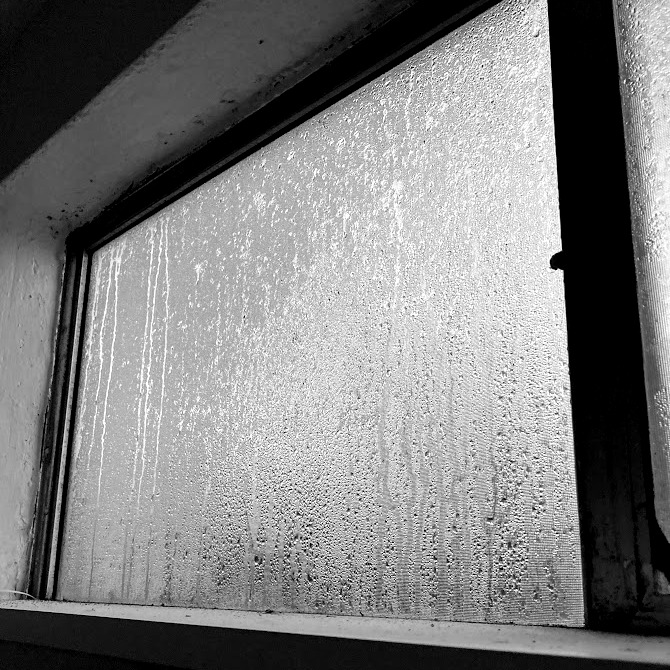
    Photo by Author

    Hallo Kartoffelkumpel,
    With record rainfalls happening, I thought you might like a rainy-day post. I contributed this article to The Memoirist, so if you’ve already read it I hope you enjoy it a second time. I’m reproducing my original article below so you can still read it in your inbox, but I really recommend checking The Memoirist out. Then come back and ask me about some of my favorite authors and posts!

    The sky had been thin and brittle all morning, the clouds stretched tight like old linen.

    I noticed it while putting on her shirt. It had the print of some cartoon from some show we’ve never watched. Buttons and bows had been too much so this is what we wore now. Simpler, faster to get on and off. She sat, or rather reclined, slumped on the edge of the couch, her head tilted slightly, a faint twitch at the corner of her eyes.

    I knew that twitch.

    “You okay?” I asked, voice soft, pretending it wasn’t what I thought it was.

    She didn’t answer.

    I could smell the eggs going way past over easy in the kitchen. The fork rested on the plate like a downed white flag. I knelt there, the eighteen inches between us feeling like miles. She blinked slowly, her eyes clouding over. I felt the shift, the earth tilting, the room around me disappearing.

    And then it began.

    I already had my phone out ready to start timing. Her body stiffened, arms jerking with mechanical violence. I eased her down to her left side. Then the sounds. At first the delicate crinkle of medication tabs being opened, then the sharp, wet click of her teeth snapping shut, the guttural rasp of breath trapped somewhere between her chest and her throat as she fell deeper into the throes. I dissolved the meds in one of the thousands of syringes always in reach, popped open her g-tube port, connected the line, vented, connected the syringe, and slowly pushed.

    Once that’s done I just sit there with my useless hands and racing heart, pounding with the same panicked rhythm it always did. Counting seconds and losing years.

    When it was over she was hollowed out, a fragile shell with her breath shallow and quick.

    That’s when the sky opened up.

    It doesn’t rain here much but today it did. The rain was beating hard against the glass. A steady drumming, like the headaches you get behind the eyes. There were about two sips left in the coffee mug. The smoke from breakfast, forgotten at first and then burnt, started to drift in from the kitchen. Outside, the world dissolved into gray, the downpour smearing it into nothing. Inside, there was silence. A heavy, suffocating silence, broken only by the low, insistent drip of whatever was on the television.

    She was there, on the couch, barely stirring. Her breath was still shallow but steady, her face pale against the cushions. The seizure had come and gone, quick and brutal, leaving her crumpled and creased in its wake. I watched it, like always. The rigidity, the tremors, the violence of it all. And then the stillness. That damned unbearable stillness that followed.

    Our protocols said if she has another one inside of 15 minutes we give a dose of the heavy stuff. Protocols. What a cold tasting word. Either way I wasn’t going anywhere so I tried to read. Hemingway. Always Hemingway. Words cut so clean you could shave with them. But now, even his words felt worn down, the edges dulled. They hung there on the page, ghosts of something that was once clarifying. When the lucidity of Hemingway doesn’t work I usually reach for the reassurance of Rilke or Elliot, hell even Horace. But her hand had found mine and would have to let go reach one of them. So I turned to the TV. It moaned in the corner with news of wars, celebrities, things to buy, in other words: disasters. A thousand voices fighting to fill the empty spaces. But the noise only made the emptiness grow, sprawling and endless. The phone was busy with its postictal timer. All of it seemed obscene. This struggle to distract, to drown the ache with static and sound.

    My mind tried to build a story. Stories were the handholds on the cliff face. They were the maps in the woods. They gave shape to the shapeless, a reason to keep moving. But the stories fell apart, crumbled like dry leaves underfoot. Logic was useless, reason even more so. What was left was the yawning space where meaning used to be.

    I looked at her again. The curve of her cheek, the way her hair spilled over the pillow. She looked so much like herself in these moments. But she wasn’t. Not entirely. The life I had imagined had been seized, torn apart piece by piece. What was left wasn’t less, but it wasn’t the same either. I thought of her laughter. The way sunlight turned her hair to gold. The feel of her hand in mine, not strong but weighty. And now, there was only her delicacy. Quiet and resting, her body betraying her in ways I couldn’t stop.

    It doesn’t rain here much but today the rain didn’t stop. It pounded against the earth in an endless rhythm, and somehow, in that rhythm, there was a truth. The abyss I was looking down wasn’t just emptiness. It was the thing that made life sharp, the edge that made us feel alive. To know the abyss was to know how fleeting it all was, how precarious, how precious.

    She was still here, right next to me. Breathing, alive. But the grief didn’t care about that. This was a lossless grief, a sorrow not from death or absence. She was here, but she wasn’t, and the weight of that pressed down on me like the rain.

    It doesn’t rain here much but today rain washed the world clean. It erased everything, the grief, the struggle, the questions without answers. And in that damn stillness there was a kind of peace. Not giving up, not despair. Just a stillness, a recognition of what is.

    The cold coffee cup stayed on the table. A reminder of time slipping away, of life moving forward no matter how hard we try to hold on. But something shifted. The balance of it all felt different. Lighter, maybe. Or just changed.

    It doesn’t rain here much but today rain kept falling like a soft hymn. And somewhere in its endless cadence, I began to let go. To accept what was. To see that in the face of the bleak, there is a strange kind of grace. The grace of knowing it will end, and loving it anyway. And for now, she was here, breathing in the quiet.

    It doesn’t rain here much but today it did. Rains like these the world around takes notice and sighs a collective, “We needed this.”

    I stood up. My legs were stiff from sitting too long, knees cracking with the effort. The mug light in my hand, the dregs cold and bitter when I finally drank them.

    In the kitchen, the burnt eggs had curled in on themselves, expensive black edges crumbling with the slightest touch. I threw them away without ceremony, rinsing the pan under cold water, watching the steam spiral into nothing.

    She made a small sound, like a sigh caught in her nose. I was there before I knew it, kneeling beside her, brushing damp hair from her forehead. Her eyes fluttered open for a moment, glassy and unfocused, but there.

    “I’m here,” I whispered, though she probably couldn’t hear me. Or maybe she did. Maybe it didn’t matter.

    Outside, the rain had softened to a mist, the world blurry and unsure. But it was still there. I pressed my forehead gently against hers, grounding myself in the warmth of her skin.


    Did this resonate with you? Reply with your thoughts or share your own story. And if you know someone who might need these words today, please forward this along.

    Every bit of support helps and we appreciate it more than words can say!


    This article was originally contributed to The Memoirist.

    My Medium friends can read this here.

  • Ramble in the Bramble

    Entirely Missing the Point of the Garden God

    “Even some bodily pains are worthwhile…” Epicurus, The Vatican Collection, LXXIII

    Another hospital night, the kind that never really starts or ends, just folds over itself like damp cloth. My daughter is asleepish under that gauzy cap that holds the EEG leads in place. The mesh looks soft, almost cozy, but I know it must be making her hot and itchy. She twitches every so often, a twitch so tiny under all that wrapping. The respiratory bands around her chest and belly rise and fall, rise and fall. Her breathing is its own precarious philosophy lesson. Beside her, my wife has fallen into that uncomfortable half-sleep of a parent in a plastic recliner. Wait, I’m in the recliner. What’s she sleeping on? Oh the sofa pulls out to a bed. That’s new.

    I bring a physical book to read each inpatient visit, there are enough screens in the room as it is (I recognize the hypocrisy as I write this on my phone screen). I brought Epicurus with me this time to stay awake. Stuff I have read many times and will read again. And again. Probably. But I’m not really doing philosophy tonight; I’m trying to live using philosophy, which feels messier. Less clear. More like rummaging through a stranger’s medicine cabinet looking for anything that might help.

    The pulse-ox glows red on her toe like a little coal. It used to be the only cheerful color in the room but they’ve recently opened up a brand new floor, dedicated just to kiddo’s like her. Everything used to be beige or gray or the particular blue hospitals love that’s meant to be calming but mostly just reminds you of paperwork. Now it’s all purple and stars (I was told each floor represents a different elevation and ours being the top floor is space). The nurses, respiratory therapists, and sleep techs move in and out quietly. They are excellent. They remember to speak in low voices, the kind you use when you’re trying not to wake a baby or a bomb.

    We’re here because we don’t know what’s causing what anymore. Are the seizures messing up her breathing, or is her breathing setting off the seizures? Or the third option, the one that hangs in the corner of the room like a smell: is her body just starting to give out. She’s been on hospice now for a bit, so technically the answer is already yes, but “yes” is a wide word. It can stretch for months, or fold in on itself overnight. We’re trying to find out where we are on that road. Or if there’s still a road at all.

    She makes a soft half sigh, half snore sound and her chest rises just a little too slow. I put a hand on her sternum, like that will tell me anything the machines aren’t already streaming silently into the computers. I feel each of her little ribs lift under my palm. It should calm me. It doesn’t. She’s gotten so skinny recently.

    Epicurus said something—and I’m paraphrasing very badly at two in the morning—about how long and short thoughts get you to the same place. Tonight I’m testing the short ones. The very short ones. She’s breathing. She’s here. I’m here. Breathe. Count. But we’re not in Epicurus’ garden. We’re in one with thorns, the one where every step scrapes. So my mind wanders to brambles. To all the things I wish I could prune away so she could have a clean path, one with soft grass and maybe sunlight. Weren’t we supposed to get rain? Lemme check. Nope, just clouds. Typical.

    My wife is stirring, mumbling something about needing to switch places soon, but she falls asleep again before I can answer. I want her to rest. I also want her awake with me. I want both things at once and neither is possible. Epicurus would probably say something about desire and the way it pulls you out of the present. He’d be annoying about it too I bet, in that calm way that makes you suspect he was never awake at 3am with a medically fragile child. I know he died of kidney stones and dysentery so it’s not like he never experienced pain, but still—it’s been a long day with hard conversations and I’m tired and a Garden God I am not.

    I’m not sure what I’m hoping for, to absorb the ataraxia off the page? I keep thinking about the maxim about how death is the one thing you can’t barricade yourself against. When it comes to death we all live in a city without walls. Tonight the city feels especially drafty. I look at my daughter’s face, mostly hidden under the wires, and wonder how many nights like this we have left. It’s a question I can’t unask once it appears. It just sits there. We are so pathetic in this small antiseptic room, why would death even bother? Surely there are other targets more deserving. But no one really deserves death, it’s not something you earn. Does anyone deserve life then? Because if miracles were a meritocracy there should be no such thing as pediatric hospice. I think what he’s getting at is more about why we should even be bothered by death. Death will do what death has always done, to everyone, everywhere, regardless of how great your walls or how clean your hospital room.

    “Don’t spoil what you have by wishing for what’s absent.” He says that too. Or something like that. And sureI agree and nod along when I read it at home. Yes, wise, good, of course. But here it feels like someone telling you not to think about the exit in a burning building. I don’t want to spoil anything. I don’t want to want anything except what’s real. But the flesh is weak and the brain the weakest of it and it reaches. It just does. It reaches toward breathing that comes easier, nights that don’t shriek with alarms, mornings where we’re not waiting for seizures to let go of her. This goes along with another banger from him about how misfortunes must be cured with gratitude for what was, and the knowledge that the past can’t be undone. Gratitude is weird at this hour. It comes in flashes: her warm feet; my wife’s hand brushing mine; the way the nurse tucked a blanket around my daughter with the tenderness of someone wrapping a newborn. And then pain and fear flood in and wash it all away. The past is fixed. The future is currently being graphed in real time across half a dozen monitors. What’s left is this room, this night, this weird in-between space where she is here but fragile, where we are awake but exhausted, where the road feels narrow and the bramble closes in on both sides. Maybe these pains of uncertainty are worth having now to fend off future certain ones.

    A nurse comes in to take vitals. My daughter squirms, gives a big clonus stretch, then settles again. The nurse asks me if I’m doing okay, if I need anything. I say I’m good. I lie. I’d love some coffee and a new brain for my girl. I know they’d get them for me if they could.

    Epicurus has a line about making the later stretch of the road matter more than the early one. I would like to believe that’s what I’m doing right now. Paying attention. Staying awake. Holding her hand. But some nights the road feels less like something you walk on and more like something that walks on you. The red glow on her toe flickers again. The number on the monitor dips. I lean forward, heart in my throat. Then it rises back up. I release a breath I didn’t realize I was holding. My wife wakes this time, real waking. “She good?” she whispers. I say “For now,” which is the closest thing to honesty that exists in this room.

    Epicurus says everyone leaves life like they’ve just been born. I don’t know what to do with that right now. Maybe it’s supposed to make dying feel less heavy. It doesn’t. But it does make me look at her face again. Her tiny mouth. The soft curls of her hair I know are hiding under the mesh. She shifts in her sleep, and I think: if she were born tonight, I would still choose her. Every version of her.

    The clock says it’s early morning now. The sky says absolutely not, I guess that rain came after all. I close Epicurus and let his words rest on my thigh. I know there is a lot of that good magic in his words, it’s helped before. But tonight the ataraxia was harder to hold and I clearly am not living the sage’s ideas. Maybe tomorrow. I’m too tired to think and too awake to stop thinking. We won’t know until later what any of this means. The data will be read, interpreted, filtered through experts, and then handed to us with the soft voice people use when they don’t want to hurt you but know they might.

    My daughter exhales. I match her. Just for a moment.

    We’re still in the bramble. Morning won’t change that. We won’t know anything more than we already do until the doctors tell us and even then, probably not. Oh hey they’re coming in now. Must have been later than I thought.

    It’s always later than I think.

  • Faces

    On Masks, Personhood, and the Performances of Care

    Thank you for coming back—or for finding your way here for the first time. However you arrived, I’m glad you’re here.

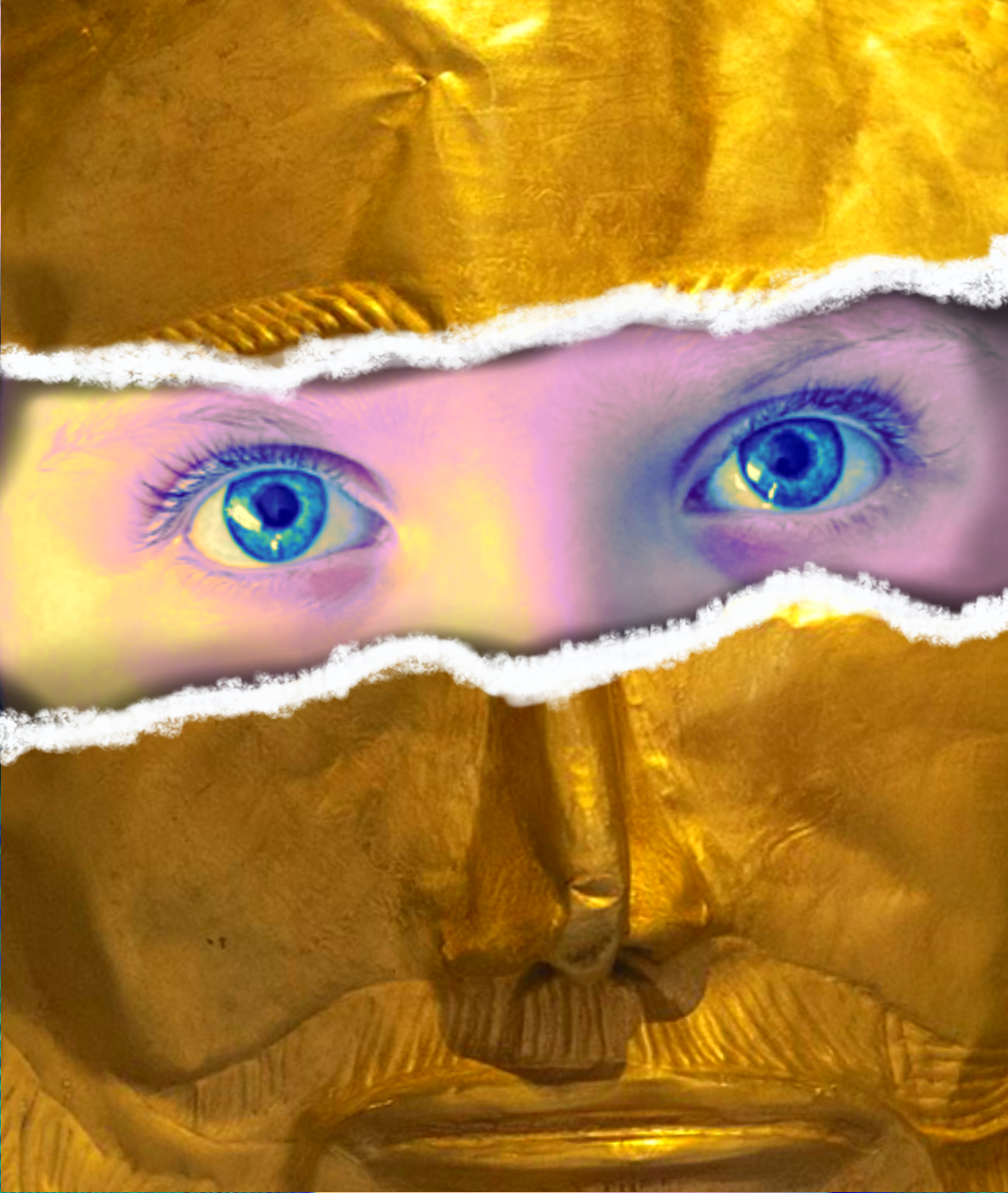
    A striking pair of blue-green eyes with purple eyelashes peer through a horizontal tear in golden-yellow textured paper or fabric. The eyes have an artistic, digitally enhanced quality with vibrant colors including yellows and purples around the eye area. The torn opening creates a dramatic peek-a-boo effect against the rich golden background.
    “The face is the mirror of the mind, and eyes without speaking confess the secrets of the heart.” – St. Jerome

    Hallo Kartoffelkumpel,

    Last post’s Halloween memories got me thinking about the idea of masks, not just as costumes, but as part of what it means to be a person. Below is a reflection on the origins of the word persona—and how caring for a disabled child makes visible what most of us forget: that we are always, in some way, performing our way toward being known.


    She doesn’t like when things tug.

    I pull the neck band of her shirt over her ears, careful not to catch stray hairs on the way down. I tell her we’re getting ready to go out, though we both know she doesn’t understand what “out” means the same way I do. Maybe she does. Maybe this script is just for me.

    So much of this life is lived within a maybe.

    Every act of care has its choreography. I’ve learned the sequence by heart: prep the meds, check the bag, adjust the straps, scoot the boot, smooth her hair, look her in the eyes. Somewhere in there, I slip into a familiar role. The calm father. The practiced one. The version of myself I know how to play. Most days at least. It’s strange how easily care becomes a patterned performance. There’s a rhythm to surviving this life that demands repetition, ritual, and, yes, costume.

    The word costume led me to mask, which led me to persona. In Latin, persona means “mask,” the kind worn by actors in ancient plays. It’s also where we get the word person, and by extension, personality. The entire language of self begins in concealment. The first person was, literally, the one who wore a face for others.

    Our most intimate sense of being arrives to us by way of performance.

    But the ancient mask wasn’t meant to deceive. It was meant to clarify and to project. Its shape and mouthpiece clarified the character’s emotions and amplified the actor’s voice so the audience could see and hear. The mask didn’t hide the self; it made the self audible.

    Sometimes I wonder if that’s what I’m doing when I speak for my daughter. Am I amplifying her voice, or speaking over it?

    Her communication is minimal and bodily. Things like a blink, a tension in her jaw, the faintest smile that might mean delight or discomfort. I’ve become fluent in these signals, though my translations are always imperfect. When people meet her, they look to me to narrate what she’s feeling. I supply her lines. “She’s happy to see you,” I say. “She loves the lights.”

    Do I give her voice, or do I put words in her mouth?

    And what happens when a world built on voices can’t hear someone who doesn’t perform one?

    I think about this when I meet new nurses, providers, or parents. I notice how their faces shift in the first moments of encounter. How they reach for a script, any script, that might make the silence less frightening. I do it too. I smile in a way I hope looks competent. Not overly cheerful, not pitying, just steady enough to reassure. It works. The interaction smooths. The performance continues.

    But later, I sometimes wonder if I was performing for them, or myself.

    We all wear masks. Some are heavy with habit. The smile that says we’re managing, the tone that signals we’ve accepted this. Some we put on to protect others from the rawness beneath. Others we inherit, like family heirlooms of composure.

    Yet in caregiving, the mask becomes complicated. It’s not only about what we show or hide, but about what allows us to function. I’ve learned that too much unfiltered fear or sorrow can paralyze the routines that keep my daughter safe. Making ‘choosing joy’ the single load-bearing beam of my life can lead to repeated collapse. I can’t stay in awe or despair for long; there are meds to draw and alarms to check. So I perform calmness until it becomes real enough to act from. Maybe that’s what ritual is for, not to fake a feeling, but to make room for it.

    There’s a philosopher1 who once described social life as theater where we’re always managing impressions, playing roles. He didn’t mean we’re liars. He meant that the stage is how we meet each other at all. Every face-to-face encounter is, in some sense, a mask-to-mask exchange.

    Still, I can’t help feeling uneasy. I want my daughter to be seen as a person, not a performance. Yet the very word person insists that to be seen, we must wear something. A covering. A voice-shape. A presence that can be perceived.

    What does that mean for someone whose presence is already so fragile, so easily misread?

    Sometimes, in her silence, I see something closer to truth than my explanations ever reach. Her stillness isn’t absence. But because our language is built on performance, on sound, gesture, and expression, we call her way of being hidden. Maybe she isn’t hidden at all. Maybe we’re the ones behind the masks, too busy performing personhood to notice how much of it is invention.

    When I think of persona again, I return to the mask as amplifier. The idea that what we wear for others might not only conceal but make audible. The father-mask I wear, steady, resilient, capable, has carried me through nights I couldn’t have survived bare-faced. Maybe it’s not inauthentic. Maybe it’s just one of the ways I speak.

    But there’s danger in over-identifying with it. When the mask fuses with the skin, it can be hard to know where the voice ends. I’ve caught myself talking about oxygen saturations and seizures with an almost professional fluency, as if language could insulate me from the tenderness beneath. As if vocabulary were armor.

    I think that a paradox particular to this kind of care is to love someone so wholly that you must sometimes perform yourself into being strong enough to keep loving.

    What frightens me is how easy it is to forget I’m performing at all.

    The word persona carries within it both the mask and the sound that passes through. Maybe that’s all we ever are: what passes through. Not the mask, not even the face behind it, but the trembling voice between the two.

    Sometimes, late at night, I hear her breathing in the dark. The concentrator chugs, the monitor lights pulse faintly, her small exhale catching against the rhythm. I listen. There is no script for this part. No costume, no cue. Just the sound that keeps returning, steady and unresolved.

    Just like me, steady but unresolved, just passing through.

    Until next time, stay safe, stay kind, and know that you are appreciated.

    Cheers,
    [kartoffelvater]


    Did this newsletter resonate with you? Let me your thoughts or share your own story. And if you know someone who might need these words today, please forward this along.

    We wouldn’t be here without you. Every bit of support helps and we appreciate it more than words can say! If you saw my face you would…

    1

    Erving Goffman, The Presentation of Self in Everyday Life (Garden City, NY: Doubleday, 1959). Goffman was actually a sociologist (mea culpa, but aren’t we all philosophers in some way?) who developed what he called “dramaturgical analysis,” the idea that we perform different versions of ourselves depending on our audience and setting. He distinguished between “front stage” behavior, where we manage how others perceive us, and “backstage,” where we prepare or drop the performance. His work wasn’t about fakeness but about how the performance itself is the medium through which we meet each other at all.

  • Princess Persona

    On Halloween Costumes and Other Performances

    Thank you for coming back—or for finding your way here for the first time. However you arrived, I’m glad you’re here.

    Hallo Kartoffelkumpel,

    We’ve had a strange little stretch here. One of those weeks where time feels like it’s wearing someone else’s coat. Too big in some places, too tight in others. Mornings come with the weight of unspoken expectations, and evenings vanish in a puff of undone tasks. Still, in the middle of it all, there are these small, theatrical moments that shimmer oddly. Maybe that’s what nudged these memories loose. That and the fact it was Halloween…


    The fabric rustled like a breeze through dry leaves.

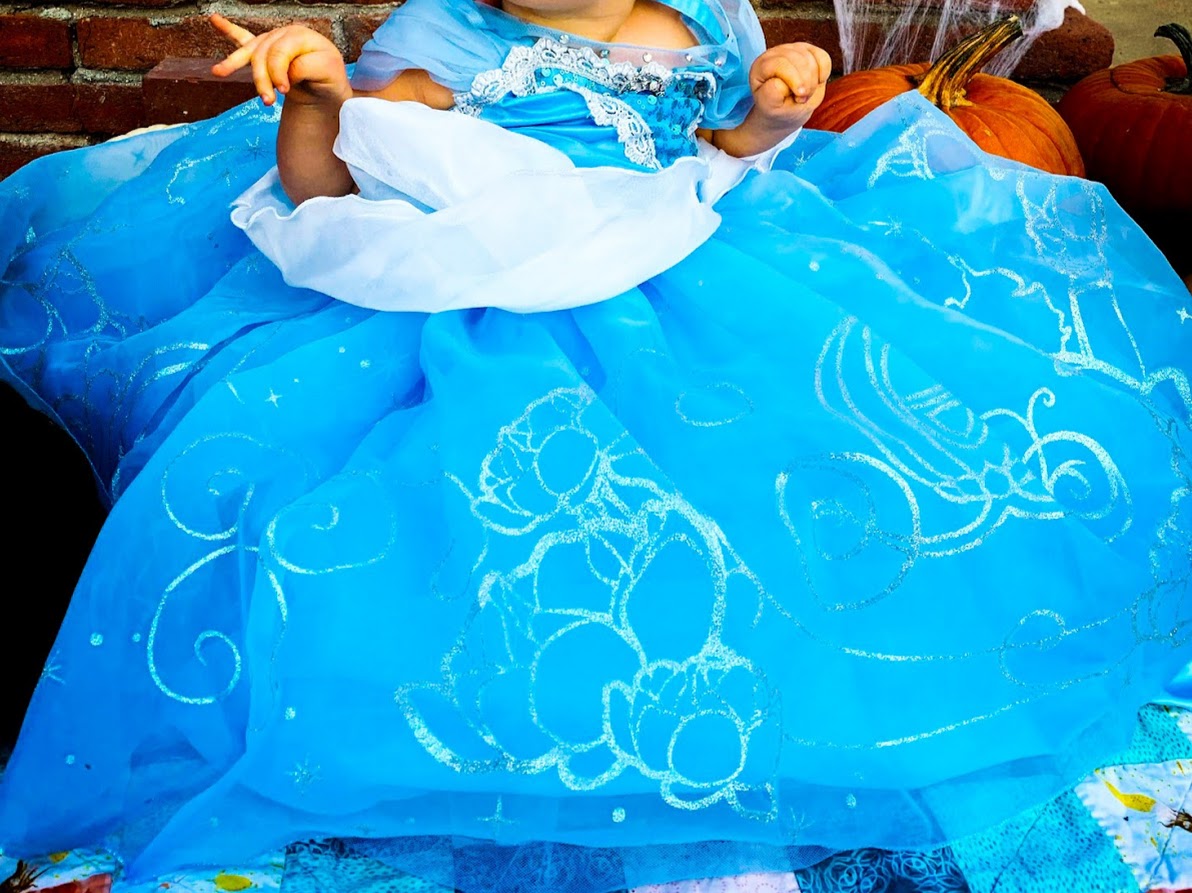
    Sharp and insistent it was a little too loud for such a quiet afternoon. The Kartoffel’s Cinderella gown shimmered faintly in the soft October light, all satin and tulle and imagined grandeur. The skirt alone was enough to overwhelm a small living room, let alone a child who spends most of her time outdoors strapped into a medical chair. We crouched beside her, maneuvering the layers around her arms and legs, trying not to jostle her too-vulnerable shoulders or hips. The tiara sat crooked on her head, as all tiaras should.

    She stared at me with a bemused face. “How are you ever put in charge of anything?”

    Her fingers flinched from the fabric’s edge. Textures are never neutral for her. Some days she loves all the different things to feel. Other days, the wrong touch can send her spiraling. We held our breath and offered the sleeve again. She blinked slowly and let us slide her arm through. If she were wearing shoes, one of them would certainly be missing by now in homage to her famous resemblance. But instead of glass slippers, she had her wheels. Grandpapapotomus had built her a carriage from a red wagon and PVC pipe, complete with orange and blue lights stretched into a pumpkin frame. It wobbled slightly and smelled like last summer.

    She looked like royalty.

    In the kitchen, mama double checked that meds would be ready to go when we got back. I grabbed our stick horses. We were ready to pull the princess. Outside, the leaves had begun their slow descent into rot. The sidewalk would soon be covered with paper ghosts and plastic bones. I caught my own reflection in the mirror we still haven’t hung: father, costumer, now horse. No mask, and yet entirely in costume.

    Halloween is supposed to be simple: a little dress-up, a little make-believe. But with the Kartoffel, it’s never just pretend. Every layer of fabric seems to ask something of us. About what we show, what we hide, and who we do it for.1 I would soon be reminded how easily those performances spill from thought into action.

    We joined our family, and the greater neighborhood caravan, outside at dusk. Parents with tired-but-it’ll-be-worth-it-for-the-memories faces, herding their kids in foam muscle suits, polyester witch hats, their plastic pumpkin buckets already filling. Someone shouted, someone tripped. The air smelled like sugar and a distant fireplace. We were part of it, and also not.

    Navigating the sidewalk was a dance. Cracks, slopes, curbs, each one a small negotiation with her wheels. People made space. They smiled. A parent knelt down to compliment her gown, though she didn’t meet her eyes. Her tiara sparkled under the streetlamp like it was doing all the work of eye contact for her. I found myself narrating on her behalf.

    “She’s excited,” I said, though she hadn’t moved much. “She loves the lights.” I wasn’t sure if she did tonight. “She loves your costume!” I needed her to seem like she belonged.

    Every house we stopped at (which was exactly three) brought a new performance. We turned her toward porches, held out her bucket, said “Trick or treat!” in a bright voice. People smiled, too wide sometimes. They dropped candy into the bucket with exaggerated care.

    “And who do we have here?” one woman asked, crouching low. “Are you Cinderella?” She blinked. I smiled.

    “Yes,” I said. “With a custom carriage and everything.” She didn’t reply because she doesn’t speak. But I spoke enough for both of us. That was my role. Apparently, my mask can get chatty.

    There is a particular kind of exhaustion that comes from a layered performance such as this. First you play your part as the cheerful, adaptive parent. Then you coach your child’s part, even if they won’t—or can’t—play it. Then you silently hope the audience sticks to their cues and is welcoming, smiling, but not pitying. Kind, but never condescending. Curious, but not interrogating. It’s the theater of interaction.

    And then comes the real trick: pretending this choreography is mutual.

    Inclusion, I’ve found, often requires the most performance from those already carrying the heaviest loads.

    I watched another kid barrel down the sidewalk in a hot dog costume, what I think was supposed to be ketchup trailing behind him. No one asked him to smile on cue. No one needed him to “prove” he was enjoying himself. He just was.

    And I—was I enjoying myself? Or just doing what I thought was required?

    Sometimes I catch myself performing disability dad. The seasoned father. Competent. Patient. Always on cue. The one who jokes about feeding pumps while navigating doctor’s appointments and fielding insurance calls. The one who wears resilience like armor. It’s not a lie. But it’s not the whole truth either.


    Not long ago, I found myself irritated with a front desk nurse when we’d rolled in with my daughter, who was clearly in need of space, time, accommodation. The nurse didn’t greet us or say anything about her hair or sunglasses.

    “They’ll be with you shortly,” she said. She took our insurance cards and had me sign something.

    I fumed inwardly. No warm smile? No ‘Aww, she looks beautiful’? She was paid to be there, wasn’t she? Didn’t she know her lines? As we left, I got an automated call asking for my feedback on the visit. I answered with every intention of letting them know the front desk staff was cold and distant.

    And then right there in the parking lot I stopped. The Kartoffel looking up at me again with those questioning eyes, wondering who keeps putting me in charge of things. I felt the absurdity of it. I was asking the nurse to perform for me. I had a script, and she hadn’t read it. She wasn’t mean, she wasn’t anything other than professional. But she wasn’t what I wanted her to be, what I know she deserves everyone she comes into contact with to be like.

    Wasn’t that the very thing I drew myself up against?

    We all do it, I realized. We lean on our private expectations of how others should play their roles. Providers should get us in the room as quickly as possible. And then take as long as we need once we are back there. Therapists should anticipate our unspoken grief. Friends should know how to offer help without making us feel helpless. Strangers should be inclusive but never intrusive. But life isn’t a stage play.

    No one has the full script.

    And the ones I expect the most from? Other parents like me. I look to them for knowing nods, shared language, the right mix of humor and sorrow. And when they don’t deliver—when they seem too upbeat or too defeated, or too wrapped up in their own horrors, or not wrapped up enough, I horripilate. As if they’re letting the side down.

    What a tangled web we weave. I want to stop performing. I want others to stop performing. And yet it seems I require their performance and they require mine. Maybe not all performance is false. Maybe some of it is ritual. And maybe ritual isn’t inherently a burden.

    There is comfort in repetition. In preparing the gown. In carving the jack-o-lantern. In saying, ‘Trick or treat,’ even if it’s me saying it. Maybe ritual is one way we carve out meaning when meaning gets slippery. Maybe it’s how we hold onto community, even as we grieve its limitations. But it’s dangerous, too. I’ve felt it when disability advocate starts becoming my whole personality. When I forget I’m allowed to be confused. Or angry.

    Or ordinary.

    The more I cling to the performance, whether I’m being helpful or hindering, the more I fear what’s underneath.

    And yet, being the Kartoffel’s dad isn’t a mask like that. It’s not something I put on. It’s who I return to when the crowds go home and the sound settles back into the floor.


    That night I found her curled in mama’s arms, her body finally unbound from the costume, soft and still. The dress lay in a heap by the laundry room door. The house was quiet, the endless rustling of the tulle playing only in my mind now. But outside of my head there was no longer the sound of effort, but of rest. No more need to speak for her. No more performance.

    The carriage leaned against the garage wall, one light still flickering. I meant to turn it off, but didn’t.

    I left it glowing there, pulsing faintly in the dark.

    Until next time, stay safe, stay kind, and know that you are appreciated.

    Cheers,
    [kartoffelvater]


    Did this newsletter resonate with you? Let me your thoughts or share your own story. And if you know someone who might need these words today, please forward this along.

    We wouldn’t be here without you. Every bit of support helps and we appreciate it more than words can say!

    1

    This was originally a longer train of thought, but it was too long for this newsletter. If I find all the threads and weave it into something, you’ll get it.

  • The Space Between

    Hollowed and Hallowed By The Waiting

    Thank you for coming back, or for finding your way here for the first time. However you arrived—I’m so glad you’re here.

    Hallo Kartoffelkumpel,

    Lately, I’ve been thinking about how the world trains us to move. Always forward, always faster, as if meaning could only be found in motion. But sometimes life hands us stillness instead, and we’re left to learn a new rhythm, one that doesn’t rush or resolve, but simply holds. This holding is uneasy, luminous, and alive, and has a shape all its own.


    A soft glow spills across the ceiling.

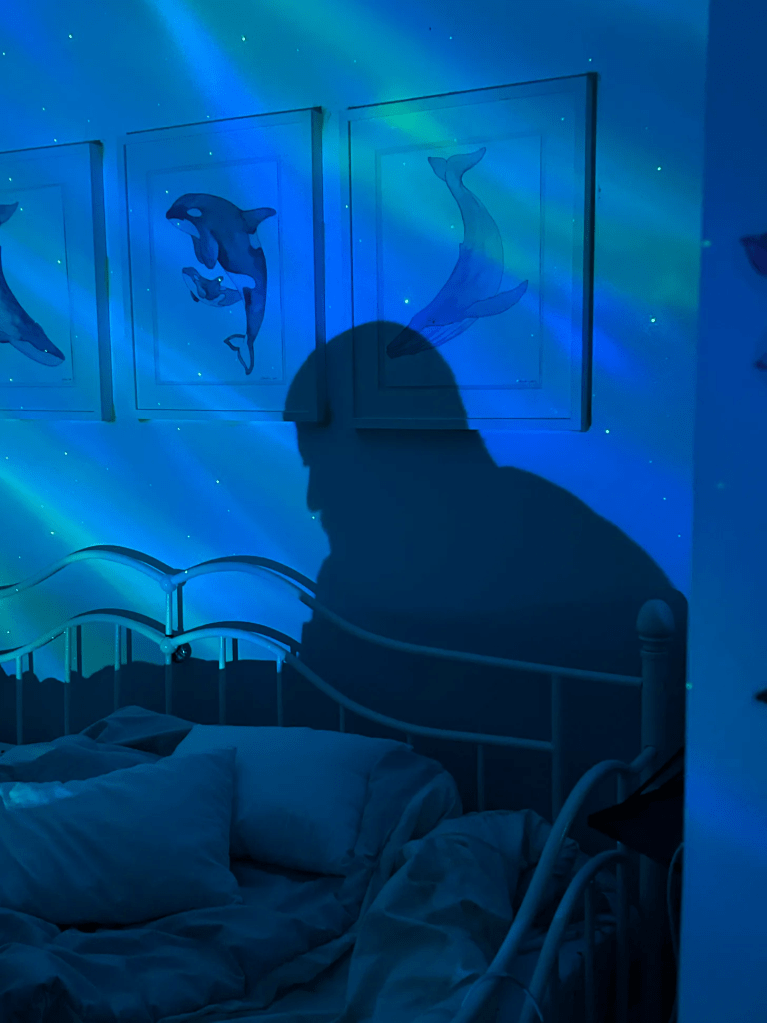
    Dancing ribbons of light sway over the bed, cast by a night light that swirls over the BiPAP’s steady rhythm. I sit beside the Kartoffel, tracking her breath, each rise and fall a tender tether anchoring me. Waiting for us isn’t a gap, a mere pause to endure; it is the weave of our existence, threading through dread, love, and the stubborn hope clinging to her presence.

    Time bends here in ways the world outside can’t grasp. Seconds bloat, heavy and vast, when her chest stutters, then shrink, fleeting, when her eyes drift like whispers across a still pond. Consciousness falters in this space, suspended between the past we’ve known and the possibilities we chase, scooping out the present until it feels like an empty pit of itself. Hope flickers as a distant spark, stress coils tight in my chest, and her laugh, as rare as rain here, dissolves hours into a single, precious note. I’d pay every sleepless night, every aching hour, to hold her stillness close.

    Because what is waiting, if the waiting is holding her?

    The toys keep watch around us. The comically oversized orca, the bear with a matching g-tube, Matilda the gorilla holding her diploma from when she graduated an early intervention program. All hushed companions in a quiet, ultimate devotion untouched by the world’s haste. Out there, clocks tick relentlessly, carving life into neat segments, chasing a presence that slips through their hands. Here, the ocean mural holds its breath, its Garibaldi suspended in a painted sea, while Emma settles. Alive, delicate, and undeniably mine. Waiting isn’t a path from here to there; it is flesh, raw and fierce, pulsing with her every wave. Time doesn’t march it unspools, slipping into a future that’s always becoming, never fully here. I’m caught in it, a father bound to her breath, my choices weightless, suspended by her waiting. I stall, watching, longing, until she drifts off.

    Yet this isn’t mine alone. You, out there, holding your own child through nights that stretch too long, you know this weight. The muted strain of a room we share, yet don’t. Who can measure a wait that binds us to them, to each other? Perhaps it isn’t a waiting room we share, but the waiting itself is the room we sit in side by side.

    Because what is waiting, if the waiting is community?

    The world beyond rushes on with its other waits while here, fairness frays, and time twists itself into meaninglessness. If the waiting itself is the room we sit in, then its architecture is built on a death of time. This isn’t just a slowed clock; waiting excavates the present, strips it bare. It’s a warping of presence and a wrapping of the moment we inhabit. Consciousness, stretched toward what might come blurs the present into a haze of speculation. Even with the all the fancy words, this isn’t some abstraction for us parents, it’s the ache of watching her tremble, with our notebook’s cold tally, the endless hours on hold with vendors, the whitespace on the page of denial from insurance, the unanswered calls to specialists who hold her fate. We’re trapped, not by choice, but by love, our freedom suspended, our sense of being hollowed and hallowed by the waiting.

    In this void, there’s a strange communion. The dread when monitors beep, the embers of hope when fingers curl, the nauseating realization that there might not be many corners left to turn on this long and winding road, experiences that are mine alone in a way that can only also be ours together. Our vigils, solitary in their intimacy, demarcate a collective space, a room without walls but made of waiting itself.

    I lean close, kiss her brow, salt, struggle, and sweetness mingle on my lips. The roots of this wait dig deeper into me. Waiting distorts, yes, empties the present for a future we can’t grasp. But it’s alive with her fight, our defiance rising against the dark that dares too near. The world hoards days like coins; we cradle moments in this softer sacred season. The Kartoffel’s breath steadies, falters, steadies again, and we’re remade, our love outlasting every shadow.

    What we have learned is that waiting, when rooted in unconditional love, is not an empty, passive gap, but an active, full, and meaningful state of existence. In this room, beneath our fragile sky, waiting is everything. The space between us is a testament to her, to us, unbroken. She is, we are, the waiting.

    Because what is waiting, if the waiting is her?

    Until next time, stay safe, stay kind, and know that you are appreciated.


    Cheers,
    [kartoffelvater]


    Did this newsletter resonate with you? Let me your thoughts or share your own story. And if you know someone who might need these words today, please forward this along.

    We wouldn’t be here without you. Every bit of support helps and we appreciate it more than words can say!

  • Night Shift

    And still, I keep the watch.

    Moonlight spills like milk across her bed,
    a thin stream catching coils of line and lead.
    The monitor hums its spectral tune—
    a lullaby wrought of wires and wound.
    Each beep, a knell. Each blink, a vow.
    The hour is glass. The time is now.

    A shadow pools beneath the crib,
    as if the dark itself could give.
    Her chest heaves slow beneath the thread
    of formula spilled and stories said.
    My hands, half-ghost, perform the rite—
    the midnight meds, the mask held tight.

    And still, I keep the watch.

    The rasp of breath. A stuttered sigh.
    The sterile tang of passing night.
    She stirs—her fingers brush my arm,
    small, sun-warm stars against alarm.
    And still I wait. And still I count.
    The dips and rises. Every ounce.

    I chase the tremor down her spine,
    where silence blooms like bitter wine.
    Each tremble taught me how to move—
    no hero’s grace, no dance, no groove,
    just habit honed by sleepless grace,
    a practiced prayer I dare not face.

    And still, I keep the watch.

    And when she laughs—half dream, half moan—
    it splits the hush, and I am shown
    a world beyond the vinyl blinds,
    where sorrow’s weight and joy entwine.
    The moon, the girl, the ticking air—
    a room suspended in despair.

    The blanket slides; I fix it twice.
    The oxygen reads ninety-five.
    My fingers skim the plastic tube,
    the cold that binds and might unglue.
    I whisper names, both hers and mine,
    as if words stitch the fraying line.

    Each night, a sea that pulls me in—
    the tides of breath, the pulse within.
    The needle floats, the liquid stings,
    the timer calls with metal wings.
    But still I wait. But still I stay,
    and trade my sleep to keep her day.

    The hallway hums. The house is still.
    Outside, the dark resumes its fill.
    And I, unbodied, sit and lean
    between the world of loss and dream.
    One hand on hers. One on the chart.
    One tethered bone. One breaking heart.

    The moon withdraws behind the shade.
    I wipe her lips. I bow. I wait.
    And think, perhaps, if light returns,
    I’ll name it thanks, though nothing’s earned.
    This night, like all, is not the first—
    the same pale bloom. The same dark thirst.

    And still, I keep the watch.

    And yet, it’s new. And yet, it’s ours.
    A vigil strung through ghostly hours.
    No end in sight. No rest to lend.
    Just breath. And touch. And then—again.

    And still, I keep the watch.

  • Yielding

    On Resilience, Reliance, and the Promise of the Net

    I’m sending out an article I originally contributed to The Courageous Parent’s Network. You can find the original here: Yielding

    We have been told that to be resilient is to stand apart. To weather the storm unmoved, to endure without breaking, to carry the weight without complaint. Fathers especially are given this story. The good father is the oak: tall, steady, admired precisely because he does not need to lean. He shelters others but never asks to be sheltered. His strength is measured by how little he requires.

    This myth has a certain beauty to it. We do not carve statues in the shape of vines; we carve them to look like pillars. All that is soft is gone, what remains is that which is hard or has been hardened. And yet, when you live long enough inside the weight of grief and care, the myth begins to feel brittle. A father who cannot bend, who cannot admit need, eventually snaps. The oak rots from the inside. The story I inherited about resilience has left me lonelier than I know how to name.

    I did not really begin to question this until I found myself sitting at my daughter’s bedside, watching her chest falter in the dark. One breath would come, ragged and shallow, then a pause too long. Then another gasp, as if her small body was unsure whether to continue. In those moments, she did not fight. She yielded. She let the air and the mask, and our trembling hands do the work. She trusted that she could rely on what held her.

    Her resilience was not in resistance but in reliance. And it startled me. Because if resilience for her is reliance, if her survival is the sum of many hands, many ties, many threads, why have we been taught to imagine resilience as the opposite? Why have we been told that to lean is failure, that to rely is weakness?

    Endure in silence, carry your grief like a private stone, prove yourself by not needing anyone. This script makes us solitary. It distorts fatherhood into isolation, as though to love well is to disappear into a fuzzy invisibility. But a single knot, no matter how tight, cannot hold anything on its own. Only when the knots are tied together do they form a net. A father’s resilience, I am beginning to believe, is not found in how firmly he can stand alone but in how deeply he can rely and be relied upon. Resilience is reliance. Strength is not in separation but in connection.

    There have been other moments, lower ones. Sitting on the floor holding my daughter when she is too weak to play, to sit, to do much but be held. I trace her small fingers as she drifts in and out of awareness. I often cry then, not from crisis but from the sheer fact that I cannot change her body, cannot take away the fragility she carries every day. Her eyes sometimes meet mine here for a moment before they close. She does not flinch from my weakness. She doesn’t need me to be unshakable; she needs me to be here. A father willing to remain, even if that means relying on her gaze to steady him.

    This is the reversal our culture resists: fragility is not the opposite of resilience, but its ground. My daughter’s life has taught me that. The ventilator, the feeding tube, the medications, the meal trains, the help around the house, the thoughts and prayers and good vibes whispered over her—all of it is reliance. And yet it is precisely in this web of dependence that her life continues. Resilience emerges not in being untouched by need but in being held within it.

    A spider’s web offers a better image of resilience to me now than an oak. The web trembles. It breaks. But it is also repaired, rethreaded, renewed. Its strength lies not in rigidity but in flexibility, not in singular hardness but in the pattern of connection. Each thread relies on the others; each knot tied to something beyond itself. Fragility is not erased; it becomes part of what holds it all together.

    Fathers are rarely given permission to see themselves this way. We have inherited a silence, a script that says we must carry the weight without asking to be carried. And so, we rarely speak to each other about care, about grief, about the unbearable tenderness of watching a child suffer. We retreat into the myth of the oak and call it love. But what if fatherhood were something else entirely? What if resilience has always been reliance, and our silence has only deepened the fracture? I imagine naming aloud the weight of nights spent pacing hospital corridors, the helplessness of waiting rooms, the fear of not being enough. Not to prove endurance, but to weave ties. To hold each other as surely as we hold our children. What if fatherhood was not a fortress but a net?

    Reliance does not mean passivity. It means fidelity. To keep showing up even when you cannot fix, to remain present when nothing changes, to lean and be leaned upon. This too is strength. When I sit beside my daughter during a seizure, I cannot stop it. All I can do is hold her hand, call her name, wait for her to return. My resilience in that moment is my reliance, on her will to come back on my wife’s presence, on the small circle of love that refuses to let go.

    This is why yielding has become, for me, another name for love. To yield is not to surrender the bond but to trust it more deeply. To stay when you cannot control. To let others carry you when you cannot carry yourself. Yielding is not weakness. It is reliance. It is what nets are made of.

    And in the end, this is what remains: not solitary strength, not the illusion of the oak standing alone, but the quiet fidelity of ties that hold. My wife’s hand in mine. Friends who ask the second question. Machines that breathe for my daughter until she can breathe again. My daughter herself, teaching me without words that life is carried by yielding. When I get to thinking like this, she looks at me as if to say, “Of course it takes more than one person. You’d last what, maybe 2 minutes on your own? 3 tops if someone left you snacks.” Alas, she is non-verbal, and I don’t read minds.

    The myth told me that to be a resilient father was to stand apart. My daughter has shown me that resilience is the opposite, it is to stand together. To be one knot in a net strong enough to hold the weight of the nothingness of grief. To yield to reliance, and to find in that yielding not failure but promise.

    Resilience as reliance, not resistance.

    These ordinary instants are the ones that change your life.

    Until next time, stay safe, stay kind, and know that you are appreciated.

    Cheers,

    [kartoffelvater]


    I hope you enjoyed this post. Don’t forget to check out the original article over at CPN, a fantastic resource for exploring the world of raising children with disabilities and rare genetic disorders. Be sure to visit their site for more insights!
  • Good Morning, Good Mourning

    On The Inadequacy of Language and the Uniqueness of Grief

    Thank you for coming back, or for finding your way here for the first time. However you arrived—I’m so glad you’re here.

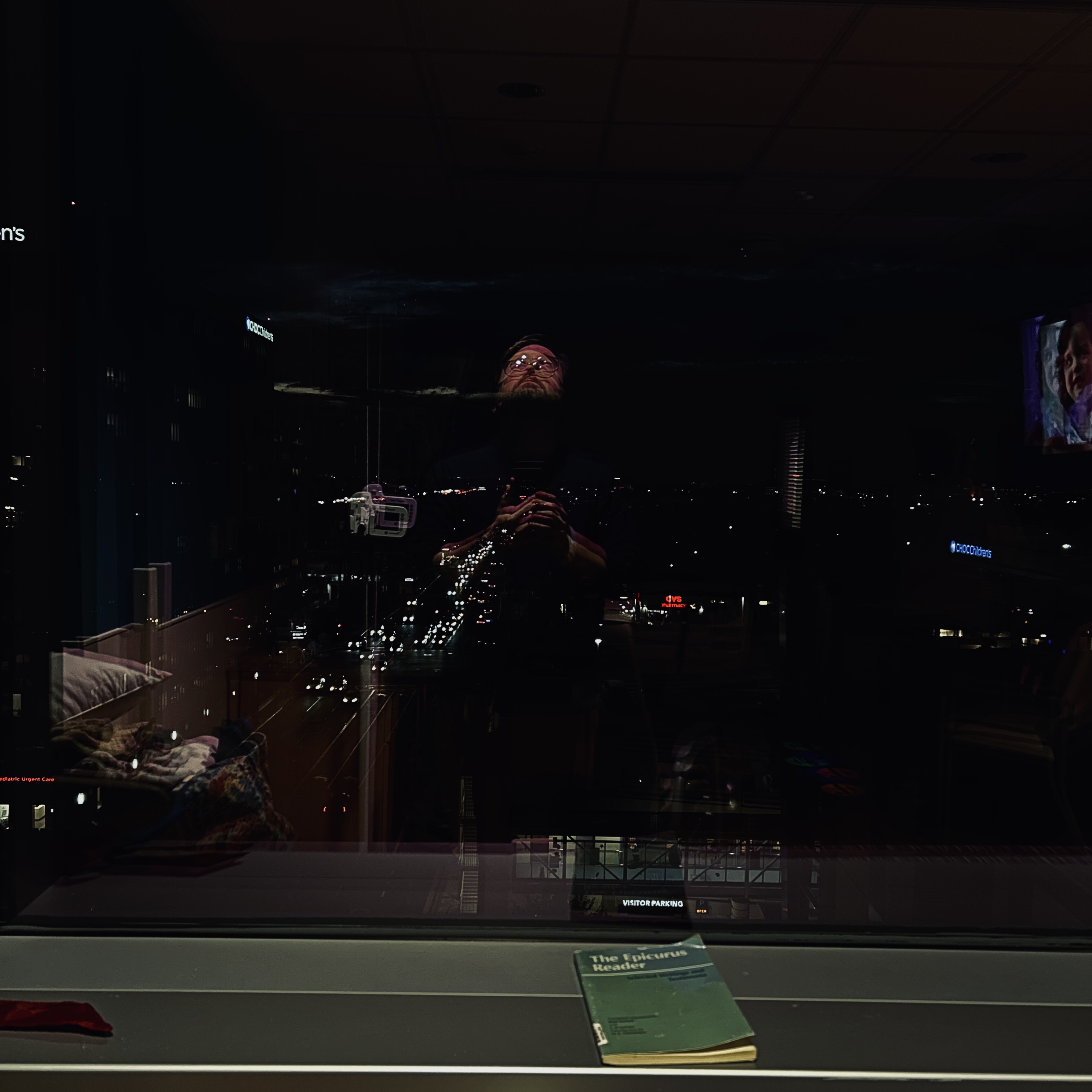
    The moon peers down, indifferent to the tree’s lonely silhouette

    Hallo Kartoffelkumpel,

    I have spent the past several posts and several thousand words trying to communicate what it was like to step into that particular grief of getting a life altering diagnosis for your child. I am about to give you a couple thousand more on how none of those other words will ever accomplish that task. This is a little longer post than usual so feel free to break it up if you’d like as I’ve tried to write each section to be (mostly) self-contained. I believe in you.


    We reach for language like reaching for handholds on a cliffside, only to find that some crumble in our grip. Still we reach, because reaching is part of being human.

    The Skin of Language

    We live inside words.

    They shape how we think, how we share ourselves, even how we imagine what is possible. From the first sounds we mimic as children, language wraps around us like a second skin. It orders the chaos, gives names to things, lets us believe the world can be held in syllables.1

    And yet there are moments when words abandon us. They shrink when we need them most. In the presence of love so fierce it hurts, or suffering so sharp it takes the breath from your chest, language begins to stumble. It gestures, it repeats itself, it circles like a plane above an airstrip waiting for clearance to land but it never quite arrives.

    Grief makes this failure unavoidable. It is not a tidy emotion, if it even is one at all. It’s not something that fits neatly inside the words sadness or loss. Grief is a kind of terrain.2 For some it feels like erosion, a slow dissolving of the self; for others it is sudden storm, or a silence that fills the room like heavy air. No two landscapes are the same, no two losses identical.

    When a doctor pronounces a diagnosis for your child, perhaps a rare one and life-altering one, grief rushes in differently. It is not a single event, but an unmooring. Words arrive—strung together from syllables of medicinal Latin, percentages, prognoses—but they do not match the feeling in your chest. You hear the phrases, you even repeat them back, but they do not touch the living, wordless rupture opening inside you. The vocabulary of nosology and the vocabulary of emotion pass each other like strangers in the night down a hospital hallway.

    This is the puzzle I keep rearranging the pieces for. The very tool we depend on to make meaning cannot hold the weight of one of the most meaning-making things we experience: grief. Words are too orderly, too bound by grammar and sense-making, while grief is stubbornly irrational. It doesn’t follow a sequence. It doesn’t stay inside lines. It lives in pauses, stray memories that ambushes you in a grocery store aisle, in the particular way you inhale after a doctor says, “I’m sorry…”

    To grieve is to find yourself beyond the sound and sight of sentences or signposts. You reach out hoping for anything to catch you, grasping for branches but finding only breath.


    Language depends on shortcuts. Each word gathers a history of shared usage, worn smooth by repetition. To say I am sad is to gesture toward a vast common experience, but it never touches the particular texture of embodied3 sadness, let alone something as complex as grief. The sadness of a rainy day is not the sadness of losing a child’s future you once imagined and yet language hands us the same small syllable, flattening both into a single shade.

    Metaphors try to rescue us. We say, it feels like a hole in the heart, a wave crashing over me, a dark cloud overhead. They help for a moment. But each metaphor strains under the weight. A hole implies emptiness, when often what you feel is not vacancy but a relentless, heavy presence. Waves suggest rhythm, but grief rarely has a rhythm, often breaking without warning. Images help us reach toward each other, but they fail to reach the center.

    Sometimes silence does more. The unspoken pause after someone asks how you’re doing. The stillness of a hospital hallway when no one knows what to say. The absence of language can mirror grief more faithfully than any phrase. Words, in their neat pursuit of definition, can become a distraction, a false map. Silence, on the other hand, can be truer: a shared acknowledgment that what is happening has slipped beyond speech.

    Grief is a language we are born into but can only learn to forget, and writing is the clumsy dictionary of its echoes. It exposes language for what it is: necessary but not sufficient, and always partial. A scaffold built too small for the weight it’s asked to hold.


    Culture tries to give us language for this singularity. In Portuguese, there is saudade—a word for longing that is not just nostalgia but an ache for something gone, something perhaps never fully possessed. It lingers like scent in an empty room, a shadow of what once was. Beautiful, yes, but still only a gesture.

    In Japanese, mono no aware4 points us toward the fleetingness of all things like the blossoms that scatter too soon, the light that changes as afternoon slips into evening. Grief, here, is not an interruption but part of the fabric of life, inseparable from joy. The word teaches acceptance, but even so, it cannot quiet the raw cry for what has been lost. Where saudade leans backward toward what has slipped away, mono no aware opens our hands, reminding us how little we can keep.

    In Czech, lítost names the sharp torment of being laid bare by sorrow, of seeing one’s own misery reflected back, unhidden, unendurable. It is the humiliation of being unraveled, the sense of standing exposed in a grief so consuming it strips away any pretense of composure. Where mono no aware offers a tender resignation, lítost recoils, refusing grace, showing us instead the raw nerve of being broken while the world carries on as though untouched.

    In many African traditions, ubuntu offers another vision: “I am because we are.” In grief, ubuntu names the rupture that is never private, the tear in the communal fabric when one thread is pulled away. It reminds us that mourning is not carried by a single body but shared among many, that even when loss isolates, the work of grief is also to draw us back into relation. Where lítost exposes the unbearable solitude of loss, ubuntu insists that no sorrow is borne alone.5

    These words are gifts, little lamps lit against the vastness of loss. But they remain fragments. Grief will not sit still long enough to be captured by any one of them. It shifts, transforms, unsettles. What feels unbearable one season may soften into memory the next. Anguish can turn into tenderness, and then back again. Grief is not a state but a space that is labyrinthine, unpredictable, never identical twice.

    Grief does not repeat itself.

    Each grief is singular because each love is singular. To speak of grief as though it were one thing is to miss its essential fact: it is always bound to the someone experiencing it. It is a clearing always found within the intricate forest that is Life. Though it touches us all it refuses to be universal.

    Grief insists on being lived, one body at a time, one love at a time, one loss at a time.


    When words collapse under the weight of grief, we reach for other forms. Art, ritual, sometimes the body itself. These become languages that do not rely on sentences and yet still speak.

    A poem6 can sometimes hold what prose cannot. A single image, distilled to its sharpest edges, can carry more truth than paragraphs of explanation. A line of verse does not need to define grief; it only needs to open the door and let us recognize ourselves inside it. Music7 does this too. A melody, without a single word, can slip past the mind and lodge itself directly in the chest. I think of the hush that falls in a room when a slow piece is played, the way people instinctively bow their heads, as if grief itself had entered and everyone feels it together.

    Ritual offers another way. In some traditions, grief is guided by prayers, chants, days marked off with candles and incense. In others, it is met with color and feasting, the telling of stories, the building of small altars that make the absent present again. Whether solemn or celebratory, rituals create a frame strong enough to hold what feels uncontainable. They tell us: you do not have to carry this alone.

    And then there is the body, which often speaks before we do. Shoulders slumped, hands trembling, the uncontrollable rush of tears. These are not accidents or symptoms; they are grief itself made visible. A body bowed in sorrow is already telling the truth words cannot manage.

    None of these are complete. Not poetry, not music, not ritual, not even the body’s raw cry. The silence of grief is a vast, echoing chamber, but writing opens a window, admitting light and shadow in equal measure.


    And Now For Some Living

    When I think back to the day of my daughter’s diagnosis, I remember the words of the specialist but more so the quiet in the days after. The long hours sitting in the hospital room between rounds. The eventual drive home. The way the world outside the windows seemed both unbearably sharp and strangely muffled. It was grief announcing itself. It was not the grief of death, but of thresholds, of futures foreclosed and futures unknown. Just this past week we stepped through another door into a new clearing of grief, full of its own wilderness we know nothing about.

    This kind of grief does not resolve. It does not move neatly through stages.8 It lingers like fog, receding, then thickening again, a weather of the soul. And yet, in its persistence, it teaches that grief is not only about endings but about the weight of love pressed against finitude. We learn that here loss isn’t the source of all grief but rather grief is the source of seeing loss in all things. To grieve is to feel the depth of our attachment in a world where nothing is guaranteed.

    We search for words because ordinary language falters. But even the richest words and rituals are but charcoal sketches of the outline. The rest must be lived. It is in the feeding tube, the hospital corridors, the held breath before a monitor alarm. It is in the laughter that arrives anyway, sudden and undeserved.

    So when we speak of grief, whether in poetry or diagnosis or silence, what are we really doing? Everything spoken about grief is a compromise with what cannot be spoken about. A necessary defeat. Perhaps then it is not a thing for words. Perhaps it is not a thing for us to solve or explain but something more like a clearing in the forest of our lives allowing us to hold space for what exceeds us. A space to honor the fragile, relentless truth that love and loss are never separate things.

    In this way, my daughter’s diagnosis was not only a moment of grief, but a opening up of a new way to see, a call into a life where joy and sorrow are braided so tightly they cannot be unknotted.

    And maybe that is what grief offers in the end: not resolution, but a

    Stay safe, stay kind, and know that you are appreciated.

    Cheers,
    [kartoffelvater]


    Did this newsletter resonate with you? Reply with your thoughts or share your own story. And if you know someone who might need these words today, please forward this along.

    We wouldn’t be here without you. Every bit of support helps and we appreciate it more than words can say!

    1

    Language is the house of Being, as has been said. Some would even say time itself is nothing more than a series of syllables. Still others believe that the limits of language actually mark the limit of your world. ‘Words matter!’ is an often used slogan, especially in the disability community. You would be hard pressed to find anyone using words who don’t think words are important. And yet…

    2

    This is actually the crux of my theory on grief, but this is a newsletter not a book (for now) so it’ll have suffice for now to see glimpses of it in posts until the full idea is fleshed out. What a lovely grotesque phrase, ‘fleshed out’.

    3

    One of the greatest challenges in language lies in the chasm between naming a thing and being that thing. The word labels a general emotion, an abstract concept but it cannot fully capture the singular, visceral reality of an individual’s experience of it—say, the heavy ache in one’s chest or the quiet sting of a specific memory. It’s why so many people are surprised when they take time to actually sit with what they are feeling. They look inside and find fear, anger, relief, even some version of peace when they expected to find only sad, which is then suddenly flooded by confusion, pain, and maybe even humor.

    4

    Another concept that resonates from Japanese culture is yūgen. It gestures toward the depth beneath the surface, a beauty veiled in mystery, tinged always with sorrow. It is the moon half-hidden by drifting clouds, the hush that falls when distant bells fade into silence. I hear grief speaking through yūgen when the world itself feels thickened, but the dark brightness it evokes will have to be saved for a future post.

    5

    These examples are not exhaustive of cultural expressions of grief and longing, nor do they fully encapsulate the complexities of Portuguese, Japanese, Czech or African cultures. They are selected to illustrate specific linguistic and emotional nuances, but many other cultures and languages offer their own unique terms and perspectives that equally reflect the universal yet varied experience of loss. Every culture has or had a unique grieving expression with countless variations within themselves. It is the precise nature of this universality of grief that makes it so ineffable.

    6

    I will have to write more about poetry, maybe even write more poetry itself. Currently, sections of Rilke’s Duino Elegies and Ovid’s Heroides are leaving my soul in ruins. If you have some poems you enjoy please send them my way.

    7

    I recommend you listen to this while rereading this posts, as I am sure you will many many times.

    8

    This is not a discarding of Elisabeth Kübler-Ross’ much maligned model of the five stages of grief. It was originally developed to describe the emotional experiences of terminally ill patients facing their own mortality. Its application has often been extended to other forms of grief but this broader use can sometimes lead to misunderstanding. Often when individuals find the stages do not align with their unique grieving process, they feel the model is altogether invalid. In truth, Kübler-Ross intended the stages as a flexible framework, not a universal or linear path, and its misapplication can overshadow its value as a compassionate lens for understanding certain experiences of loss. I’m merely stating that the kind of grief I experience in the wake of the Kartoffel’s diagnosis doesn’t fit.