“One swallow does not make a spring, nor does one day. And in this way, one day or a short time does not make someone blessed and happy either.” — Aristotle, Nicomachean Ethics, I.7
Aristotle’s argument that true flourishing requires more than good character—it requires “proper equipment.” Health. Wealth. Goodly children. And it seems that somewhere across the centuries, people began treating blessed as the goal rather than good, until the trappings of a certain kind of happiness came to stand in for virtue itself as the mark of a well-lived life.
The trouble, of course, is that the equipment is not fully ours to control. What is needed to be good, however, is.
And so, we return to the question we left hanging: why do you need to feel happy in order to be good?
I have always been a light sleeper.
I have been the proud owner of insomnia that predates the medical alarms by decades. In the years before my daughter, the silence of the night was a void I often filled with thought; now, the silence is a physical weight, a pressurized chamber. I lie awake at some unfathomable hour. Is it 11:00 PM or 3:00 AM? Does it matter? At this altitude, the distinction loses its utility. Time is no longer a sequence of events but a flat, humming plane.
The house breathes through machines. There is the brown noise machine, churning out a static sea to negotiate an uneasy peace with the oxygen concentrator’s mechanical inhalation. Every few seconds, the ventilator interrupts with its rhythmic, insistent sigh, just dropping in a synthetic reminder of a life being sustained by a collective of wires and software. I hear these things, but they don’t break the silence. They create the kind of silence that makes your head ache, like the physical sensation of ears failing to pop as you climb into a thinning atmosphere. You are higher up than you were ever meant to be, and the old thick, easy oxygen of a “normal” life is gone.
And in that ear-splitting silence, the unluckiest series of events takes our night to the places it so often goes. The smart speaker playing the brown noise decides to update. The break in the droning is just enough to make her hold her breath for a split second too long, which sets off the pulse-ox alarm. This wakes her with a start. Which triggers a seizure.
Phone out and timing. Now all the alarms are screaming. The seizure won’t stop. Rescue meds administered. Phone now ready to call 911. The rescue meds finally take hold of her, and she settles. And in the middle of this chaos, the speaker emits a cheery ding! Update complete. Brown noise resumes.
We need to talk about the word unlucky.
In the culture of caregiving, we are often coached to avoid this word. We are told to speak of “challenges,” “journeys,” or “special blessings.” We are encouraged to view our circumstances as a bespoke curriculum designed by the universe to refine our souls. But to look at my daughter’s room, or to look at her when her body is a site of systemic failure, and call it a “blessing” is a lie that insults her reality.
We are, quite simply, profoundly unlucky. Luck is the name we give to the vast architecture of events that influence our lives but remain entirely outside our control. It is the genetic lottery and the random mutation, yes, but it is also the granular friction of the day-to-day: a suction tube getting impossibly caught on the corner of the couch when you are hurried, or receiving an entire box of diapers with the side tabs missing. When these events settle into the foundation of your life, they create a ruinous horizon. I look toward the future, and I do not see the milestones of graduation or the bright, messy independence of a growing child. I see the vacation photos that will never be taken. I see milestones that have hardened into millstones. These heavy, immovable facts that we must carry until one day we will bury them in the earth with her.
By the time the sun actually rises, the adrenaline of the 3:00 AM seizure has curdled into a pungent, salt-rimmed exhaustion. We had recently had a long-term EEG day, and this morning’s requirement is a gentle tedious labor: washing the glue out of her hair. As luck would have it, she didn’t have any meaningful events while she was hooked up to the monitors so the task of having to excise glue from her tender scalp seems unnecessarily cruel.
There is a specific, grey adhesive used to bind electrodes to a child’s scalp, designed to withstand the thrashing of a brain on fire. It is stubborn. It smells of solvent. As we work the adhesive remover into her hair, the sensory contrast is jarring. My fingers, calloused by the small, repetitive tasks of maintenance, feel the startling warmth of her scalp. Beneath the chemical smell of the glue that milk-warm, floral-earthy smell that is uniquely hers hits my nose.
In these moments, she is often limp. The seizures and the medications have hollowed out her muscle tone, and she crumples into us. There is a terrifying beauty in that crumple. It is a manifestation of absolute trust, a weight that says, I cannot hold myself up, so you must. We are devoted to this weight; we take it up willingly, but it is not “joy.” It is not amusing or light.
The world tells us that to be “good” parents, we must be “happy” parents. We are sold a version of virtue that is inseparable from a sunny disposition. Indeed, it seems that people would have you be happy and not good, rather than be good and unhappy. We are told that if we just “choose” enough gratitude, we can achieve a state of perfect contentment despite the ruins. To the outside observer, my wife and I standing over the sink might even look “inspiring.” People love that word; it makes them feel better about the fact that they aren’t the ones holding the washcloth. It is so important that we be happy that whole industries have popped up around it. Retreats promising to revitalize you, respite for date nights so you can find that spark of happiness again, mantras of ‘take the trip’ or ‘do the thing’ all with the design to get you happy again so you can get back to doing the hard work of parenting, or caregiving, or parent-caregiving as the case may be.
For many, this is just what they need. The break to fill their own cup lets them pour their goodness back into their child’s care. Others deem it impossible to provide the care demanded of them unless they also have these happy moments provided for them as well. This is not an indictment of those who ‘take the trip’ or go on retreats. This is not a nihilistic rant against people being happy, and I’m not saying being this kind of happy isn’t at times helpful. But the mindset that you are owed happiness or even that you have earned it through your actions begs the question: Why hang your goodness on the hook of happiness? Why must you need these moments of pleasure in order to be good in the pain?
Happiness, in the modern sense, is a fickle emotion, sometimes reduced to a chemical reaction to favorable circumstances. It’s hard to imagine a happy person who never smiles. But if you require that feeling in order to be a “good” person, what happens when the circumstances are objectively terrible? What happens when the “unluck” is permanent? Would you dare to be good even if you knew it would mean you’d never be happy, in the emotional sense, again?
I have over the years come to believe that one of the most radical acts of care is to decouple the two. We can acknowledge that our lives are in ruins. We can admit to being fundamentally unhappy. And yet, in that thinning air, we can choose to be deeply, radically good. The “Good” person does good things—like scrubbing grey glue from a tired child’s head—not because it provides a “special” joy or for some reward, but for the sheer, deep, cognitive and spiritual devotion to the things that matter most, because they are the right things to do. We do not do it because we are “happy” to do it. We do it because she is here, and she is ours, and she is worth the exhaustion.
This is a multi-part exploration of life on the far side of the thinning air of the (un)Blessed. This is a place where the old, easy oxygen has run out, but where a different, breathtaking view of the human spirit becomes visible.
I am writing this not as a possessor of some immutable truth. The philosophy I’m exploring here is an experiment, more like a framework I’m “trying on” to see how it fits against the jagged edges of my daily life. I write with the conviction that survival often requires, but I am well aware that these ideas are contested and fragile. I may find I need a different set of tools after the next crisis.
Next time we’ll step away from the sink and the solvent-smelling rituals to look at the “Why” we tell ourselves and why the search for a reason might be the very thing keeping us from finding our footing in the ruins. We’ll look at the view from the peaks, and why the “unlucky” are the only ones who ever get to see it.
Until next time, stay safe, stay kind, and know that you are appreciated.
Cheers,
[kartoffelvater]
Thank you for reading. For those of you coming back, or for finding your way here for the first time—I’m so glad you’re here.We wouldn’t be here without you. Every bit of support helps and we appreciate it more than words can say!
Or in other words, can you be good without needing to also feel happy about it?
The house is holding its breath again.
Or maybe it’s just me. Her breathing has met her vent at its usual rhythm of 16 cycles per minute. A soft, synthetic sigh that cuts through the brown noise, but it’s the silence between the breaths that’s the loudest thing in the room. It’s that specific, pressurized hush that only exists in houses heavily modified for survival. It feels like the air has thinned, like I’m standing on a mountain peak where the oxygen is too scarce or too precious to chatter on about the old stories I used to tell myself. And yet chatter I will…
I’ve been lying here for an hour.
Aimlessly staring at the ceiling, trying to untangle a knot. When I was younger I used to be pretty good at undoing knots. Other kids would always bring me their yo-yos whenever the strings would get tangled up. Tonight though, this particular knot happens to be between my heart and my head.
Who am I becoming in this?
Not the father I planned to be. That man is gone, buried under layers of insurance denials, medication schedules, and the terrifying, beautiful weight of a child who cannot hold herself up. I don’t miss him, not really. He was a stranger anyway, a fantasy of sunlit driveways and training wheels. But I’m not sure who has taken his place.
Someone told me the other day that I’m “so strong.” They said it with that bright, manic smile people wear when they’re terrified of the dark. They want me to be strong. They want me to be the oak tree that stands unbowed. At the very least they want me to think that they think I am strong like the oak. But I don’t feel like an oak. I feel like a spiderweb, trembling in the draft, knowing the wind is coming, knowing the threads will tear, and still, somehow, weaving.
And that’s where the question starts to itch.
If I am not happy does that mean I am doing this wrong? It certainly seems that way based on the reactions I get when I give an honest response to, “How are you?” If my life is objectively a tragedy, if the horizon is ruined and the air is thin, what’s the point? To choose joy and do what you can, cutoff whoever you need to, walk away from whatever you must, in order to be happy would seem to be the answer. But if all of that, if the word “happy” itself feels like a lie I’m telling myself to keep from screaming, can I still be a good person?
We are taught that goodness and happiness are married. That if you are good, the universe will eventually reward you with peace, with joy, with a life that makes sense. Can you, then, be profoundly, deeply good in the midst of a life that offers you no joy? What if the only thing left to do is to be good because there is so little joy?
I think about when we have to wash her hair in the sink. The grey adhesive from some hospital stay that won’t come out. The smell of solvent and the warmth of her scalp under my fingers. We scrub. We rinse. We do it again. We don’t do it because it makes us happy. It doesn’t. It’s tedious, exhausting, and often heartbreaking. We do it because she is here. Because she is ours. Because it is the right thing to do.
Is that enough? Is that the only thing that matters?
I feel a strange fear rising in my throat. Not fear of the future, or the next seizure, or the next bill. Fear of the possibility that I am wrong. That maybe I am just deluding myself, trying to find a philosophy to justify the pain. That maybe there is no “higher excellence” in this, just a slow, grinding erosion.
But then I look at her. She’s asleep, her chest rising and falling with the help of the machine. She looks so small. So fragile. Our lovely round baby girl has gotten so skinny. And yet, there is a dignity in her sleep that is almost a question. One that I don’t understand how to answer. I don’t have the words for it. I just know that the old language of “blessing” and “silver linings” has cracked and fallen away. I’m standing in the ruins, and the air is thin, and I’m trying to figure out how to breathe without pretending the sky is blue. Maybe that’s all there is. Just the breathing. Just the doing of the right thing, even when it hurts. Even when it doesn’t make me happy. Which makes me think we need to recalibrate the way we use the word ‘happy’.
When people talk about happiness they usually mean smiles, laughter, that warm fuzzy feeling. And they take for granted that this is the way things are supposed to be, that hardship and suffering are aberrations that must be relieved or diminished in order to get back to being happy. But how can that version of happiness be the natural state of things when so much of my life is not…that? I think there needs to be a reckoning that happiness is not our default condition, it isn’t a destination you arrive at, and it’s not a commodity you get. It is something that blooms out of a life lived being a good person. And the Good must come before the happiness.
I tell myself I’ll write this down later. When the sun comes up. When the glue is washed out. When I have a word for this feeling. Who am I kidding, the sun is already here, there is always more glue, and there are never the right words for things.
For now, I just hold her hand.
Until next time, stay safe, stay kind, and know that you are appreciated.
Cheers,
[kartoffelvater]
Thank you for reading. For those of you coming back, or for finding your way here for the first time—I’m so glad you’re here.We wouldn’t be here without you. Every bit of support helps and we appreciate it more than words can say!
This post was originally written during the months of March ans April as we held vigil at our daughter’s bedside.
“You really ought to give it a try.”
Someone was texting me about some kind of fast they were doing. A detox they called it. No something or other for forty days. It was going to help them reclaim their mornings, they said. They were going to start returning to themselves. Get back to what’s really important.
I blinked and nodded at the phone, as if they could see, in the way you nod when someone is talking about some hobby you were deep into 15 years ago but no longer keep up with. They were speaking a language I once knew, using words I once used. As I scanned their messages I could even remember the feeling of believing I could shape a season of my life through sheer will. The feeling that I could step back, look at my life, and just decide to do it differently for a while.
I read the texts as they came in. It wasn’t the time to share my own reality, this moment was for them, but their words sparked a recognition in me. I do something like that every day. Not in forty-day increments. Not with a declared intention or a clean start date. But every morning, in the accumulated weight of small decisions that don’t announce themselves as decisions, I choose this life. I choose to stay. I choose to show up at the bedside, make the calls, read the signals, carry the knowledge that no one else in the room is carrying quite the way I carry it. My fast isn’t from things like chocolate or screens; it’s from the illusion that I can control the outcome.
I can’t simply decide to carve out a contemplative morning the way someone without a medically complex child can. The context is different. Their fast is a choice to step back; mine is a choice to stay put. What I have is not the polished, curated choice of someone redesigning their life from a position of varied options. It’s something different, something smaller, less persiflage, more gravity. It’s the choice that gets made in the middle of things, not before them.
It is Lent as I write this. The three pillars of the season could be articulated as reflection, discipline, and service. Much as I wrote about Advent, these concepts belong to anyone who has had to live where certainty runs out. They are practices you vow to take up deliberately, proving to yourself across forty days that your impulses don’t have to run the show.1 Caregiving already is these three things. Not because it imposes them automatically, not because caregivers are virtuous by default, but because this life keeps presenting the choice, again and again, in circumstances where the choosing is genuinely hard. This life presents an omnipresent opportunity to engage with reflection, discipline, and service, they find you, you don’t have to go looking for them.
The practice isn’t in the taking up. It’s in the not putting down.
Reflection
The common conception of reflection is appealing in its tidiness. You carve out silence. You sit with your thoughts. You practice what some have called the ‘view from eternity’ (sub specie aeternitatis for the curious). Imagine looking down at your life from a great distance, seeing it whole, and understanding yourself from that angle. The goal is perspective. The method is commonly a deliberate withdrawal from noise.
I don’t carve out silence. Silence finds me, and usually not gently.
It arrives at all hours of the morning, when the pulse oximeter alarm or the concentrator alarm or one of the many other alarms goes off. And then, after I’ve repositioned her and watched her numbers climb back into the safe range, doesn’t go off again. Then I’m left sitting in the half-dark with nothing between me and my own mind. It arrives in the car ride home after a hard appointment with more questions than answers, in the pharmacy line that somehow just filled up the instant before you got in line, in the thirty seconds between when one task ends and the next one hasn’t started yet. It arrives, I’ve noticed, whenever the doing stops, even briefly. Which means it arrives constantly. It just arrives in the spaces I didn’t schedule.
The question isn’t whether the silence comes or how I can rearrange my schedule to fit in a 15-minute breathing exercise before the kid wakes up. The question is what I do when it does. And I think the choice lives here, in whether I reach for the phone, flip on whatever streaming service I haven’t given up on yet, run the mental list of what needs to be done tomorrow, or whether I stay quiet. Just for a moment. Let whatever is there surface.
That’s harder than it sounds. The silence that finds a caregiver tends to carry questions that aren’t comfortable. What do I actually believe about what is happening? What am I doing this for? Is this sustainable? What does it mean that this situation is even happening at all? These are not questions you can answer and set aside. They are the kind that take years, and ask themselves over and over, and over and over. They don’t resolve so much as deepen. Sitting with them and choosing not to flee, is the practice. Not the scheduled reflection, but the repeated choice to remain in the unscheduled kind.
This is a kind of attention that can only be learned under duress. Not the focused attention of achievement, but the open attention of vigil. The way you use your useless hands to hold something you love that is broken and you cannot fix. The practice is staying. Staying is the choice.
Contemplative traditions point at exactly this. The carving-out is scaffolding for people learning to bear stillness. Caregiving removes the scaffolding. Whether you bear it is not determined by whether you planned to. The opportunity to choose is here, you don’t get a say in that. What you get to choose is whether you do it awake. Whether you do it intentionally.
Discipline
Fasting, in its received understanding, is about voluntarily constraining yourself. You remove the easy comfort, the dopamine shortcut, the reflexive reach for relief. Presumably to prove to yourself that your impulses don’t run the show. The logic isn’t wrong, by enduring a little chosen hardship you can build the interior framing that helps you endure unchosen hardship better.
And in this is laid open to us the structural irony of caregiving. That you can’t fast from the hard parts. The hard parts are not optional in the same way that social media or chocolates are optional. You can only abstain from the vigilance, the physical labor, the sustained attention to medical complexity that doesn’t take weekends in such a way where you have to alter what your definition of a ‘good parent’ is. There is no feast to return to at the end of the forty days. In a life where you are choosing to be present for your totally dependent child the fasting is the baseline.
But I want to be careful here, because this is where the story can tip into something false. The idea that caregivers simply endure, that the difficulty is something that happens to us rather than something we are continually deciding to be inside of, is something I disagree with. A life where I simply have no choice but to care for the Kartoffel is not what I experience. What I experience is that every day, the hardship presents itself again, and every day there is a moment, sometimes very small, sometimes not small at all, where I choose to meet it rather than flee it, resent it, or merely survive it.
The flight I’m most tempted by is not physical. I’m not going anywhere. The flight is interior. That would be the slide into bitterness, the slow calcification of grievance, the transformation of sacrifice into debt that someone owes me. Doing so would be the path of least resistance. The discipline, the real discipline, is in not taking it. In refusing to let the weight become a ledger. In choosing, without ceremony, without demanding witness, without anyone handing me credit or expecting a reward for it, to carry this without turning it into a case against the world.
This is where the ‘superhero’ platitude fails us, and where the ‘you would do it too’ response falls short. When people say, ‘I can’t imagine how you do it,’ they are projecting a kind of exceptionalism that I don’t feel. I am not a superhero. I am not better than the parents of typical children. But neither am I just ‘like you.’ I don’t believe everyone is cut out for this life, and I don’t think the ‘you would do it too’ sentiment honors the specific, brutal reality of what is required here.
The truth is simpler and less flattering. I am not doing this because I am special. I am doing it because it is what I believe to be the right thing to do. And yes, through a thousand small repetitions, I have learned how to stand in this specific fire. But that skill is not the reason I stay; it is the result of having stayed. It is not a superpower; it is a discipline forged in a specific climate. I am not ‘better’; I am continually adapting. And that adaptation is not a gift I was born with, but a practice I return to every day.
This is not the same as saying, ‘It’s fine.’ It is frequently not fine. The discipline doesn’t require feigning otherwise. What it requires is something more deliberate. It requires the choice not to let the difficulty become the whole story. To hold it alongside the small dailiness of other things, the particular person at the center of it, the fact that choosing this is still choosing something.
The version of discipline you find in self-help books or from digital gurus says you must prove to yourself that you control your impulses. The way I view caregiving says something stranger and more specific; you must prove to yourself, every ordinary day, that you are here on purpose. It is a shift from control to intention. That this life is not merely what happened to you. That is the fast. Not from comfort, but from the abdication of authorship over your own story.
Service
Of the three pillars, service is the one most people project onto caregivers from the outside. You are so giving. What you do for her is such a gift. I receive these observations with something I’ve learned to keep off my face. They are not wrong, although she would disagree with the ‘gift’ part. The tension arises from the fact they are describing the surface of something without touching the inside of it.
The standard vision of service is beautiful, yet expansive. You volunteer your skills, mentor someone younger, show up in your community, reduce your ego by recognizing how much you need others and they need you. The assumption embedded in this vision is that service is chosen from some sort of surplus. The belief that you have enough, and so you give some away. Service as overflow.
I want to say something honest about what has happened to that impulse in my caregiving life, because I don’t think it gets said enough. The desire to be of service gets narrowed. Not eliminated—narrowed. The primary relationship, the daily total care of my daughter, uses the majority of what I have. What remains for the broader civic project of giving is genuinely less than I would like. There are weeks when a friend could use a check-in and I don’t have it in me. There are seasons when the idea of mentoring someone or investing in their growth, feels like being asked to lend money I don’t have.
As much as I might want to be involved with helping someone other than the Kartoffel, sometimes the honest answer is ‘Not right now.’ I am already at the edge of my capacity. To pretend otherwise and stretch toward a broader civic generosity that I don’t currently have the reserves for is not virtue. It’s a performance of virtue, and it costs more than it gives.
For a long time, this felt like failure. The evidence for that failure, I told myself, was found in the gap between what I believed about service and what I could actually sustain. But I’ve come around to thinking the gap is not a moral deficit but rather it’s a resource constraint; the well is not inexhaustible.
What I’ve had to deliberately choose is the mindset that the narrow channel is a real service. I’m not choosing this as consolation or as a way of throwing up my hands and saying “well, at least…” but as a genuine account of where my giving goes. To one specific person, with one specific set of needs, in a sustained and total way that most forms of civic engagement don’t require or resemble. I choose to see that clearly rather than through the distorting lens of what service is ‘supposed’ to look like.
And there’s something else I keep choosing, which is to pay attention to this life carefully enough to find words for it. My experience is not universal, I haven’t met anyone yet whose experience is, and so I would not speak for others. But what caregivers carry tends to go unexamined and unarticulated. It remains invisible to those outside the culture of it, sometimes even to those inside it. To name it in earnest, to write it down in a way that might reach another parent sitting in a waiting room somewhere wondering if their experience is real, this is a form of service I can still manage. It gives as it goes. It costs something and replenishes at the same time. That particular economy feels sustainable in a way that the other version doesn’t, at least right now.
Being the Season
The season of Lent is built around anticipation. The tradition holds that forty days of preparation are moving you toward something. You practice in order to arrive. The discipline earns an after.
I’m not sure caregiving has an after in that sense. There is no terminus at which the reflection can stop, the discipline be retired, or the service concluded. The choice doesn’t get made once and then honored automatically. It will get made again tomorrow, and the day after, and the day after again, in the same unglamorous circumstances, without a finish line in sight.
What shifts is not the structure of your life but your relationship to the choosing. It happens slowly, with effort, and not on any schedule. Whether you experience each renewed decision as evidence that you are trapped, or as evidence that you are still here on purpose. Whether the weight feels like something that has been done to you, or something you are doing.
The difference between a burden and a chosen weight is not how heavy it is. It’s whether you keep choosing to carry it. And the remarkable, largely unacknowledged fact of caregiving is that most of us keep choosing. Not because we have no other option, we have options, and we know what they cost, and we choose anyway.
We are now in the liminality that is the night before Easter. I have always loved the feeling of movement in this part of the dark. Only now I am asking:
Am I in this season or am Ithis season?
Until next time, stay safe, stay kind, and know that you are appreciated.
Cheers,
[kartoffelvater]
Did this newsletter resonate with you? Reply with your thoughts or share your own story. And if you know someone who might need these words today, please forward this along.
We wouldn’t be here without you. Every bit of support helps and we appreciate it more than words can say!
I’ve written before about resilience as a net instead of an oak, about how the Kartoffel taught me that yielding is not weakness but the very material of strength. What follows are some further thoughts. Some heavy, some humorous, all held together by letting go.
We are told to be strong.
To bounce back.
To weather every storm with steel in our bones and silence stitched across our mouths.
But resilience, as I’ve come to know it, is not forged in silence. It’s not a virtue earned in isolation or an emblem of self-sufficiency. The old story we inherit is clean, almost cinematic. I witness something very different in my daughter on the long nights when her breathing grows uncertain. She does not resist the failing rhythm. Instead she softens into it, limp, trusting, entirely surrendered to the support around her: the mask, the steady hands, the voices whispering her name through the dark.
Nights like these teach me endurance is rarely a solo fight. It is the trembling circle of us holding her, and her allowing us to hold.
What if true endurance isn’t forged of metal at all? What if it is a delicate trembling net, or a low murmur passed hand to hand?
Or the patient way the moss on the brick in my backyard cradles the memory of this season’s rain long after the downpour has gone. After all, it doesn’t rain here much.
I once admired the solitary figures standing rigid against the gale. Now I seek out those who reach, who allow themselves to come gently undone, trusting the hands that will gather the pieces. There is an almost holy dignity in consenting to be held.
We so often tell survival as resistance. We push harder, refuse to yield, stand unbowed.
Yet so much that lasts in this world endures precisely by bending, by twining, by leaning without shame. The vine does not conquer the tree, it curls around it, drawing life from the very thing it needs.
What if survival is less the trials of a solitary will singing out and more like the harmony found in a chorus? Needs spoken and met, just enough, again and again and again. What if fragility is not resilience’s enemy, but the very soil in which it takes root?
Even now, some days I catch myself stretching into the posture of the oak. I stand alone, straight-backed, self-contained, appearing unmoved.
But it is the oak that splinters when the wind howls hardest. The willow leans with the gust. The spiderweb shivers and repairs. The mycelium with its soft threads weaves through the damp earth.
.
Some mornings I wake feeling composed entirely of thread.
How I wish it was the taut, purposeful kind twisted into rope. Alas it is more often like the stray filament that clings to your sleeve after restless sleep, soft and half-unspooled, unraveling not as if looseness was its original design.
We dismiss “barely holding it together” as defeat when really it is more of a miracle that we are managing to hold any shape at all, threading one shaky breath into the next hour, one tenuous stitch after another.
My daughter’s days, poised always on the edge of unraveling, have become an instructor in the art of staying soft when instinct screams to harden, staying open to the world even when every nerve begs to close the door.
Certain mornings her body simply forgets to hold its own warmth. Others, it’s as if her swallow reflex vanishes entirely. No predictable cadence exists anymore. What we have to offer is the feeding tube, the suction, the gentle tilt to one side. She blinks slow acknowledgment. And yet in fleeting instances, of which we’ve had a few recently, her mouth curves into that smile and her eyes light up at us as if greeting old friends.
The tenderness she carries is forged within these lapses, not lessened by them.
She has become a vessel veined with fine cracks across every curve. Light pours through those same lines brighter, warmer, and more insistent than I ever believed a fragile form could contain or release.
Where once I measured strength by unbroken surfaces now I wonder if fracture belongs to the very shape. What if the work is not to forbid the cracks, but to craft a life spacious enough to cradle them and let something luminous pass through?
The image I keep circling is the spider’s web. The spider never pleads with the wind to quiet. She constructs knowing full well the threads will tear.
A web is a living scar that remembers how to mend.
.
Years ago, probably early on a Tuesday, I had a moment when I wanted to hide. The morning had come with deceptive sunlight promising a warmth it never delivered. Sleep had long since abandoned me. I was brittle in that particular way where every gentle word, every offered kindness, scraped like sandpaper.
While connecting her feeding tube, my hand trembled and sent the syringe clattering to the floor. Formula bloomed across my shirt in a slow, pale milk stain, seeping under the clamp like an accusation that refused to hurry.
Heat climbed behind my eyes. Not from the spill itself, but from the sudden, ferocious wish to vanish. To stop being needed in this relentless, microscopic way. To escape the endless catalog of details required to keep one small life tethered to the hours.
In that instant I longed to be the father who steadies training wheels on a sunlit driveway, shouting encouragement as she wobbles forward.
Not the one who kneels in the dim hours to empty the suction canister, measuring what her lungs could not clear.
And then shame arrived.
Instant. Sour.
A metallic tang that seeped between my teeth and settled there, heavy and unswallowable. First guilt for having done this particular thing, but then shame for being the kind of person who does something like this. I’m not talking about spilling the formula. I’m talking about being the kind of person who not only just imagines a different life, but who wishes not to be in the one he has.
I have never not wanted my daughter in my life, but at that moment I did not want the work of her.
I folded in on myself and fell to the floor beside her bed, formula still damp on my shirt, and let the tears come, hidden, or so I thought. When I lifted my eyes, she was looking straight at me. Wide-eyed. Calm. Simply present. Bearing witness without judgment. Who am I kidding, of course she was judging me. But not for crying. Probably for the particular glasses I keep in her room. Big chunky black frames.
Judgment on my fashion aside, in that gaze I realized something small and enormous: she has never required an unshakable father. She requires only the one who remains. Who stays in the room when every instinct pulls toward the door. Who does the right things for her not for what they return, but because they are the right things to do. And I am learning, slowly, sometimes heartbreakingly, that this is all any reward ever was.
.
Each dawn I gather what the darkness scattered. I reattach, re-knot, re-begin. This ordinary labor feels, increasingly, like its own sort of prayer.
There are hours when the only possible act is nearness. When no remedy exists, no balm suffices, and all that remains is the plain, unadorned fact of being there.
To sit beside suffering you cannot halt can feel, in the moment, like inadequacy. Yet perhaps it is the opposite. Perhaps this bare presence is hope and love taking their earliest, most elemental forms. There is unexpected power in remaining exposed. Unarmored. Unprepared. Simply present. A face held steady toward another, offering nothing more or less than witness.
We equate strength with choices, with paths forward. Yet life so often contracts to a single narrow corridor. The real question ceases to be “What can I fix?” and becomes “Will I stay, knowing I cannot?” This undefended staying, this porous, unguarded proximity is a courage seldom honored. It wears no badge of motion. It wears the frequently misread shape of stillness.
Softness here holds a particular strength. To stay soft amid brutality is no capitulation. It is a deliberate refusal to let the world’s hardness become your own.
To choose fluidity where others stiffen—this, too, belongs to endurance.
I once hunted for resilience among fixed qualities like optimism, grit, or some other inner steel one could own outright.
But what if it is never a possession? What if it arises only in relation, in the space between one person and another? A living process. A shared rhythm. An ongoing improvisation.
It shifts with each day. One morning it is the courage to dial a number you’ve avoided for weeks. Another, it is clearing the calendar to lie beside a hospital bed and listen to the monitors. On the hardest days, it is simply placing one dish in the sink instead of surrendering the whole pile. The tiniest motion that nudges the thread onward.
Endurance is never a static identity. It is a repeated stubborn act in the teeth of whatever seeks to unravel you. It is the choreography of a solitary need answered by a communal offering. What endures, in the end, is not the armored strength we are taught to admire. What endures is the fragile, persistent choice to keep extending oneself. Extending toward the child, toward this exact bruised moment, toward any small mercy that arrives as a steadying hand, a lingering gaze, a single shared breath.
.
Some days I want to be strong the old way. The clean way. To be the unshakeable parent, the stable center of the wheel. But then the wheel turns. And turns again. And I remember no single one of us is the center. What holds us isn’t one thing. It’s a network of a hundred small hands, holding one another in the dark. It holds because we do.
I do not know what tomorrow brings. But I have learned not to brace against it. The future arrives like unbidden weather. We are not strong enough to make the sun rise. Still we live through the night.
This life demands a willingness to be remade by what we cannot control. Maybe that is all resilience ever was:
a slow unfolding web that we keep rebuilding for each other.
Until next time, stay safe, stay kind, and know that you are appreciated.
Cheers,
[kartoffelvater]
Did this newsletter resonate with you? Reply with your thoughts or share your own story. And if you know someone who might need these words today, please forward this along.
We wouldn’t be here without you. Every bit of support helps and we appreciate it more than words can say!
Between appointments and obligations, happy days and holidays, all held together by our small rituals and the people who have become the ground beneath our feet…February is a month that holds a lot for us. It has a way of reminding us to look closely at the lives we are actually living, not the ones we imagined we would have by now. I hope this shortest month with the longest days finds you holding what you need, and being held by those you need.
I noticed the bottle one afternoon while cleaning out the refrigerator.
Dark glass. A narrow neck. It must have been the kind of bottle you don’t throw away right away because it held something worth remembering. I turned it in my hand and read the label: 2014. That was, by all accounts, a very good year. I remember receiving it now, who we were with, and the unspoken assumption that there would be many more like it.
At the time, I would have told you this was how a life was supposed to work. You laid things down carefully; you let them age, and you trusted that, when the moment came, you would know how to pour. That bottle belonged to a different life, one designed for long evenings and unhurried company, for the clink of glasses meeting midair and the smell of woodsmoke threaded through conversations about the future. All my yesterdays were so full of tomorrows.
And as I stare at the bottle, an unfounded guilt starts to gather.
Not the guilt of having broken something, but of having misused it. As though a life without a medically complex child could be opened fully and savored without interruption. Not necessarily a life without hardship, but hardships born lightly and moved through expediently. Before, I thought that suffering must be done nobly, with a composed voice and steady hands. Could life be measured based on what it actually holds and not just what I wanted it to hold? The bottle was never ruined after all; it just isn’t holding what it once promised to hold. I set it on the counter and kept cleaning.
Standing in front of the open fridge now, the analogy continues to unfold. The bottle is still sound, the glass uncracked. The wine held fast by an undamaged cork. The label remains crisp and legible, displaying, in my mind, so much more than year and vineyard. It is announcing a whole life built of the expectations of that younger version of myself.
Like so many years ago, I again did not throw the bottle away. This time, instead of returning it to the fridge, I rinsed it out, letting the water run until the last traces of the old vintage were gone. I peeled back the label slowly, careful not to rip apart the memories it contained. What remained was simpler than what had been promised.
The bottle, and the life that it represents, is not a failure. It has been repurposed, it is a vase now.
The admission lands with less drama than I may have expected. A vase is a modest thing. It does not hold intoxicating promises. It is meant to stay put, to be stable, to hold without calling attention to its own design. Before, I imagined myself a full bottle, offering something rich and expansive. I have become more like the vase, holding something much simpler yet necessary to keep something precious alive.
The world still demands the mindset of that former self though. It shows up in many areas of my life. My career that rewards the privilege of consistent momentum. The friendships that aren’t as easy to maintain now that I’m always requesting accommodations. The invitations to travel, the asks to show up, to say yes, all while having to calculate what it will cost at home. Conversations still open with What’s next? as though the future were a neutral resource. Even praise for me as a caregiver is spoken in the old grammar, with phrases that call me impressive, productive, or busy.
I’ve come to realize that the ache of who I once imagined I would become doesn’t fade just because I’ve given my role a new name. The world is still calling, regardless of my positive reframing. The sense that a life once forecast with confidence has come in under expectation reverberates even in the smallest moments, like when a friend texts to ask if I can meet for coffee, as though they are reaching for the older version of me. I have spent so much time living as though the person I might have been is here now, waiting for me to explain myself. But how do I explain the weight of her on my chest? The ache from being torn between wanting sleep but not wanting to miss a thing? How do I explain that being home for her bedtime routine is more important than any night out with friends will ever be?
It has been an ongoing challenge for me to shift my understanding of what I want my life to look like now that my days are dictated by the needs of a medically complex child. And though I am no longer full of the vivacious libations I once was, neither am I empty. I now hold what is necessary for those that cannot survive without me. I am a vessel for a life that no longer photographs well, but that quietly persists. I have found mercy in letting my life as a caregiver be what it is without demanding it justify the change.
When I can hold myself with the same steady regard I offer my child, the gap between my real and ideal self finally begins to close. I start to become, at last, a better friend to myself. The kind of friend who can laugh at the clumsiness of the work while holding the water needed to sustain just one, precious thing.
To live as the vase is to stop apologizing for not becoming the person I might have been. It is to acknowledge the uncomfortable certainty that I am the parent I have needed to become, and to understand that this is not a moral failure. The bottle was altered by necessity, not neglect.
Life was altered by love.
Until next time, stay safe, stay kind, and know that you are appreciated.
Cheers, [kartoffelvater]
Did this newsletter resonate with you? Let me your thoughts or share your own story. And if you know someone who might need these words today, please forward this along.
We wouldn’t be here without you. Every bit of support helps, and we appreciate it more than words can say!
I hope you enjoyed this post. Don’t forget to check out the original article over at The Courageous Parents Network, a fantastic resource for exploring the world of raising children with disabilities and rare genetic disorders. Be sure to visit their site for more insights!
Thank you for coming back, or for finding your way here for the first time. However you arrived—I’m so glad you’re here.
For the uninitiated the last day of February is set aside to honor people living with and alongside rare diseases. There are hashtags, purple ribbons, awareness campaigns, carefully chosen stock photos of smiling children in wheelchairs, copy text about resilience. The grammar of awareness is familiar by now. It asks us to notice, to learn, to care.
But as I sat down to write about just how rare she is, something else came to mind.
She isn’t rare at all; she is the opposite. She is ubiquitous. She is the single most present thing in my life. We are two folds in the same tablecloth at the banquet of life, tugging and smoothing the same fabric, spilling on the same places, living inside the same stains.
Rarity is a statistical category. It lives in spreadsheets, in prevalence rates, in the language of funding cycles and research pipelines. It belongs to the way medicine sorts and prioritizes bodies, the way institutions decide which lives get legible, which conditions get named, which suffering gets indexed. All of that matters. It shapes who gets help and when. It determines which clinics exist, which specialists you can see without driving three hours and taking a day off work, which questions can be asked because there’s a billing code to hold them.
But none of that is how she exists to me.
To me she is the sound of her breath at 2:13 a.m., the way the house goes still when a machine alarm cuts through a dream. She is the weight on my chest when her body is cold and needs to borrow my warmth for a while. She is the particular way her laugh breaks open a room that is otherwise heavy with unspoken fear. She is the choreography of tubes and medications and the small, fierce rituals of care that bracket our mornings and nights.
This isn’t to say there aren’t rare aspects of her. There are several: a certain genetic mutation; her wondrous talent for making conversation without making it entirely about her trauma; her complete inability to live de mauvaise foi; her penchant for bringing people together; her friends and family who have been willing to grow with us and learn how her life rigidly demands flexibility.
Her rarity shows up in exam rooms when clinicians lean in a little closer to the chart, when we become case studies by accident, when we are thanked for our “patience” because there is no protocol for this constellation of needs. It shows up in the way things like insurance systems, school districts, transportation requirements all assume a default body and then quietly fail anyone who doesn’t fit inside that template. Her rarity shows up in the assessment forms with boxes too small to hold the truth, in the phone trees that loop endlessly when you try to explain that your child’s needs don’t align with the options on offer.
It has been tempting these past six years to view her rare diagnosis as an obstacle. As an intrusive “something over there,” while who she really is lives “over here.” To tell ourselves that if we could just cure it, get around it, un-dam the damn thing, then maybe the rivers of our life would finally flow. As if there is a normal life stalled somewhere upstream, waiting for us to clear the blockage so it can arrive on time and according to plan.
Meanwhile many of the things we hoped for have not come to be, and many of the things we dread are now here.
This is the futility of a hope that is only oriented toward the life we were promised rather than the life we are living. This kind of hope can become a way of postponing presence. A way of loving some imagined future version of your child more than the child who is breathing in front of you right now. It can turn care into a holding pattern with mantras such as we’ll really begin once this diagnosis loosens its grip; we’ll really live once the system stops being so disorienting; we’ll really rest once the crisis phase is over.
But the crisis phase is no longer just a phase.
Her diagnosis isn’t something that happens to her. It’s just one way of trying to understand one facet of her existence. It is the language that medicine uses to speak about her body. It is not the language she uses to speak about herself. And when I confuse those two, I start relating to an abstraction instead of a person.
Parsing out her biological rarity, then, is a comparison game; and I have no great interest in doing that. Rare, compared to what? Compared to whose body, whose baseline, whose imagined normal? Comparison is the thief of connection. It tempts me to measure her life against a statistical average and call the difference a catastrophe, rather than to meet the singularity of her being and call it a relationship.
Letting her diagnosis be just one part inside the imponderable bloom that is the Kartoffel allows for all that splendid ambivalence around holidays, milestones, and awareness days. It lets me hold gratitude and grief in the same hand without asking either of them to justify being here. It lets me show up to Rare Disease Day without needing to perform inspiration or despair, without seeking absolution for experiencing conflicting (or unpopular) thoughts and emotions.
There are days when awareness campaigns feel like a thin layer of paint over a cracked wall. On those days I want to ask what awareness does when it doesn’t come with structural change such as respite care, or accessible housing, or reliable home nursing, or schools that don’t require parents to become full-time case managers just to secure basic accommodations. There are days when “honoring” feels like a euphemism for noticing without altering the conditions that make life so hard.
And there are days when I’m grateful for the simple fact of being seen, however imperfectly. For the provider who says, “I don’t know, but I’m willing to learn.” For the stranger who doesn’t look away when my daughter’s body draws attention in public. For the small mercies of community that appear in waiting rooms and online forums, in late-night messages between parents who recognize each other’s exhaustion.
Her diagnosis is rare, and yet her Being-in-the-world has become the absolute foundation of my facticity. This is the ground of my life now. The systems I move through, the language I use, and the questions I ask – about what counts as care, about whose bodies are considered costly, about how grief and wonder can coexist in the same afternoon – have all been rewritten by the daily labor of loving her.
As we honor Rare Disease Day, I hope a growing community takes time to reflect on the ways our culture struggles to make room for bodies that don’t conform to its narrow expectations of productivity, independence, and ease. My deepest hope is that we change the way we treat care as a private burden rather than a shared practice; because the truth is, people living with medical complexity are not edge cases. Rare diseases exist amongst our neighbors, our classmates, our colleagues, our family, and our friends.
She is rare, precisely because she isn’t.
She is everywhere in my life: in the way I think about time now as something elastic, punctuated by alarms and appointments and the long, slow work of waiting; in the way I understand dignity as something that has nothing to do with efficiency or self-sufficiency and everything to do with being met where you are; in the way I imagine a good society as one that is built for the most vulnerable first, becoming gentler for everyone else.
On Rare Disease Day, I can hold the colored ribbons and the spreadsheet in one hand, and her warm, inconvenient, luminous presence in the other. I can honor the language of rarity without mistaking it for the truth of who she is. And I can say, with as much steadiness as I can manage: she belongs without qualifiers. Rarity is a framework for medicine and advocacy, not a measure of worth.
She is life, up close.
Until next time, stay safe, stay kind, and know that you are appreciated.
Cheers, [kartoffelvater]
Did this newsletter resonate with you? Let me your thoughts or share your own story. And if you know someone who might need these words today, please forward this along.
We wouldn’t be here without you. Every bit of support helps, and we appreciate it more than words can say!
I hope you enjoyed this post. Don’t forget to check out The Courageous Parents Network, a fantastic resource for exploring the world of raising children with disabilities and rare genetic disorders. Be sure to visit their site for more insights!
It’s that time of year when the world gets very loud about a certain kind of love. The kind that comes wrapped in cellophane and tied with a perfect bow. It’s hard to ignore the sudden rush toward the bright and the polished. Things have been heavy and beautiful in equal measure lately, as they often are in our corner of the world, so it’s got me thinking about those of us whose devotion doesn’t fit on a greeting card. Those whose love is measured in milligrams, nightly vigils, and an endless calendar of choosing to be present. Before we get into it, I just wanted to check in and remind you that the “less than radiant” work you’re doing is the realest thing there is.
Love is the most dangerous and transformative act a human can commit.
Not the flashy kind you see in movies, but the real stuff, the kind that shakes you up and keeps you going when the days get long. The kind that doesn’t come with a bow on it, the kind we live every day with our children who don’t fit the world’s tidy little boxes. I’m thinking of the Kartoffel, her rare self, a constellation of quirks and seizures, and how loving her isn’t some oil painting you’d frame on the wall. It’s an obscured, muddy, fierce thing, rooted deep in the marrow of us parents and caregivers who know the drill of meds, waits, and the nights that stretch too long. This love doesn’t ask for an “I see you.” from others. It just is as it is. Solid as the earth, wild as a storm, and bigger than the whole sky.
We become practical souls, don’t we? We chart the hours, measure the doses, build small routines to keep the chaos from spilling over the lip of the day. You don’t always get to map out this path; but you can find who you are inside it, staying long after you might have chosen to leave. You stay without conviction, often without clarity, because leaving would cost more than you can afford.
In this narrow space, your attention undergoes a revolution. You stop chasing the shadows of who she might have been or tallying the milestones she won’t hit. Instead, you learn the discipline of the gaze—looking at who is actually in front of you, even when the picture refuses to come into focus. It is a steady, rhythmic “Here you are.” This isn’t a love that fixes or fills gaps; it is a love that makes enough room to breathe. Sometimes the breath is shallow, sometimes it’s borrowed, but through your fidelity, you realize you are no longer bracing for a change. You are simply remaining, attending to the human that just won’t let you go.
Mind you, it’s a reckoning too. Loving like this breaks you open, strips away the bits that crave a nod or a “well done.” You don’t ask, “What’s my reward?” because the question falls flat in the face of it. Let that go, and you’re not boxed in anymore, you’re spilling out, woven into them, part of a bigger dance. It’s an agony, sure, but a beautiful one. Our children feel it too, unshackled from the roles we might pin on them. They’re not here to prove anything, not to us or the world. We see them in their stumbles, their sparks and spasms and say,
“I’m here. You’re enough.”
This love doesn’t lift us out of it, does it? It takes the slog—the diapers, the chairs, the endless rounds with doctors—and refuses to let it become empty. I think of us, cradling tiny humans who might never toss a ball or whisper “thanks,” and the world shrugs, calls it a pity. But we know how little that word used that way explains. Stripped of the usual trappings, this bond binds us without promising that either of us will become more than we already are. A hand on a cheek, a shared silence, what remains when there’s nothing left to say.
This less than radiant but relentless love stays close to where the shadows pool. You stay when the seizures hit, when the news cuts, when you’re so weary you’d trade your soul for sleep. You’re close, unsteadily saying, “I’m here.” It’s raw, unglamorous, and it holds. Through the muck and the ache, it’s the thread that keeps our tapestry from falling apart.
So, what does it build, this love (is build even the right word)? Space. Not for us to mend, but space for the mending to take place should it arrive. It ties us to each other with a knot we must choose to keep retightening, hoping to outlast the days that would unravel us. In a life that can feel like a storm with no end, it plants meaning where the ground’s gone soft. And here’s the gift: it frees us all. They get to be, just as they are, even when others would keep the strings attached. We learn to carry the weight without feeling the guilt of not being enough. We love, and that’s the whole of it.
But this isn’t a solitary vigil. If you look closely at the architecture of this life, you’ll see the same light burning in windows across every zip code. We may be a ragtag crew of carers, but we are a community. Not because we share the same struggles, or the same diagnoses, or treatments, or anything else outside of us. We are a true community when we have agreed to love the same difficult, beautiful things.
We are bound together by what we have chosen to hold dear in the dark.
If we acknowledged that, and really saw the collective strength in our unsteadiness, the hard days wouldn’t vanish, but they’d carry a weight worth bearing. It would be a ripple that starts in the puddles of our own backyards and ends by shifting the world’s axis just a hair.
It’s not easy, I know. Takes everything you’ve got some days to live fuller, to hold closer, to brush against something bigger than the daily grind. It sees us peeling back the layers, starting fresh when we’re anything but, stretching past ourselves into the wild unknown.
So, do we keep at it? Let it shape us, our families, this life we’ve got?
Damn right we do. It’s a love that is ours to claim.
Always has been.
Until next time, stay safe, stay kind, and know that you are appreciated.
Cheers, [kartoffelvater]
Did this newsletter resonate with you? Reply with your thoughts or share your own story. And if you know someone who might need these words today, please forward this along.
We wouldn’t be here without you. Every bit of support helps and we appreciate it more than words can say!
Feeling the cost of survival in the quiet of home.
Thank you for coming back, or for finding your way here for the first time. However you arrived—I’m so glad you’re here.
Hallo Kartoffelkumpel,
There is a specific kind of exhaustion that only shows up once you’ve finally sat down. It’s a tired that waits until the room is quiet to remind you how heavy your own limbs have become. Lately, I’ve been thinking about how we carry ourselves through the days we never thought we’d have to survive, and what happens to that momentum when the immediate need for it vanishes. It’s a strange thing to realize that sometimes the hardest part isn’t the climb itself, but the way your body shakes once you’ve reached the plateau. I’m checking in on all of you navigating these heavy after-moments (and if I haven’t checked in on you and you would like me to, let me know).
It took a few days.
We came in from the cold, yes. We slept in our own house. We made coffee in our own kitchen. But those first days after discharge from the PICU felt more like a relocation than a return. I didn’t really feel I could say we were home yet. For days our bodies still pitched forward, waiting for the next interruption. Adrenaline doesn’t care about addresses. It lingers. It keeps its own calendar. Makes your fingers restless.1
It was later, a handful of nights in, when stillness finally found me.
The living room was dark except for the Christmas lights we had draped along the footboard of her new hospital bed. We’d just had it delivered. It was an abrupt, practical upgrade that arrived with the authority of necessity. It made caring for her easier. It also rearranged the room around a truth we could no longer pretend was temporary.
We slept there together for a while. My daughter in the bed. My wife and I trading the couch and the recliner. The house held us, but tentatively, like it wasn’t sure yet what version of us had returned.
My daughter slept (or really more rested, or maybe hovered?) in that ambiguous space we now call stable, though I’m no longer certain what that word means outside the hospital. Exhausted, but holding. Alive in a way that feels provisional only because everything does now.
The absence was loud.
We still had the machines that breathe with her, the monitors that translate her body into numbers. But now there were no nurses passing by with practiced glances, no quiet reassurances spoken fluently in acronyms. Just us. Just the dark. Just the soft, uneven sounds of a house settling around a child who has never really fit inside ordinary definitions of safety.
I realized then that what I missed was not the crisis, but the company.
In the PICU, vigilance was shared. At home, it became solitary again. Just us. There was no one to hand the watch to. No one to confirm that what I was hearing—or not hearing—was acceptable. Every sound felt suspicious. Every silence required interpretation.
I watched her chest rise and fall in rhythm with the vent, the Christmas lights reflecting faintly off the metal rails of the bed. The cup of water on the coffee table caught my eye. The glass looked too thin. Too breakable. The same feeling I’d had in the hospital, now relocated, domesticated.
My hands were still shaking. There was nothing left to hold.
During the crisis, everything had been sharp. Time narrowed. Attention hardened. My body knew exactly what to do because it had no other choice. Stand here. Listen harder. Stay ready. Urgency edited the world down to its essentials.
Home removed the editor.
Stillness arrived without instructions. The danger had receded, but it hadn’t left. In the PICU she is under a microscope, but here it felt more like I was looking at her through the wrong end of a telescope. The house was quiet in a way the hospital never was. Not a negotiated hush, but an ordinary one, the kind of quiet you might imagine as you hum along to O, Holy Night. The hush people usually associate with peace and poems.
High alert had ended, vigilance hadn’t. My body didn’t know how to downshift. It kept scanning, listening for alarms that didn’t exist, replaying moments that hadn’t gone wrong just to be sure. And then there is that awful aching.
It didn’t begin all at once or dramatically. It settled in like dampness. My jaw hurt from days of clenching. My shoulders sagged as if something heavy had been removed without warning. Even standing at the sink felt like effort. Ugh, the damn sink.
The sink was full of mugs. Laundry sat unfolded on the couch. In the hospital, coffee comes in paper cups you throw away. You wear the same clothes for days. The world is pared down to what matters most, and everything else politely disappears. At home, it all returns at once. Dishes. Clothing. Trash needing to be taken out. Dust needing to be swept. The small maintenance rituals of a life that assumes continuity.
I stood there longer than necessary, staring at the mugs, unsettled by how uncannily fragile this version of normal felt. As if I was washing with someone else’s hands and the act itself might ask more of me than I had left to give.
We talk a lot about resilience as endurance. About holding fast, pushing through, staying upright no matter the cost because we don’t have any other choice, because you would do it too if you were in my shoes. That story makes sense when everything is actively falling apart. Endurance explains how you survive the moment when the stakes are unmistakable.
It explains far less about what comes after.
Stillness exposes a different kind of fragility. Without urgency to organize you, the cost becomes visible. You are left alone with the residue of attention. With the knowledge of how narrowly things held. With the unsettling realization that the part of you trained for crisis does not automatically know how to live without it.
My daughter has always survived through yielding, through reliance, through systems and people and hands that hold her precisely because she cannot hold herself. That web carried her through the worst of it.
Now, at home, that same web felt thinner. Still present, but more willowy. Less obvious. The knot still tied. The net still holding. Just no longer announced by alarms or shifts or rounds or visitors. And for the first time in days, I wasn’t pulling against it.
There was grace in that, but it wasn’t comforting.
The bracing didn’t end so much as give out. I had been standing longer than I knew, and when the weight finally settled, the cost arrived without explanation. What had been spent could no longer hide behind function or necessity. There wasn’t a need to tread water and so the water calmed. But still water does not mean shallow water. Sometimes it means depth without markers.
I wondered, not for the first time, whether this ache was something to be fixed or something to be honored. Whether soreness was a sign of weakness or evidence that my body finally believed it was allowed to feel again.
The lights on her bed glowed softly. The house breathed around us. Outside, the holiday season was winding down, but here the decorations lingered, cradling a joy that felt tentative, careful, real in a way that refused performance.
Tomorrow would ask again. I knew that. Care that heads in the opposite direction of recovery never ends. Crisis is never far. Stability—whatever that word means now—is always provisional. But for this moment, there was this narrow, shattered stillness that could bear weight.
I sank into the couch between piles of clean-but-heaped clothes for an uneasy rest.
Until next time, stay safe, stay kind, and know that you are appreciated.
Cheers, [kartoffelvater]
Did this newsletter resonate with you? Let me your thoughts or share your own story. And if you know someone who might need these words today, please forward this along.
We wouldn’t be here without you. Every bit of support helps and we appreciate it more than words can say!
The doodle in the picture is one of many that come from restlessness. And if you look closely, you can see the first draft for another essay scribbled at the top, first drafts are always written out by hand. There’s something about pen on paper that brings words out. ↩︎
I originally submitted this piece to Open Secrets Magazine. If you enjoy it (even if you don’t), please check them out for more.
The team came by during early morning rounds, when the hallway lights were still dimmed and the night shift was only halfway gone. Our daughter was hooked up to long-term EEG monitoring, her head a tangle of gauze and wires. We were all just looking at her, watching her sleep through this deafening silence. A cough echoed in from the hall and one of the staff closed our door. Closing a door in a hospital is its own kind of diagnosis.
The neurologist scrolled through the results on a tablet, paused, and said, almost conversationally, “Her background looks terrible.”
I said, “So you’re telling me she’ll never pass a DOJ screening.”
The doctor blinked.
“What?”
“You said she has a bad background,” I said. “That’s going to be a problem for a background check,” and then, dramatically hanging my head, “there go our hopes for her getting a job with security clearance.”
The silence returned. Not a heavy kind like before, more of a recalibration while our team tried to get back on script. The doctor looked down at the tablet. I looked at my daughter, whose fingers were curled over her thumb the way they always did when she slept, a habit that had survived every medication change. The feed pump chugged.
The doctor continued with the results.
A few beats passed.
Then she stopped, looked up again, and said, “Wait. Actually… that’s hilarious.”
This was not the first time I had made a joke like that. After that admission, she would sometimes tell me (always politely, always at the end of an encounter) that I was one of the funniest parents she knew. I would thank her and resist the urge to tell her that I suspected she said that to many parents, the way doctors say, “You’re doing a great job,” when what they really mean is, I see how little control you actually have here.
Many people use humor in awkward situations to smooth something over. Maybe a social misstep or some other embarrassment. Something to clear the air when it gets thick with discomfort, you reach instinctively for a joke the way you might crack a window. Sometimes that discomfort belongs to you. Sometimes it belongs to the room. Sometimes it’s shared, but unevenly distributed.
In other words, we joke because we feel guilty.
This isn’t going to be an exploration of guilt, so I’ll offer a working definition and move on: guilt is the uncomfortable certainty that we are not all we could have been, not all we should have been. When I joked about my child’s EEG looking like a criminal record, it was because I felt awful. Because as a parent, I had failed at the one job parents are not supposed to fail at—keeping their children safe, intact, progressing along the expected arc of things.
I was not all I could be.
I was not all I should be.
See? Guilt.
But in many of the situations where that guilt gets offloaded through often dry, sometimes morbid, occasionally maudlin humor I am almost immediately served a second course. The joke I used to manage the original guilt is followed by guilt about delivering the joke itself. Guilt for saying something so dark. For not bearing the moment properly. For not suffering well.
The joke collapses in on itself and becomes evidence of my lacking.
This, I think, is bound up with a widely held belief that is rarely stated outright. It is the belief that those who suffer are responsible not only for carrying their suffering, but for carrying it nobly. We praise the parent who remains gracious. We admire the ones who speak softly, who never seem sharp or strange or inappropriate. We tell stories about strength and resilience and grace under pressure, as though grief were a performance and composure the yardstick for measuring this danse macabre.
So when I make a joke to ease my own suffering, I fail that standard. I am reminded, again, that I am not all I could be. That I am not all I should be.
Double guilt.
And yet, it isn’t always guilt that fuels these jokes. Parents (and really, most people I’ve talked with) will tell you they joke in situations like this because it helps them cope. Because the weight of the moment is too heavy to carry straight on. Because burnout has stripped away the energy required for decorum. Because humor offers a brief exit ramp from a reality that feels otherwise inescapable. Or simply because this is the voice their life has trained them to speak in now. ‘You’re funny!’ ‘Thanks, it’s my trauma.’
All of these explanations are true in their own way. But all of them place humor as a reaction against crisis (or lysis in our case), as something that negates, distorts, or briefly erases what is happening. Humor as disappearance. Humor as denial. Humor as a way to step sideways out of the room.
I don’t think that’s the whole story.
I think humor can be something else entirely.
I think it can be one of the clearest expressions of Hope.
Shattering the Sacred
We often talk about the work of hope as if it were something always dignified. Grand. Upright. The kind of thing done with steady hands and a calm voice. Hope, in this telling, is clean with eyes forward, jaw set, doing what must be done without complaint. It is noble and, increasingly more important, it photographs well.
But more often than not, hope looks nothing like that.
More often, hope is clumsy. It slips. It misjudges the angle. It trips over its own good intentions. There is a slapstick quality to it that rarely makes it into the stories we tell afterward. A kind of physical comedy born of being too close to the ground to maintain any illusion of grace.
In a previous essay, I described hope not as wishing for water, but as digging a well. The metaphor has held up, mostly. But what I didn’t say then is how frequently that digging goes wrong. How often the shovel hits something unexpected. How often you strike not water, but a mess—an unmarked pipe, a bureaucratic fault line, a pocket of something foul-smelling and expensive to clean up.
The work of hope, in practice, is full of these moments. You set out to be what I called “love with its sleeves rolled up,” and end up soaked, muddy, apologizing to someone on the phone who keeps transferring you to another department. You fill out the wrong form. You miss the deadline. You bring the wrong supplies to the appointment. You do everything with sincerity and still manage to look ridiculous.
Humor is the controversial admission of this fact. It is the acknowledgment that sometimes, while digging the well of hope for our children, we don’t look brave, we look foolish. We get covered in literal or metaphorical filth. We stand back, stare at the hole we’ve made, and laugh. This is where humor begins to do something important.
Hope, when it appears in places like the PICU, or beside a hospice bed, or mid-conversation with a friend whose child will not stop seizing, is often treated as a solemn obligation. A sacred task. Something to be handled with hushed voices and appropriate reverence. We imagine hope as a kind of moral excellence, best embodied by marble statues of ancient philosophers or saints who have already passed through suffering and emerged polished on the other side.
But these lofty versions of hope miss its true location.
Hope does not live in the abstract. It does not hover above the room. It lives here, in the present moment, among IV poles and medication schedules and conversations that start with, “I’m sorry to tell you…” Humor brings hope back down to this level. It returns seriousness to the ground. A chuckle in the middle of a conversation about procedures doesn’t cheapen what’s being discussed but rather reanchors it. It reminds us that we are still here, still embodied, still subject to gravity and timing and bad coffee.
Humor, then, is not a distraction from the work. It is one of the ways we stay in the mud of this precious and precarious life without getting swallowed by it.
There is another way humor grounds us, one that matters just as much. It reminds us that our children are human.
Disabled children are too often rendered symbolic. They become aspirational angels or inspirational infants, regardless of their disposition or age. They are praised for enduring. They are held up as lessons. They are spoken about in tones that smooth over the roughness of actual personality. Humor disrupts this. A laugh, especially one shared and especially one the child participates in, cuts through the sentimentality. It insists on personhood.
A joke does not erase the seriousness of what our children face. It refuses, instead, to turn them into abstractions. It says: this is a human life, subject to boredom and annoyance and surprise and absurdity, no matter how long the discharge packet is. And all of us in this room with them are not above it, no matter how many hours of sleep you’ve lost or how long the alphabet soup is after your name on your lab coat.
And once the sterile sanctimony of caring for and being cared for has been shattered, hope can begin to do something else. It can become shareable.
Reality is no longer something observed from behind a two-way mirror, with others watching us bear it well. The glass breaks. Everything becomes face to face. And now begins a different kind of work. The work of knowing who to hand the shovel to, who can laugh with you at the mess, and who understands the joke not as a failure of reverence, but as an invitation into the work itself.
The Currency of the Dark Joke
Once the glass has broken and hope is no longer something performed behind a pane of observation we begin to notice something that was true all along: we were never alone in this. We are always involved in a world that is already happening and we are connected to the lives of people who are already inhabiting it. The moment you plant hope in your actual, present circumstances you have planted it in shared soil. It takes root not just in you, but in the network of relationships you are already tangled up in.
Hope, by its nature, is communal.
And if hope is communal, then humor is one of its currencies.
Jokes are exchanged the way money is. They are offered tentatively, slid across the table, sometimes pocketed, sometimes refused. They can be borrowed or stolen. They can inflate or lose value depending on the room. Some jokes buy you time. Some buy you trust. Some cost you more than you expected. Like any currency, they only work if there is some shared agreement about what they mean and what they’re for. This is where the so-called dark joke comes in.
The humor that emerges among parents of severely disabled or medically complex children is often raw. Unpolished. Seemingly inappropriate for the circumstances. It rarely announces itself with disclaimers or asks permission. It arrives shaped by exhaustion, proximity to loss, and a familiarity with the limits of good news. To an outsider, it can sound callous. To the wrong audience, it can land like a breach of etiquette.
But to the right one, it functions as a signal.
Someone who laughs at, or at least doesn’t recoil from, your deathbed joke is doing more than appreciating your wit. They are telling you, in a language older than words, that your credit is good here. That your money is accepted. That you are not going to be audited for impropriety. And sometimes, if they laugh back or add their own line, you even earn interest.
In this way, humor doesn’t merely decorate the community hope needs but helps form it. It establishes who can stand in the mud with you without pretending the mud isn’t there. Who understands that the joke is not a denial of seriousness, but proof of engagement. Who can roll their sleeves up alongside you without demanding that you first become someone more palatable.
This realization usually comes after a period of searching.
Boy, do we love a label.
One of the first things we did, like so many others, was go looking for our people by name. We typed our daughter’s diagnosis into search bars. We followed hashtags. We found groups and threads and accounts filled with people living parallel lives. And we did find people, some of the best people. Generous, knowledgeable, sincere.
But over time, it became clear that shared experience creates a category, not a community.
Diagnosis can tell you what happened to someone. It can’t tell you how they live inside it. It can’t tell you how they make meaning, or what keeps them steady, or where they locate hope when things refuse to improve. And one of the quickest ways to learn that difference, to discover who your people are and who, despite every overlap on paper, are not, is through humor.
Because humor does not generalize well.
A joke only works if it lands somewhere specific. It demands a shared orientation to the world. When it fails, it fails loudly. And when it succeeds, it does something more precise than sympathy or solidarity ever could. It tells you, unmistakably, that you are speaking the same language in the same room at the same time.
That, too, is hope at work.
A Particular Way of Knowing
Humor didn’t just tell me who my people were. It also told me who I was not.
I used to scroll. Page after page. Reel after reel. TikTok after TikTok. Parents with children carrying the same or adjacent diagnoses as my daughter making jokes to trending audio about ventilators, seizure meds, feeding tubes, hospital bags that never quite made it back to the closet. The comments would stack up beneath them: So relatable!THIS.I’ve never felt more seen.
And I wouldn’t get the joke.
It wasn’t offense or judgment. I wasn’t scandalized by the content or clutching pearls on behalf of seriousness. I simply didn’t get the joke. It passed over me cleanly, like a reference from a show I had never watched. Despite the overlap in ICD codes, despite the shared vocabulary of consults and procedures and acronyms that don’t translate well at dinner parties, I wasn’t the audience being addressed.
That moment of realizing that I wasn’t who the joke was for was clarifying in a way I hadn’t expected. Just as my humor signaled who was inside my circle, the humor of others let me know whether I was inside theirs. This wasn’t a moral judgment. I didn’t think those jokes were wrong, or shallow, or irresponsible. Many of the people making them were doing something generous: using humor to lighten the load for others who lived with similar rhythms and constraints. The fact that I didn’t laugh said far more about me than it did about them.
It meant my way of standing inside this life was different. And that difference mattered.
Because my humor—like my hope—was my humor. It was not interchangeable. It couldn’t be standardized or exported or scaled. It might be informed by abstractions or universal themes or the borrowed language of philosophy and science, but it was ultimately built out of the bricks of my own days. Out of the sounds of our home at night. Out of the way time stretched in our living room. Out of the particular weight of my daughter’s body when I lifted her, and the particular fear that accompanied loving someone whose life would never be predictable.
Hope that strayed too far from those particulars risked becoming something else entirely. A performance for others. A posture. A glittering wish that hovered above the lived-in world instead of taking responsibility for it. Humor functioned the same way. When it lost contact with the ground of experience, it stopped being a form of engagement and became something closer to noise.
That was the tension I kept running into online. Not a tension between optimism and realism, but between abstraction and embodiment.
Humor, I realized, wasn’t just expressive. It was epistemic.
It revealed what kind of knowledge someone trusted. Whether they knew this life from the inside or only from its outlines. Whether they were making sense of it through repetition and recognition, or through a sustained nearness to what refused to resolve. Neither was inherently better. But they were not the same. And they did not always speak to each other.
This was where responsibility entered the room.
Because you couldn’t force someone to understand a joke any more than you could force them to live your life. When their jokes didn’t land, or when mine landed with a thud, it gave me information about my orientation and my limits. About what I was trying to do with humor in the first place. I could ignore that information. I could harden into resentment or superiority. Or I could listen. But either way, I was choosing.
And once humor became something I tried to enforce—through repetition, through escalation, through the subtle pressure of come on, it’s funny—it stopped functioning as hope. It became coercive. The joke that had once opened space now demanded compliance. Laughter became proof of understanding. Silence became a failure of character. And I knew I didn’t want my humor to work like that.
I wanted it to remain a way of knowing that stayed accountable to the life I was actually living. One that acknowledged the darkness without trying to make it palatable. One that didn’t require everyone else to arrive where I was standing in order for me to keep standing there.
Not every joke was for me. And not every joke of mine would be for others. That wasn’t a problem to be solved. It was a fact to be respected. And learning to respect it, to let humor remain particular, situated, and freely received, turned out to be another way hope learned how to tell the truth.
The Laugh That Moves
Not every joke counts as hopeful.
This is not an argument for indiscriminate acceptance, for pretending that every attempt at humor deserves a charitable reading simply because life is hard. Hope is not passive. One of its essential features is movement. It leans forward. It refuses to leave things exactly where it found them. Humor that does not move its teller or its audience is not hopeful, no matter how loudly it insists on being received that way.
Some jokes are designed precisely to keep things in place.
They rely on stereotypes. On cruelty dressed up as honesty. On the familiar gravity of punching down and calling it realism. These jokes do not open space; they narrow it. They chain their targets to a single, distorted version of reality and invite the rest of the room to laugh at the containment. Nothing shifts. Nothing breathes. Whatever tension is released comes at the cost of someone else’s immobility.
That kind of humor mistakes stasis for truth and hope cannot live there.
Hopeful humor always works in the present tense of real life. For me it often uses the materials of missed sleep, bad coffee, long nights punctuated by alarms and numbers that matter more than they should. It does not require denial or distance. On the contrary, it insists on things ready at hand. But it also refuses to treat the present as a prison. It acknowledges reality without embalming it.
There is movement built into it. It moves us away from the static world of concepts to the real world, it moves within a community, it moves within myself.
Even in the hardest places, even for parents whose days are structured around constraints that do not loosen, hopeful humor carries this quality. It describes the journey without pretending the path is paved. It makes clear that feeling so well expressed by Seneca: Not much voyaging, but much being tossed about. The joke that works is the one that recognizes the tossing without insisting that this is all there will ever be. Or that the tossing itself is what defines my life in its entirety.
At its height, humor can lift you clean out of the muck. A well-timed laugh can interrupt grief mid-sentence, dry tears that have not yet decided what they are about. But the humor that sustains is rarely the kind that erases the present. It is the kind that moves you through it. It makes just enough room.
Enough room to see the hurt without becoming it. Enough room to hold what is heavy without dropping it on someone else. Enough room to step forward carrying the marks of what has been endured rather than pretending nothing has happened at all. When used, not to overwrite suffering nor to dwell forever in the dark, but to move forward without erasing what it has moved through—this is humor as hope.
The Last Laugh
Like a magician’s trick, humor does not survive being fully explained. The more insistently we pull it apart the less of it remains. Something essential disappears. Not because it was flimsy, but because it was never meant to be handled that way. Humor really works best while it is happening.
So this is not an exhaustive account of what humor does in the lives of caregivers. It is not a taxonomy. It is certainly not prescriptive. These are not rules for what you should laugh at or when or how. It is a series of observations, gathered in rooms where living and laughing and dying and crying exist in a way that abstraction can’t hold. What I am describing here is not about humor so much as it is spoken from inside it.
And from inside it, humor begins to look less like offloading guilt and more like commitment.
Because the humor I’ve been tracing is not passive. It does not float above suffering or wait politely for circumstances to improve. It shows up in the middle of what is unfinished and unresolved. In this way, humor expresses hope itself as an active, difficult choice to remain in motion.
Humor commits us to the present moment. It refuses the fantasy of distance. It uses what the body, the room, the mess, the timing, the people. A joke does not solve the problem. But it can open a path through it. It can shift a stalled conversation. It can turn observation into participation. It can make action possible where paralysis had been setting in.
Humor is also accountable. It demands attention to who is in the room, to what they carry, to what is being risked in the saying. In this way, humor trains a kind of radical responsibility. You don’t get to outsource it. You don’t get to hide behind intention. You offer the joke, and you live with what it does.
And because it must be received to exist at all, humor is irreducibly communal. It builds connection without flattening difference. It allows shared work without requiring identical lives. It gathers people around a solution-free orientation; around a way of standing inside uncertainty together, sleeves rolled up, eyes open.
And that, as I have come to understand it, is what hope actually looks like.
By keeping us here, together, and moveable, humor, like the hope it expresses, refuses to let suffering have the final word. Humor does not deny the darkness. It insists that even here there is still room to act, to respond, and to choose one another again, and again.
Thank you for coming back, or for finding your way here for the first time. However you arrived—I’m so glad you’re here.
Hallo Kartoffelkumpel,
This is a longer piece than usual. It was written at our daughter’s bedside during our recent stay in the Pediatric Intensive Care Unit (or PICU, as you will see throughout). It also happened to be Advent while we were inpatient, and the essay unfolds slowly, much like the season. If you need to step away and come back, it will still be here. Let it take the time it takes.
I was already tired.
The emergency room generates a particular frequency that leaves a buzzing in your ears. My nervous system had been on high alert for so long even standing felt like a decision. Weary before anything had even been said out loud.
I arrived at the satellite unit at 7:06am. I don’t remember looking at the time but when writing this I looked back at the ‘Just parked.’ text I sent my wife. I drove separately because the med transport from the overwhelmed main hospital only had room for one parent.
The air in the PICU was thick, as if I had walked into one of the Kartoffel’s lungs, currently full of aspirated pedialyte and mucus. There was that familiar smell, though. Something citrusy, lemon zest maybe? Whatever scent the cleaning companies infuse their products with to reassure you that sterility doesn’t have to smell like alcohol.
The floor gleamed in a way that made every movement feel amplified. Shoes squeaked as nurses moved quickly but carefully across it, rushing to aid at some child’s bedside. Somewhere nearby, a plastic packet crinkled open and released syringes, tubing, gauze. All ordinary sounds here, but loud enough to register. The monitors murmured in their steady synthetic cadence. But really what I noticed was the odd calm in this controlled chaos. Not silence, exactly. More like a hush that had been negotiated.
Parents sat close to bedsides, bodies angled inward, conserving energy. I assume their expression of trying not to unravel was the same one I had on my face. All of us with our grief being held in check by posture alone.
Everyone waiting. No one resting.
In worlds outside the hospital, people were moving through a season of darkness and anticipation. Lighting candles, counting down, telling children about a waiting that ends in good news. Inside the PICU, we were waiting too, but without the assurance of how the story would resolve. The irony wasn’t lost on me. Advent asks you to believe that something is coming. The PICU asks you to sit with the possibility that it might not.
What follows are thoughts I had at her bedside, forged slowly in the space between beeps and breaths. They borrow language often reserved for church conversations—faith, hope, love—but not because those ideas belong to religion alone. I think they belong to anyone who has had to live where certainty runs out. Anyone who has needed a way to remain human inside a system that measures life in decidedly inhuman ways.
The PICU has a way of stripping sentimentality from words. It forces them to earn their place. Faith, hope, and love survive here only if they are sturdy enough to bear weight. Only if they can function as more than decorations.
This is an attempt to articulate what held me together as I was falling apart this past week.
Faith: The Performative Substance
I always feel like I’m borrowing someone else’s hands and I forgot to ask what I’m allowed to do with them. Can I put them in my pockets? Fold my arms and hide them? So I just end up endlessly rubbing them together, the tactile feedback reminding me this nightmare isn’t one I will wake up from. And after having failed knowing what to do with my hands, next is knowing where to stand. Literally and metaphorically.
The PICU teaches you very quickly that having information is not the same thing as having ground to stand on.
The room is saturated with knowledge. Numbers scroll. Waveforms rise and fall. Alarms announce changes before your body has time to register them. Saturations, pressures, rates, volumes. Each one a small window into what is happening inside this tiny body we love. And yet, none of it tells me where to stand.
I used to think faith was a kind of private belief, something held quietly, internally, my own conclusion about the unseen. But at the bedside, belief in that sense feels flimsy. Almost decorative. Information is abundant here, but certainty is not. The data keeps coming, and still the question remains: What do you do with your body? Where do you place your weight?
Faith, as I have come to understand it, is not primarily about what you think. It is about what you do when thinking runs out.
Every day in the PICU involves a series of small, irreversible acts. You nod as plans are explained. You sign your name. You step back while hands you do not know well enough reach toward the person you love most. None of this is driven by confidence in a particular outcome. It is driven by something more basic and more exposed: the decision to trust, and to act on that trust.
This kind of faith is performative in the actual sense; it manifests in the performing of actions. It does not describe the world; it enters it, performs in it. It is the act of standing on ground you cannot see and discovering, only afterward, that it holds.
There is a strange reversal that happens here. Outside the hospital, we tend to imagine faith as something that helps us make sense of the future. Inside the PICU, faith pulls the future into the present. It shows up not as assurance about what willhappen, but as the willingness to participate in what ishappening, even when the words for the story you wanted to write for are no longer available.
It does not require imagining a better ending. It requires accepting that meaning is not postponed until resolution. Faith is the decision to treat the unseen things, the competence of the team, the care embedded in routines, the shared seriousness of everyone in the room, as real enough to act upon.
When the floor is removed, faith becomes whatever allows you to stand without pretending it hasn’t. Faith is what we stand on—not because it explains the room, but because it allows us to inhabit it.
Most days it feels more like compliance than conviction. But slowly, you realize that this, too, is a kind of knowledge. A knowledge that lives in the body. A knowledge that says, I do not know how this ends, but I know I will remain.
Hope: The Coordinates of Reality
If faith answers the question of what we stand on, hope answers a different, more destabilizing one: Where are we, really?
Modern medicine is built on a particular story about time. It assumes a forward arc, a sequence of problems moving steadily toward resolution. Progress is its governing metaphor. Each machine beeps with that promise. The implication is subtle but persistent: suffering is a technical error. It’s something that appears when a system hasn’t yet been perfected. Given enough data, enough refinement, enough innovation, it should eventually disappear.
This belief has consequences.
When suffering is framed only as a malfunction, the present becomes something to endure rather than inhabit. Life is placed on hold, suspended until the fix arrives. Hope, in this framework, is reduced to optimism with the quiet conviction that tomorrow’s technology will succeed where today’s has not. We wait. We endure. We count the days by what has not yet happened. But the relentless now of the PICU is organized around urgency, not patience.
True hope cannot survive in us as a wish for escape. It has to do something more difficult. It has to teach us how to live here.
There is a deeper hope that emerges when progress fails to deliver its promised rescue. Not the hope that things will improve, but the hope that this unbearable, ordinary, singular moment is not meaningless simply because it is painful. This is the hope that refuses to outsource significance to the future.
For me, this hope is not abstract. It is located with precision.
It has a who: my daughter, as she is, not as she might become.
A where: this room, this chair, this bedside.
A when: this breath, then the next.
Hope, understood this way, is not a feeling that rises without intention. It is a posture you take. An orientation you commit to. It asks you to move toward reality rather than away from it, even when reality offers no reassurance.
This kind of hope is active and difficult. It demands participation. It requires radical responsibility for the present moment because it is where life actually happens. It insists that being a father to a suffering child is not a placeholder role, something provisional until “real life” resumes. It is real life, asking to be lived with attention and care.
Hope, then, is not the denial of suffering. It is the refusal to let suffering have the final say about what counts.
And it is never solitary.
Hope in the PICU is always communal, whether we want it to be or not. It lives in the shared language of the care team, in the rituals that repeat across shifts, in the agreements made without words. It is carried between parents, nurses, physicians, each of us holding a small piece of the present steady for one another.
This is why hope cannot be reduced to optimism. Optimism isolates; it lives or dies on outcomes. Hope binds. It creates movement even when the destination is unclear. It allows us to act with meaning without waiting for permission from the future.
Hope does not ask whether this suffering will be justified in the end. Against the machine’s promise that suffering is merely a glitch to be corrected, hope makes the more radical claim that to remain engaged, attentive, and faithful in the midst of irreducible pain is not failure, but the measure of our humanity.
True hope is not a passive wish for an outcome, but an active, difficult, and communal commitment to movement, radical responsibility, and principled action in the present moment.
Love: The Engine of Expression
If faith is what we stand on, and hope is how we locate ourselves in time and place, then love is what finally moves. It is the force that gives form to everything else. Not as sentiment, but as specific, costly, and embodied action.
In the PICU, suffering does not merely coexist with love. It refines it.
There is a stripping that happens here, an incineration of what once demanded attention. The things I thought mattered 8 years or 4 weeks or even 2 days ago have not disappeared, exactly, but they have lost their gravity. Career ambitions. Social obligations. The low-grade anxieties that usually organize a day. They drift through my mind like recognizable yet insubstantial ghosts. I can see their outlines, remember their weight, and yet they no longer ask anything of me.
These were what I once called priorities. Now they feel like supernumerary objects of care orbiting a life that has suddenly contracted around something more precise. Life with the Kartoffel, as I heard someone put it, burns away the bullshit.
Love, under this kind of pressure, becomes exacting. It no longer spreads itself thin across abstractions. It does not concern itself with what might matter later, or elsewhere, or to someone else. It fixes its attention here, on this body, in this room, at this hour.
There is nothing abstract about it.
Love is the way my hands finally learn what to do. They rest where they are allowed. They follow the cues of nurses who have done this longer than I have. They offer comfort without demanding response. Love becomes measured in how long I can stay still, how gently I can speak, how fully I can accept what this moment requires without flinching away.
We are often encouraged to love broadly—to love humanity, to love the world, to love ideals large enough to keep us from having to encounter anyone too closely. We are taught not so much the look of love but rather a love of looking. But love shaped by faith and hope refuses that distance. It insists on proximity. It is not polite. It does not generalize. It is a decision to suffer with, rather than to feel for.
This kind of love makes a claim on the world.
To love my daughter here, in this state, is to accept suffering as a fundamental human experience rather than an aberration to be corrected or hidden. It is to insist a life organized around care rather than obsessed with cure is not a lesser life, or a tragic deviation from the norm, but a fully human one.
Love, then, becomes the engine that carries hope outward. It refuses to let hope remain a private stance. We are bound together by bodies, by systems, by shared vulnerability and because of this my hope for her necessarily implicates others. It asks something of the room. Of the routines. Of the people who enter and exit this space with practiced tenderness. Just as the hope of others necessarily implicates me.
In this way, love asks a question that lingers beyond the bedside: whether our world knows how to make room for this kind of devotion. Whether we have a moral imagination capacious enough to recognize attention, endurance, and faithful hope as meaningful work.
The Standing Ground
Taken together, faith, hope, and love are not simply ‘nice things good people do.’ They are ways of standing when the usual supports have been removed. They are habitual and firm dispositions toward the Good and, along with the other virtues, help us complete all the appropriate acts and are the key to living a fulfilling and meaningful life.
Faith gives you something solid enough to place your weight on, even when certainty is unavailable. Hope tells you where you are allowed to live, without postponing meaning until conditions improve. Love moves you into that space with precision, asking your body to participate in what your mind cannot resolve.
None of these fix the PICU. They do not pause the alarms or loosen time’s grip. They do not redeem suffering or make sense of it in retrospect. What they do instead is allow a human life to remain human under conditions that threaten to reduce it to data, diagnosis, or delay.
They make it possible to inhabit the room rather than merely survive it.
Eventually, of course, the room releases you.
At some point, we will leave the PICU. The monitors will fade into memory. The negotiated hush will give way to ordinary noise. Outside the hospital, Advent will have passed. Candles extinguished. Calendars turned. The season of waiting, at least for everyone else, will be over.
But for us, the waiting will not end so neatly.
It will change shape. It always does. It will follow us home, settle into new routines, find quieter ways to ask for attention. And I find myself not for the first time wondering whether the way of standing I learned here can survive outside these walls.
Can faith still be performative when the crisis is no longer visible? Can hope remain anchored to the present when there is more space to drift into distraction or denial? Can love stay as exacting when the bullshit returns and those supernumerary objects of care begin, slowly, to regain their gravity?
I don’t have answers to those questions. I only know that they are still being lived at bedsides like hers.
What I will have instead when we are discharged is a memory of how it felt to stand here, my hands finally knowing what to do, attention narrowed to what mattered, meaning located not in outcomes but in her, in us.
Perhaps that is enough to carry forward.
As a way of returning again and again and again to the ground beneath my feet. A way of remembering that faith, hope, and love are not reserved for certain religions or certain seasons or certain rooms. They are what allow us to remain human when waiting stretches on and the story refuses to resolve.
This is what I hope to take with me when we leave.
Until next time, stay faithful, be hopeful, and know that you are loved.
Cheers,
[kartoffelvater]
Did this newsletter resonate with you? Reply with your thoughts or share your own story. And if you know someone who might need these words today, please forward this along.
We wouldn’t be here without you. Every bit of support helps and we appreciate it more than words can say!


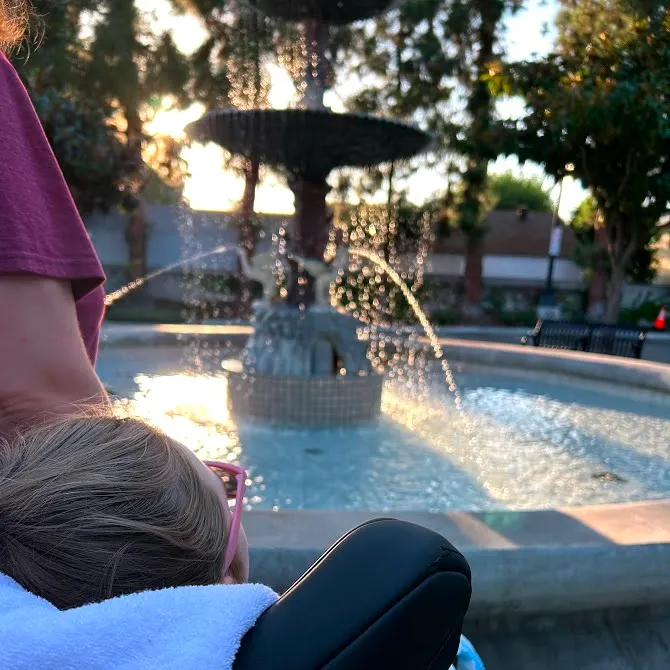
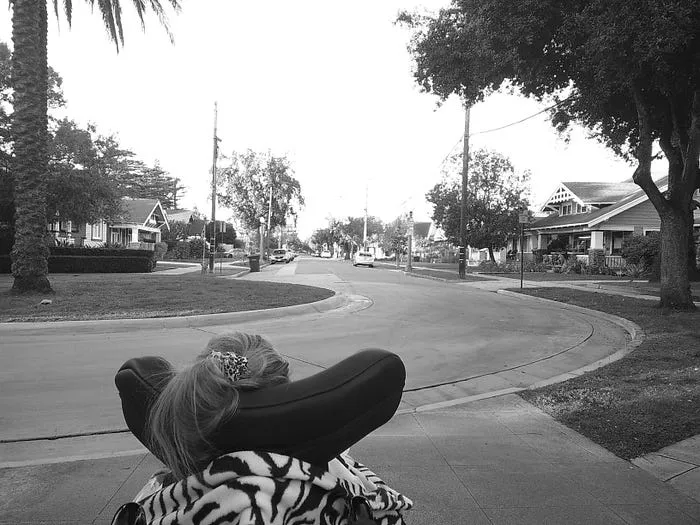
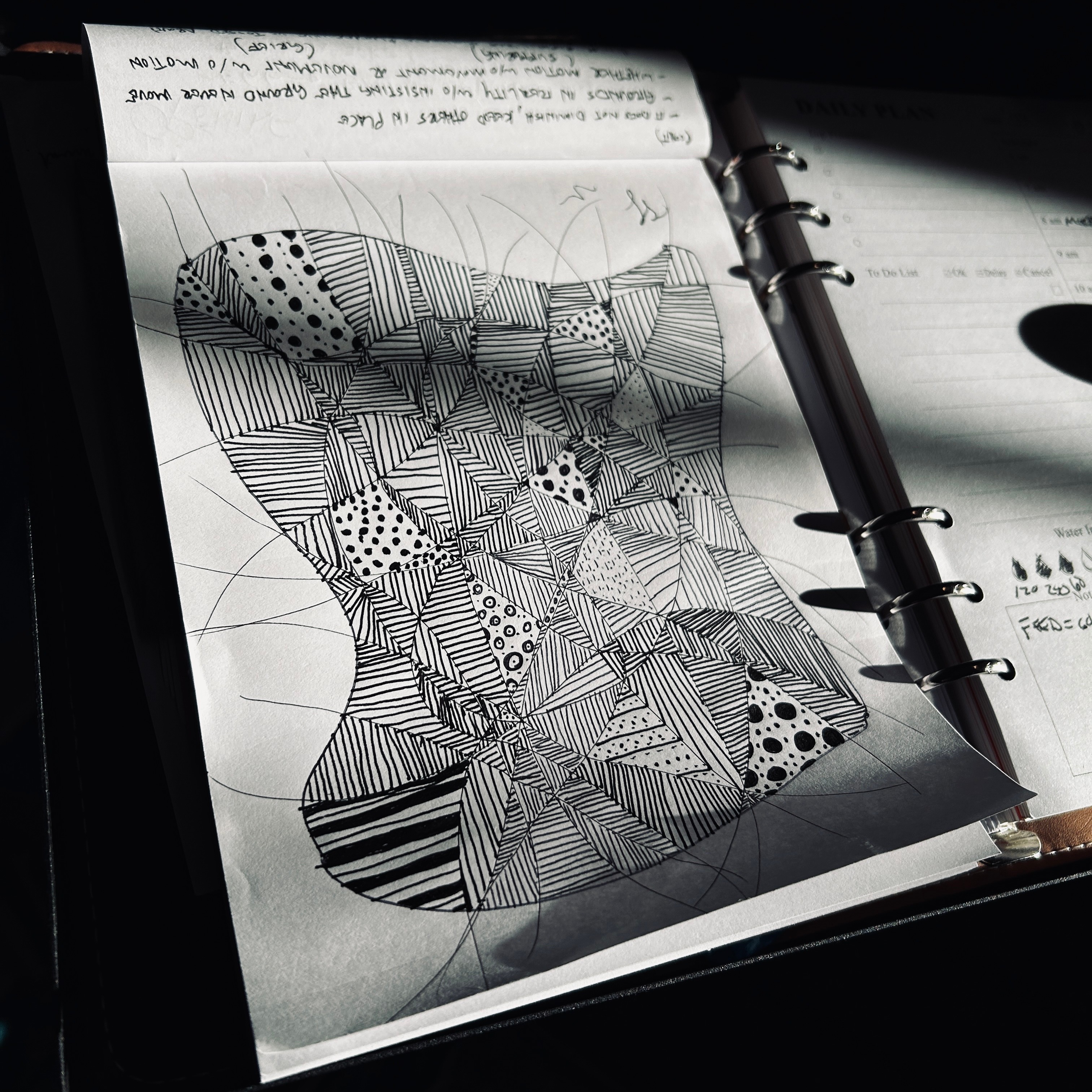
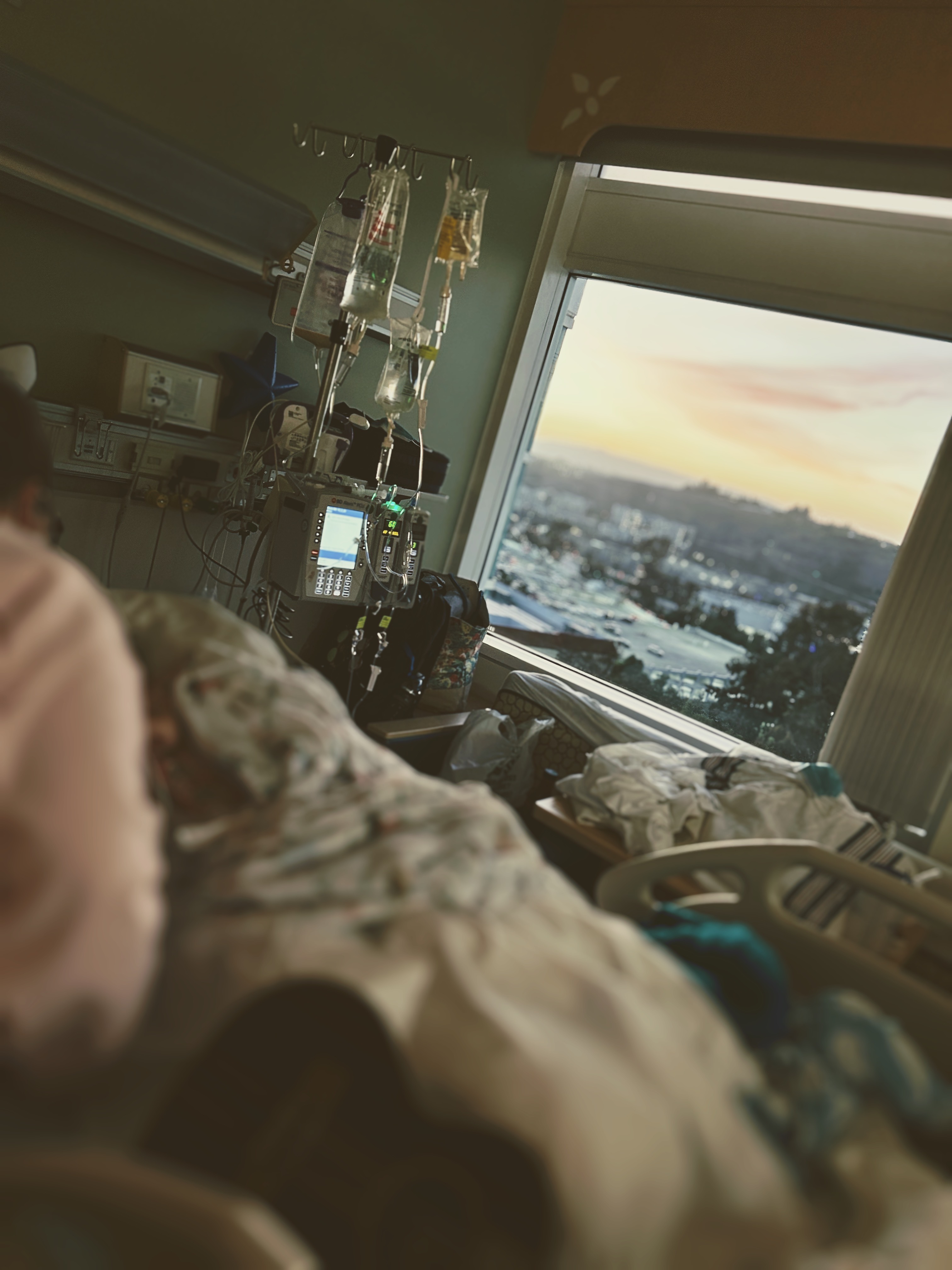
 Our Little Kartoffel