On the Fierce, Fragile Beauty of Lives That Defy Resolution
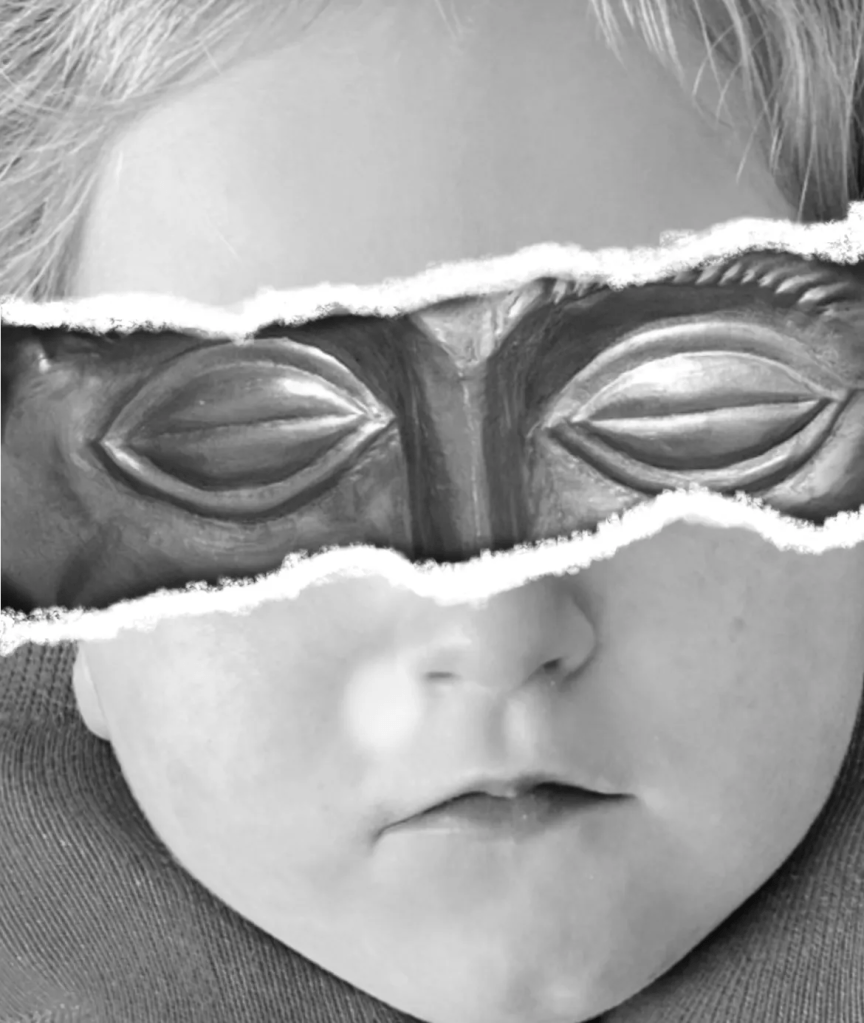
What if tragedy isn’t the opposite of dignity, but one of its deepest forms?
When I call my disabled daughter’s life a tragedy, I don’t mean it’s pitiable. I mean it’s vast. I mean it defies easy resolution. I mean it reveals something true about being alive: that we are fragile, that we suffer, and that this doesn’t make us any less worthy of love. In fact, it might be the very thing that binds us.
But “tragedy” is a word that makes people flinch. In disability discourse, it’s often seen as a slur, as something said by those who don’t understand, those who haven’t stayed up all night suctioning lungs or waiting out seizures. So we counter it with mantras: My child is not a tragedy. Our life is not a tragedy.
I understand the impulse. I’ve said those words too. They were my shield. My insistence that she was more than how the world saw her. And she is. But lately I’ve started to wonder: what if we lose something important when we throw the word away?
Literature has long given us another meaning of tragedy. Too often, we mistake the tragic for the sentimental. We want stories of suffering to leave us uplifted, we want catharsis without consequence. But this view turns pain into a kind of theater, something that performs for our edification. Especially now, when lives are streamed and suffering can be shared as content, we are trained to feel about pain without doing anything with it. We confuse feeling moved with being present. But real tragedy isn’t built to inspire. It’s built to hold what can’t be tied up. It’s not there to cleanse the spirit, but to stretch it. It asks more of us, not less.
Unbearable Insight
“How dreadful the knowledge of the truth can be
When there’s no help in truth.”
— Sophocles, Oedipus Rex
In Sophocles’ Oedipus Rex, the tragedy doesn’t hinge on weakness, but on knowledge. Oedipus is noble, capable, determined. But his relentless pursuit of truth leads him to unbearable revelation: that he himself is the source of the plague afflicting his city, that he has killed his father and married his mother. The horror is not in what he did, but in the moment he knows. Tragedy, here, is clarity. Not punishment, but insight. What if our children’s lives ask that of us too, to see clearly, even when it hurts? To witness the full scope of their experience, not just the parts that reassure us? Tragedy doesn’t come from weakness, but from the revelation of something uncontainable.
The Space Between
“I know indeed what evil I intend to do, but stronger than all my afterthoughts is my fury, fury that brings upon mortals the greatest evils.”
— Euripides, Medea
In Euripides’ Medea, tragedy emerges not from simple villainy, but from unbearable contradiction. Medea is both a grieving mother and a woman who commits the unthinkable. She is betrayed by Jason, abandoned in a foreign land, stripped of home and identity and yet, she is also the one who enacts vengeance so devastating it collapses the moral order. What makes Medea tragic is not just the horror of her actions, but that we feel her pain even as we recoil. She is victim and perpetrator, tender and terrifying, powerful and powerless. Her grief cannot be comfortably resolved. Euripides refuses us the moral simplicity of heroes and villains. Instead, he gives us a world of terrible beauty where suffering twists the soul and love becomes unbearable.
I think of this when people rush to frame my daughter’s life as either a story of resilience or a cautionary tale. These narratives, even when well-meaning, flatten her experience. They miss the way she lives in contradiction. She is utterly dependent, and yet full of presence. She cannot speak, yet expresses a will that shifts the mood of a room. Her body is fragile, and yet she has survived countless crises. Like Medea, her story resists tidy categories. And that resistance is precisely what makes it tragic. Not in the sense of despair, but in the sense of magnitude. She lives in the space between extremes. And she invites me to live there with her.
Stripped of Logic and Speech
“Never, never, never, never, never.”
— William Shakespeare, King Lear
In King Lear, tragedy unfolds through disillusionment. Lear, once a powerful king, demands public affirmations of love from his daughters. When the one who loves him most refuses to flatter him, he banishes her. Slowly, Lear is stripped of power, status, illusion. He goes mad. But in that madness, he begins to see the world as it truly is. He recognizes suffering, recognizes love. The heartbreaking image of Lear cradling Cordelia’s body is the climax of this recognition. “Never, never, never, never, never,” he says, holding her. No redemption, no lesson. Just loss, laid bare. When I hold my daughter during one of her seizures, knowing I can’t stop it, only be there, this is the Lear moment. Not hopelessness, but exposed love. Not weakness, but naked fidelity. Raw grief, stripped of logic and speech, mirrors my recognition of love within powerlessness, how nothing is resolved, and everything is still held.
A Haunting
“Definitions belong to the definers, not the defined.”
— Toni Morrison, Beloved
In Toni Morrison’s Beloved, tragedy lives in memory. Sethe, a formerly enslaved woman, is haunted—literally and emotionally—by the daughter she killed to spare her from being returned to slavery. Beloved returns as a ghost, as hunger, as ache. Morrison doesn’t sentimentalize this pain. She lets it haunt the reader as it haunts the characters. Sethe’s love is wild, desperate, impossible. There is no tidy moral, no healing arc. And yet, through this pain, Morrison gives us something sacred: a mother who refuses to let her child’s suffering be erased, even at the cost of her own peace. This, too, resonates. I don’t want to sanitize my daughter’s story. I don’t want to tell it only in hashtags and victories. I want to let it haunt, not as terror, but as truth. Not to terrify, but to make space for the full, uncontainable weight of her life. A haunting that resists closure, reminding me that some pain must be remembered, not packaged, and that haunting itself can be a form of care.
Monstrosity as Unacknowledged Pain
“I am malicious because I am miserable. Am I not shunned and hated by all mankind?”
— Mary Shelley, Frankenstein
Then there is Mary Shelley’s Frankenstein, a story so often misread as a simple horror. But Shelley’s monster is not monstrous by nature. He is sensitive, intelligent, and yearning. What he wants most is connection. What wounds him is rejection. He is denied community, denied kindness. The tragedy is not in his creation, but in his abandonment. And it is this abandonment—via the world’s refusal to witness his pain—that drives him toward rage. In some ways, this mirrors how the disability world is often treated: as either heroism or horror, with nothing in between. When we only show our children overcoming, we risk Frankenstein’s fate: we deny the reality of their rejection, their complexity, their unfulfilled needs. We fail to look directly at what the world refuses to hold. This reframing of monstrosity as unacknowledged pain, helps me draw the connection between the disabled body and the world’s refusal to face suffering without distortion.
Tragedy as a form of Sacred Clarity
“It is only as an aesthetic phenomenon that existence and the world are eternally justified.”
— Friedrich Nietzsche, The Birth of Tragedy
Finally, Nietzsche’s The Birth of Tragedy argues that true tragedy arises when the Apollonian (order, reason, form) and the Dionysian (chaos, passion, suffering) are held in tension. Our culture tends to prefer the Apollonian. We like order, progress, neat story arcs. But my daughter lives on the edge of the Dionysian. Her seizures, her pain, her unmeasured time, they defy form. And yet they are beautiful. Fierce. Sacred. Nietzsche believed that Greek tragedy, at its peak, didn’t resolve the world’s suffering; it revealed it, and found something sublime in the revelation. When I say her life is a tragedy, I mean it in this sense: it is not less than life as others live it. It is more. Too much for tidy narratives. Too much for order alone. Suffering doesn’t have to be overcome to be meaningful, that tragedy can be a form of sacred clarity.
Tragedy offered audiences not moral lessons or heroic victories, but a space where the full contradiction of existence with its beauty and cruelty, its vitality and decay, could be revealed and held. The tragic stage did not offer redemption. It offered recognition.
I think of this often as a parent. How quickly we reach for structure, for narrative coherence, for control that might shield us from what feels unbearable. Even in our resistance to the medical gaze that reduces our children to diagnoses, we may build new facades crafted not of charts and probabilities, but of positivity mantras and curated joy.
But our children do not live in tidy categories. They wail and tremble and laugh in the same hour. Their bodies resist the symmetry we’re taught to call health. Their lives, like all lives, are shaped by forces beyond their choosing. And still they are. Still they burn, brilliantly, if unevenly, and always gloriously.
When we use tragedy as a purgative, we distance ourselves. We declare a life “less than,” and feel good for noticing. But when we use tragedy as an affirmation, we join. We admit the pain not as evidence of inferiority but as part of the fabric of living.
So no, I don’t say her life is tragic because it is lesser.
I say it is tragic because it is bigger than what the world knows how to hold.
It is a life made of pain and joy, confusion and clarity, dependence and agency. It is not easily framed. It is not easily shared. But it is deeply and stubbornly real.
And maybe that’s what tragedy gives us: not a reason, not a resolution, but a place to stand when the world makes no sense. A form big enough to carry what cannot be fixed. My daughter’s story is not only an inspiration. It is not an emotional cleanse. It is not a platform. It is a tragedy in the oldest, deepest sense.
And I am here, in the wings, listening to her life ring out.
Just letting it echo.
Cheers,
[kartoffelvater]
Did this newsletter resonate with you? Reply with your thoughts or share your own story. And if you know someone who might need these words today, please forward this along.
Every bit of support helps and we appreciate it more than words can say!
 Our Little Kartoffel