It’s that time of year when the world gets very loud about a certain kind of love. The kind that comes wrapped in cellophane and tied with a perfect bow. It’s hard to ignore the sudden rush toward the bright and the polished. Things have been heavy and beautiful in equal measure lately, as they often are in our corner of the world, so it’s got me thinking about those of us whose devotion doesn’t fit on a greeting card. Those whose love is measured in milligrams, nightly vigils, and an endless calendar of choosing to be present. Before we get into it, I just wanted to check in and remind you that the “less than radiant” work you’re doing is the realest thing there is.
Love is the most dangerous and transformative act a human can commit.
Not the flashy kind you see in movies, but the real stuff, the kind that shakes you up and keeps you going when the days get long. The kind that doesn’t come with a bow on it, the kind we live every day with our children who don’t fit the world’s tidy little boxes. I’m thinking of the Kartoffel, her rare self, a constellation of quirks and seizures, and how loving her isn’t some oil painting you’d frame on the wall. It’s an obscured, muddy, fierce thing, rooted deep in the marrow of us parents and caregivers who know the drill of meds, waits, and the nights that stretch too long. This love doesn’t ask for an “I see you.” from others. It just is as it is. Solid as the earth, wild as a storm, and bigger than the whole sky.
We become practical souls, don’t we? We chart the hours, measure the doses, build small routines to keep the chaos from spilling over the lip of the day. You don’t always get to map out this path; but you can find who you are inside it, staying long after you might have chosen to leave. You stay without conviction, often without clarity, because leaving would cost more than you can afford.
In this narrow space, your attention undergoes a revolution. You stop chasing the shadows of who she might have been or tallying the milestones she won’t hit. Instead, you learn the discipline of the gaze—looking at who is actually in front of you, even when the picture refuses to come into focus. It is a steady, rhythmic “Here you are.” This isn’t a love that fixes or fills gaps; it is a love that makes enough room to breathe. Sometimes the breath is shallow, sometimes it’s borrowed, but through your fidelity, you realize you are no longer bracing for a change. You are simply remaining, attending to the human that just won’t let you go.
Mind you, it’s a reckoning too. Loving like this breaks you open, strips away the bits that crave a nod or a “well done.” You don’t ask, “What’s my reward?” because the question falls flat in the face of it. Let that go, and you’re not boxed in anymore, you’re spilling out, woven into them, part of a bigger dance. It’s an agony, sure, but a beautiful one. Our children feel it too, unshackled from the roles we might pin on them. They’re not here to prove anything, not to us or the world. We see them in their stumbles, their sparks and spasms and say,
“I’m here. You’re enough.”
This love doesn’t lift us out of it, does it? It takes the slog—the diapers, the chairs, the endless rounds with doctors—and refuses to let it become empty. I think of us, cradling tiny humans who might never toss a ball or whisper “thanks,” and the world shrugs, calls it a pity. But we know how little that word used that way explains. Stripped of the usual trappings, this bond binds us without promising that either of us will become more than we already are. A hand on a cheek, a shared silence, what remains when there’s nothing left to say.
This less than radiant but relentless love stays close to where the shadows pool. You stay when the seizures hit, when the news cuts, when you’re so weary you’d trade your soul for sleep. You’re close, unsteadily saying, “I’m here.” It’s raw, unglamorous, and it holds. Through the muck and the ache, it’s the thread that keeps our tapestry from falling apart.
So, what does it build, this love (is build even the right word)? Space. Not for us to mend, but space for the mending to take place should it arrive. It ties us to each other with a knot we must choose to keep retightening, hoping to outlast the days that would unravel us. In a life that can feel like a storm with no end, it plants meaning where the ground’s gone soft. And here’s the gift: it frees us all. They get to be, just as they are, even when others would keep the strings attached. We learn to carry the weight without feeling the guilt of not being enough. We love, and that’s the whole of it.
But this isn’t a solitary vigil. If you look closely at the architecture of this life, you’ll see the same light burning in windows across every zip code. We may be a ragtag crew of carers, but we are a community. Not because we share the same struggles, or the same diagnoses, or treatments, or anything else outside of us. We are a true community when we have agreed to love the same difficult, beautiful things.
We are bound together by what we have chosen to hold dear in the dark.
If we acknowledged that, and really saw the collective strength in our unsteadiness, the hard days wouldn’t vanish, but they’d carry a weight worth bearing. It would be a ripple that starts in the puddles of our own backyards and ends by shifting the world’s axis just a hair.
It’s not easy, I know. Takes everything you’ve got some days to live fuller, to hold closer, to brush against something bigger than the daily grind. It sees us peeling back the layers, starting fresh when we’re anything but, stretching past ourselves into the wild unknown.
So, do we keep at it? Let it shape us, our families, this life we’ve got?
Damn right we do. It’s a love that is ours to claim.
Always has been.
Until next time, stay safe, stay kind, and know that you are appreciated.
Cheers, [kartoffelvater]
Did this newsletter resonate with you? Reply with your thoughts or share your own story. And if you know someone who might need these words today, please forward this along.
We wouldn’t be here without you. Every bit of support helps and we appreciate it more than words can say!
I originally submitted this piece to Open Secrets Magazine. If you enjoy it (even if you don’t), please check them out for more.
The team came by during early morning rounds, when the hallway lights were still dimmed and the night shift was only halfway gone. Our daughter was hooked up to long-term EEG monitoring, her head a tangle of gauze and wires. We were all just looking at her, watching her sleep through this deafening silence. A cough echoed in from the hall and one of the staff closed our door. Closing a door in a hospital is its own kind of diagnosis.
The neurologist scrolled through the results on a tablet, paused, and said, almost conversationally, “Her background looks terrible.”
I said, “So you’re telling me she’ll never pass a DOJ screening.”
The doctor blinked.
“What?”
“You said she has a bad background,” I said. “That’s going to be a problem for a background check,” and then, dramatically hanging my head, “there go our hopes for her getting a job with security clearance.”
The silence returned. Not a heavy kind like before, more of a recalibration while our team tried to get back on script. The doctor looked down at the tablet. I looked at my daughter, whose fingers were curled over her thumb the way they always did when she slept, a habit that had survived every medication change. The feed pump chugged.
The doctor continued with the results.
A few beats passed.
Then she stopped, looked up again, and said, “Wait. Actually… that’s hilarious.”
This was not the first time I had made a joke like that. After that admission, she would sometimes tell me (always politely, always at the end of an encounter) that I was one of the funniest parents she knew. I would thank her and resist the urge to tell her that I suspected she said that to many parents, the way doctors say, “You’re doing a great job,” when what they really mean is, I see how little control you actually have here.
Many people use humor in awkward situations to smooth something over. Maybe a social misstep or some other embarrassment. Something to clear the air when it gets thick with discomfort, you reach instinctively for a joke the way you might crack a window. Sometimes that discomfort belongs to you. Sometimes it belongs to the room. Sometimes it’s shared, but unevenly distributed.
In other words, we joke because we feel guilty.
This isn’t going to be an exploration of guilt, so I’ll offer a working definition and move on: guilt is the uncomfortable certainty that we are not all we could have been, not all we should have been. When I joked about my child’s EEG looking like a criminal record, it was because I felt awful. Because as a parent, I had failed at the one job parents are not supposed to fail at—keeping their children safe, intact, progressing along the expected arc of things.
I was not all I could be.
I was not all I should be.
See? Guilt.
But in many of the situations where that guilt gets offloaded through often dry, sometimes morbid, occasionally maudlin humor I am almost immediately served a second course. The joke I used to manage the original guilt is followed by guilt about delivering the joke itself. Guilt for saying something so dark. For not bearing the moment properly. For not suffering well.
The joke collapses in on itself and becomes evidence of my lacking.
This, I think, is bound up with a widely held belief that is rarely stated outright. It is the belief that those who suffer are responsible not only for carrying their suffering, but for carrying it nobly. We praise the parent who remains gracious. We admire the ones who speak softly, who never seem sharp or strange or inappropriate. We tell stories about strength and resilience and grace under pressure, as though grief were a performance and composure the yardstick for measuring this danse macabre.
So when I make a joke to ease my own suffering, I fail that standard. I am reminded, again, that I am not all I could be. That I am not all I should be.
Double guilt.
And yet, it isn’t always guilt that fuels these jokes. Parents (and really, most people I’ve talked with) will tell you they joke in situations like this because it helps them cope. Because the weight of the moment is too heavy to carry straight on. Because burnout has stripped away the energy required for decorum. Because humor offers a brief exit ramp from a reality that feels otherwise inescapable. Or simply because this is the voice their life has trained them to speak in now. ‘You’re funny!’ ‘Thanks, it’s my trauma.’
All of these explanations are true in their own way. But all of them place humor as a reaction against crisis (or lysis in our case), as something that negates, distorts, or briefly erases what is happening. Humor as disappearance. Humor as denial. Humor as a way to step sideways out of the room.
I don’t think that’s the whole story.
I think humor can be something else entirely.
I think it can be one of the clearest expressions of Hope.
Shattering the Sacred
We often talk about the work of hope as if it were something always dignified. Grand. Upright. The kind of thing done with steady hands and a calm voice. Hope, in this telling, is clean with eyes forward, jaw set, doing what must be done without complaint. It is noble and, increasingly more important, it photographs well.
But more often than not, hope looks nothing like that.
More often, hope is clumsy. It slips. It misjudges the angle. It trips over its own good intentions. There is a slapstick quality to it that rarely makes it into the stories we tell afterward. A kind of physical comedy born of being too close to the ground to maintain any illusion of grace.
In a previous essay, I described hope not as wishing for water, but as digging a well. The metaphor has held up, mostly. But what I didn’t say then is how frequently that digging goes wrong. How often the shovel hits something unexpected. How often you strike not water, but a mess—an unmarked pipe, a bureaucratic fault line, a pocket of something foul-smelling and expensive to clean up.
The work of hope, in practice, is full of these moments. You set out to be what I called “love with its sleeves rolled up,” and end up soaked, muddy, apologizing to someone on the phone who keeps transferring you to another department. You fill out the wrong form. You miss the deadline. You bring the wrong supplies to the appointment. You do everything with sincerity and still manage to look ridiculous.
Humor is the controversial admission of this fact. It is the acknowledgment that sometimes, while digging the well of hope for our children, we don’t look brave, we look foolish. We get covered in literal or metaphorical filth. We stand back, stare at the hole we’ve made, and laugh. This is where humor begins to do something important.
Hope, when it appears in places like the PICU, or beside a hospice bed, or mid-conversation with a friend whose child will not stop seizing, is often treated as a solemn obligation. A sacred task. Something to be handled with hushed voices and appropriate reverence. We imagine hope as a kind of moral excellence, best embodied by marble statues of ancient philosophers or saints who have already passed through suffering and emerged polished on the other side.
But these lofty versions of hope miss its true location.
Hope does not live in the abstract. It does not hover above the room. It lives here, in the present moment, among IV poles and medication schedules and conversations that start with, “I’m sorry to tell you…” Humor brings hope back down to this level. It returns seriousness to the ground. A chuckle in the middle of a conversation about procedures doesn’t cheapen what’s being discussed but rather reanchors it. It reminds us that we are still here, still embodied, still subject to gravity and timing and bad coffee.
Humor, then, is not a distraction from the work. It is one of the ways we stay in the mud of this precious and precarious life without getting swallowed by it.
There is another way humor grounds us, one that matters just as much. It reminds us that our children are human.
Disabled children are too often rendered symbolic. They become aspirational angels or inspirational infants, regardless of their disposition or age. They are praised for enduring. They are held up as lessons. They are spoken about in tones that smooth over the roughness of actual personality. Humor disrupts this. A laugh, especially one shared and especially one the child participates in, cuts through the sentimentality. It insists on personhood.
A joke does not erase the seriousness of what our children face. It refuses, instead, to turn them into abstractions. It says: this is a human life, subject to boredom and annoyance and surprise and absurdity, no matter how long the discharge packet is. And all of us in this room with them are not above it, no matter how many hours of sleep you’ve lost or how long the alphabet soup is after your name on your lab coat.
And once the sterile sanctimony of caring for and being cared for has been shattered, hope can begin to do something else. It can become shareable.
Reality is no longer something observed from behind a two-way mirror, with others watching us bear it well. The glass breaks. Everything becomes face to face. And now begins a different kind of work. The work of knowing who to hand the shovel to, who can laugh with you at the mess, and who understands the joke not as a failure of reverence, but as an invitation into the work itself.
The Currency of the Dark Joke
Once the glass has broken and hope is no longer something performed behind a pane of observation we begin to notice something that was true all along: we were never alone in this. We are always involved in a world that is already happening and we are connected to the lives of people who are already inhabiting it. The moment you plant hope in your actual, present circumstances you have planted it in shared soil. It takes root not just in you, but in the network of relationships you are already tangled up in.
Hope, by its nature, is communal.
And if hope is communal, then humor is one of its currencies.
Jokes are exchanged the way money is. They are offered tentatively, slid across the table, sometimes pocketed, sometimes refused. They can be borrowed or stolen. They can inflate or lose value depending on the room. Some jokes buy you time. Some buy you trust. Some cost you more than you expected. Like any currency, they only work if there is some shared agreement about what they mean and what they’re for. This is where the so-called dark joke comes in.
The humor that emerges among parents of severely disabled or medically complex children is often raw. Unpolished. Seemingly inappropriate for the circumstances. It rarely announces itself with disclaimers or asks permission. It arrives shaped by exhaustion, proximity to loss, and a familiarity with the limits of good news. To an outsider, it can sound callous. To the wrong audience, it can land like a breach of etiquette.
But to the right one, it functions as a signal.
Someone who laughs at, or at least doesn’t recoil from, your deathbed joke is doing more than appreciating your wit. They are telling you, in a language older than words, that your credit is good here. That your money is accepted. That you are not going to be audited for impropriety. And sometimes, if they laugh back or add their own line, you even earn interest.
In this way, humor doesn’t merely decorate the community hope needs but helps form it. It establishes who can stand in the mud with you without pretending the mud isn’t there. Who understands that the joke is not a denial of seriousness, but proof of engagement. Who can roll their sleeves up alongside you without demanding that you first become someone more palatable.
This realization usually comes after a period of searching.
Boy, do we love a label.
One of the first things we did, like so many others, was go looking for our people by name. We typed our daughter’s diagnosis into search bars. We followed hashtags. We found groups and threads and accounts filled with people living parallel lives. And we did find people, some of the best people. Generous, knowledgeable, sincere.
But over time, it became clear that shared experience creates a category, not a community.
Diagnosis can tell you what happened to someone. It can’t tell you how they live inside it. It can’t tell you how they make meaning, or what keeps them steady, or where they locate hope when things refuse to improve. And one of the quickest ways to learn that difference, to discover who your people are and who, despite every overlap on paper, are not, is through humor.
Because humor does not generalize well.
A joke only works if it lands somewhere specific. It demands a shared orientation to the world. When it fails, it fails loudly. And when it succeeds, it does something more precise than sympathy or solidarity ever could. It tells you, unmistakably, that you are speaking the same language in the same room at the same time.
That, too, is hope at work.
A Particular Way of Knowing
Humor didn’t just tell me who my people were. It also told me who I was not.
I used to scroll. Page after page. Reel after reel. TikTok after TikTok. Parents with children carrying the same or adjacent diagnoses as my daughter making jokes to trending audio about ventilators, seizure meds, feeding tubes, hospital bags that never quite made it back to the closet. The comments would stack up beneath them: So relatable!THIS.I’ve never felt more seen.
And I wouldn’t get the joke.
It wasn’t offense or judgment. I wasn’t scandalized by the content or clutching pearls on behalf of seriousness. I simply didn’t get the joke. It passed over me cleanly, like a reference from a show I had never watched. Despite the overlap in ICD codes, despite the shared vocabulary of consults and procedures and acronyms that don’t translate well at dinner parties, I wasn’t the audience being addressed.
That moment of realizing that I wasn’t who the joke was for was clarifying in a way I hadn’t expected. Just as my humor signaled who was inside my circle, the humor of others let me know whether I was inside theirs. This wasn’t a moral judgment. I didn’t think those jokes were wrong, or shallow, or irresponsible. Many of the people making them were doing something generous: using humor to lighten the load for others who lived with similar rhythms and constraints. The fact that I didn’t laugh said far more about me than it did about them.
It meant my way of standing inside this life was different. And that difference mattered.
Because my humor—like my hope—was my humor. It was not interchangeable. It couldn’t be standardized or exported or scaled. It might be informed by abstractions or universal themes or the borrowed language of philosophy and science, but it was ultimately built out of the bricks of my own days. Out of the sounds of our home at night. Out of the way time stretched in our living room. Out of the particular weight of my daughter’s body when I lifted her, and the particular fear that accompanied loving someone whose life would never be predictable.
Hope that strayed too far from those particulars risked becoming something else entirely. A performance for others. A posture. A glittering wish that hovered above the lived-in world instead of taking responsibility for it. Humor functioned the same way. When it lost contact with the ground of experience, it stopped being a form of engagement and became something closer to noise.
That was the tension I kept running into online. Not a tension between optimism and realism, but between abstraction and embodiment.
Humor, I realized, wasn’t just expressive. It was epistemic.
It revealed what kind of knowledge someone trusted. Whether they knew this life from the inside or only from its outlines. Whether they were making sense of it through repetition and recognition, or through a sustained nearness to what refused to resolve. Neither was inherently better. But they were not the same. And they did not always speak to each other.
This was where responsibility entered the room.
Because you couldn’t force someone to understand a joke any more than you could force them to live your life. When their jokes didn’t land, or when mine landed with a thud, it gave me information about my orientation and my limits. About what I was trying to do with humor in the first place. I could ignore that information. I could harden into resentment or superiority. Or I could listen. But either way, I was choosing.
And once humor became something I tried to enforce—through repetition, through escalation, through the subtle pressure of come on, it’s funny—it stopped functioning as hope. It became coercive. The joke that had once opened space now demanded compliance. Laughter became proof of understanding. Silence became a failure of character. And I knew I didn’t want my humor to work like that.
I wanted it to remain a way of knowing that stayed accountable to the life I was actually living. One that acknowledged the darkness without trying to make it palatable. One that didn’t require everyone else to arrive where I was standing in order for me to keep standing there.
Not every joke was for me. And not every joke of mine would be for others. That wasn’t a problem to be solved. It was a fact to be respected. And learning to respect it, to let humor remain particular, situated, and freely received, turned out to be another way hope learned how to tell the truth.
The Laugh That Moves
Not every joke counts as hopeful.
This is not an argument for indiscriminate acceptance, for pretending that every attempt at humor deserves a charitable reading simply because life is hard. Hope is not passive. One of its essential features is movement. It leans forward. It refuses to leave things exactly where it found them. Humor that does not move its teller or its audience is not hopeful, no matter how loudly it insists on being received that way.
Some jokes are designed precisely to keep things in place.
They rely on stereotypes. On cruelty dressed up as honesty. On the familiar gravity of punching down and calling it realism. These jokes do not open space; they narrow it. They chain their targets to a single, distorted version of reality and invite the rest of the room to laugh at the containment. Nothing shifts. Nothing breathes. Whatever tension is released comes at the cost of someone else’s immobility.
That kind of humor mistakes stasis for truth and hope cannot live there.
Hopeful humor always works in the present tense of real life. For me it often uses the materials of missed sleep, bad coffee, long nights punctuated by alarms and numbers that matter more than they should. It does not require denial or distance. On the contrary, it insists on things ready at hand. But it also refuses to treat the present as a prison. It acknowledges reality without embalming it.
There is movement built into it. It moves us away from the static world of concepts to the real world, it moves within a community, it moves within myself.
Even in the hardest places, even for parents whose days are structured around constraints that do not loosen, hopeful humor carries this quality. It describes the journey without pretending the path is paved. It makes clear that feeling so well expressed by Seneca: Not much voyaging, but much being tossed about. The joke that works is the one that recognizes the tossing without insisting that this is all there will ever be. Or that the tossing itself is what defines my life in its entirety.
At its height, humor can lift you clean out of the muck. A well-timed laugh can interrupt grief mid-sentence, dry tears that have not yet decided what they are about. But the humor that sustains is rarely the kind that erases the present. It is the kind that moves you through it. It makes just enough room.
Enough room to see the hurt without becoming it. Enough room to hold what is heavy without dropping it on someone else. Enough room to step forward carrying the marks of what has been endured rather than pretending nothing has happened at all. When used, not to overwrite suffering nor to dwell forever in the dark, but to move forward without erasing what it has moved through—this is humor as hope.
The Last Laugh
Like a magician’s trick, humor does not survive being fully explained. The more insistently we pull it apart the less of it remains. Something essential disappears. Not because it was flimsy, but because it was never meant to be handled that way. Humor really works best while it is happening.
So this is not an exhaustive account of what humor does in the lives of caregivers. It is not a taxonomy. It is certainly not prescriptive. These are not rules for what you should laugh at or when or how. It is a series of observations, gathered in rooms where living and laughing and dying and crying exist in a way that abstraction can’t hold. What I am describing here is not about humor so much as it is spoken from inside it.
And from inside it, humor begins to look less like offloading guilt and more like commitment.
Because the humor I’ve been tracing is not passive. It does not float above suffering or wait politely for circumstances to improve. It shows up in the middle of what is unfinished and unresolved. In this way, humor expresses hope itself as an active, difficult choice to remain in motion.
Humor commits us to the present moment. It refuses the fantasy of distance. It uses what the body, the room, the mess, the timing, the people. A joke does not solve the problem. But it can open a path through it. It can shift a stalled conversation. It can turn observation into participation. It can make action possible where paralysis had been setting in.
Humor is also accountable. It demands attention to who is in the room, to what they carry, to what is being risked in the saying. In this way, humor trains a kind of radical responsibility. You don’t get to outsource it. You don’t get to hide behind intention. You offer the joke, and you live with what it does.
And because it must be received to exist at all, humor is irreducibly communal. It builds connection without flattening difference. It allows shared work without requiring identical lives. It gathers people around a solution-free orientation; around a way of standing inside uncertainty together, sleeves rolled up, eyes open.
And that, as I have come to understand it, is what hope actually looks like.
By keeping us here, together, and moveable, humor, like the hope it expresses, refuses to let suffering have the final word. Humor does not deny the darkness. It insists that even here there is still room to act, to respond, and to choose one another again, and again.
On the Fierce, Fragile Beauty of Lives That Defy Resolution
“Time, which sees all things, has found you out.” —Sophocles
What if tragedy isn’t the opposite of dignity, but one of its deepest forms?
When I call my disabled daughter’s life a tragedy, I don’t mean it’s pitiable. I mean it’s vast. I mean it defies easy resolution. I mean it reveals something true about being alive: that we are fragile, that we suffer, and that this doesn’t make us any less worthy of love. In fact, it might be the very thing that binds us.
But “tragedy” is a word that makes people flinch. In disability discourse, it’s often seen as a slur, as something said by those who don’t understand, those who haven’t stayed up all night suctioning lungs or waiting out seizures. So we counter it with mantras: My child is not a tragedy.Our life is not a tragedy.
I understand the impulse. I’ve said those words too. They were my shield. My insistence that she was more than how the world saw her. And she is. But lately I’ve started to wonder: what if we lose something important when we throw the word away?
Literature has long given us another meaning of tragedy. Too often, we mistake the tragic for the sentimental. We want stories of suffering to leave us uplifted, we want catharsis without consequence. But this view turns pain into a kind of theater, something that performs for our edification. Especially now, when lives are streamed and suffering can be shared as content, we are trained to feel about pain without doing anything with it. We confuse feeling moved with being present. But real tragedy isn’t built to inspire. It’s built to hold what can’t be tied up. It’s not there to cleanse the spirit, but to stretch it. It asks more of us, not less.
Unbearable Insight
“How dreadful the knowledge of the truth can be When there’s no help in truth.” — Sophocles, Oedipus Rex
In Sophocles’ Oedipus Rex, the tragedy doesn’t hinge on weakness, but on knowledge. Oedipus is noble, capable, determined. But his relentless pursuit of truth leads him to unbearable revelation: that he himself is the source of the plague afflicting his city, that he has killed his father and married his mother. The horror is not in what he did, but in the moment he knows. Tragedy, here, is clarity. Not punishment, but insight. What if our children’s lives ask that of us too, to see clearly, even when it hurts? To witness the full scope of their experience, not just the parts that reassure us? Tragedy doesn’t come from weakness, but from the revelation of something uncontainable.
The Space Between
“I know indeed what evil I intend to do, but stronger than all my afterthoughts is my fury, fury that brings upon mortals the greatest evils.”
— Euripides, Medea
In Euripides’ Medea, tragedy emerges not from simple villainy, but from unbearable contradiction. Medea is both a grieving mother and a woman who commits the unthinkable. She is betrayed by Jason, abandoned in a foreign land, stripped of home and identity and yet, she is also the one who enacts vengeance so devastating it collapses the moral order. What makes Medea tragic is not just the horror of her actions, but that we feel her pain even as we recoil. She is victim and perpetrator, tender and terrifying, powerful and powerless. Her grief cannot be comfortably resolved. Euripides refuses us the moral simplicity of heroes and villains. Instead, he gives us a world of terrible beauty where suffering twists the soul and love becomes unbearable.
I think of this when people rush to frame my daughter’s life as either a story of resilience or a cautionary tale. These narratives, even when well-meaning, flatten her experience. They miss the way she lives in contradiction. She is utterly dependent, and yet full of presence. She cannot speak, yet expresses a will that shifts the mood of a room. Her body is fragile, and yet she has survived countless crises. Like Medea, her story resists tidy categories. And that resistance is precisely what makes it tragic. Not in the sense of despair, but in the sense of magnitude. She lives in the space between extremes. And she invites me to live there with her.
Stripped of Logic and Speech
“Never, never, never, never, never.” — William Shakespeare, King Lear
In King Lear, tragedy unfolds through disillusionment. Lear, once a powerful king, demands public affirmations of love from his daughters. When the one who loves him most refuses to flatter him, he banishes her. Slowly, Lear is stripped of power, status, illusion. He goes mad. But in that madness, he begins to see the world as it truly is. He recognizes suffering, recognizes love. The heartbreaking image of Lear cradling Cordelia’s body is the climax of this recognition. “Never, never, never, never, never,” he says, holding her. No redemption, no lesson. Just loss, laid bare. When I hold my daughter during one of her seizures, knowing I can’t stop it, only be there, this is the Lear moment. Not hopelessness, but exposed love. Not weakness, but naked fidelity. Raw grief, stripped of logic and speech, mirrors my recognition of love within powerlessness, how nothing is resolved, and everything is still held.
A Haunting
“Definitions belong to the definers, not the defined.” — Toni Morrison, Beloved
In Toni Morrison’s Beloved, tragedy lives in memory. Sethe, a formerly enslaved woman, is haunted—literally and emotionally—by the daughter she killed to spare her from being returned to slavery. Beloved returns as a ghost, as hunger, as ache. Morrison doesn’t sentimentalize this pain. She lets it haunt the reader as it haunts the characters. Sethe’s love is wild, desperate, impossible. There is no tidy moral, no healing arc. And yet, through this pain, Morrison gives us something sacred: a mother who refuses to let her child’s suffering be erased, even at the cost of her own peace. This, too, resonates. I don’t want to sanitize my daughter’s story. I don’t want to tell it only in hashtags and victories. I want to let it haunt, not as terror, but as truth. Not to terrify, but to make space for the full, uncontainable weight of her life. A haunting that resists closure, reminding me that some pain must be remembered, not packaged, and that haunting itself can be a form of care.
Monstrosity as Unacknowledged Pain
“I am malicious because I am miserable. Am I not shunned and hated by all mankind?” — Mary Shelley, Frankenstein
Then there is Mary Shelley’s Frankenstein, a story so often misread as a simple horror. But Shelley’s monster is not monstrous by nature. He is sensitive, intelligent, and yearning. What he wants most is connection. What wounds him is rejection. He is denied community, denied kindness. The tragedy is not in his creation, but in his abandonment. And it is this abandonment—via the world’s refusal to witness his pain—that drives him toward rage. In some ways, this mirrors how the disability world is often treated: as either heroism or horror, with nothing in between. When we only show our children overcoming, we risk Frankenstein’s fate: we deny the reality of their rejection, their complexity, their unfulfilled needs. We fail to look directly at what the world refuses to hold. This reframing of monstrosity as unacknowledged pain, helps me draw the connection between the disabled body and the world’s refusal to face suffering without distortion.
Tragedy as a form of Sacred Clarity
“It is only as an aesthetic phenomenon that existence and the world are eternally justified.” — Friedrich Nietzsche, The Birth of Tragedy
Finally, Nietzsche’s The Birth of Tragedy argues that true tragedy arises when the Apollonian (order, reason, form) and the Dionysian (chaos, passion, suffering) are held in tension. Our culture tends to prefer the Apollonian. We like order, progress, neat story arcs. But my daughter lives on the edge of the Dionysian. Her seizures, her pain, her unmeasured time, they defy form. And yet they are beautiful. Fierce. Sacred. Nietzsche believed that Greek tragedy, at its peak, didn’t resolve the world’s suffering; it revealed it, and found something sublime in the revelation. When I say her life is a tragedy, I mean it in this sense: it is not less than life as others live it. It is more. Too much for tidy narratives. Too much for order alone. Suffering doesn’t have to be overcome to be meaningful, that tragedy can be a form of sacred clarity.
Tragedy offered audiences not moral lessons or heroic victories, but a space where the full contradiction of existence with its beauty and cruelty, its vitality and decay, could be revealed and held. The tragic stage did not offer redemption. It offered recognition.
I think of this often as a parent. How quickly we reach for structure, for narrative coherence, for control that might shield us from what feels unbearable. Even in our resistance to the medical gaze that reduces our children to diagnoses, we may build new facades crafted not of charts and probabilities, but of positivity mantras and curated joy.
But our children do not live in tidy categories. They wail and tremble and laugh in the same hour. Their bodies resist the symmetry we’re taught to call health. Their lives, like all lives, are shaped by forces beyond their choosing. And still they are. Still they burn, brilliantly, if unevenly, and always gloriously.
When we use tragedy as a purgative, we distance ourselves. We declare a life “less than,” and feel good for noticing. But when we use tragedy as an affirmation, we join. We admit the pain not as evidence of inferiority but as part of the fabric of living.
So no, I don’t say her life is tragic because it is lesser.
I say it is tragic because it is bigger than what the world knows how to hold.
It is a life made of pain and joy, confusion and clarity, dependence and agency. It is not easily framed. It is not easily shared. But it is deeply and stubbornly real.
And maybe that’s what tragedy gives us: not a reason, not a resolution, but a place to stand when the world makes no sense. A form big enough to carry what cannot be fixed. My daughter’s story is not only an inspiration. It is not an emotional cleanse. It is not a platform. It is a tragedy in the oldest, deepest sense.
And I am here, in the wings, listening to her life ring out.
Just letting it echo.
Cheers,
[kartoffelvater]
Did this newsletter resonate with you? Reply with your thoughts or share your own story. And if you know someone who might need these words today, please forward this along.
Every bit of support helps and we appreciate it more than words can say!
(One of the many) Complicated Truths of Disability Parenting
I reluctantly welcome the dawn.
I am unsure whether facing the day would be easier than surviving the night. I watch it leaning over our kitchen sink while waiting for the kettle to boil, thinking about contradictions. How the same sky can hold both storm and sunbreak. How we can feel both crushed and lifted by the same moment. These tensions have been my quiet companions lately, teaching me that truth rarely arrives in neatly labeled packages.
In about a month we will come up to our Pachyversary1 and so one of those tensions that have filled my mind recently is that surrounding tragedy.
When Positivity Becomes Another Cage
I used to post photographs of my daughter’s hospital stays with uplifting captions. I documented her medical procedures and framed them as challenges to overcome, moments of strength. I became fluent in the language of using whatever term was currently accepted as the term that might finally release our children from judgment.2 These terms became amulets against the darkness, against judgment, against what I feared to feel.
What I never posted: her face contorted in pain that medication couldn’t touch. The way certain procedures made her body rigid with fear, eyes searching mine with questions I couldn’t answer. The medical trauma that doesn’t resolve into neat narratives of overcoming.
It took years to understand that in my fight against a world that too easily dismisses disabled lives, I had become another system of control, one that policed how my daughter’s life could be perceived, even by me.
By resisting ever viewing her life as a tragedy I had inadvertently reduced her in another way, by denying the profound reality of her suffering alongside her joy.
This is the paradox many of us navigate as parents of disabled children. We can become the very forces we’re fighting against. In our desperate love and advocacy, we sometimes create new constraints around our children’s full humanity.
What if we let our children’s lives be tragic, not to pity them, but to see them fully?
The Digital Performance of Joy
Scroll through any disability parenting forum, and you’ll see them—the mantras we whisper to ourselves and shout to the virtual world:
“My child is not a burden.”
“I choose joy.”
“We wouldn’t change a thing.”
“Our life is not a tragedy.“
These phrases appear beneath hospital bed photos adorned with fairy lights, alongside videos of therapy breakthroughs, beneath milestones celebrated months or years later than expected. They are both shield and declaration.
I understand why we reach for these words. They were born of necessity, crafted in response to generations of exclusion. They emerged from institutional hallways where children were hidden away, from genetic counseling sessions heavy with assumption, from playground sidelines where stares lingered too long.
The digital landscape has amplified these voices of resistance. Instagram accounts showcase smiling children with feeding tubes decorated in whimsical patterns. Facebook groups celebrate adaptive equipment as extensions of personhood. TikTok videos set medical appointments to upbeat music.
But beneath these sunlit stories, the shadows still pool. In private messages and quiet conversations, we sometimes confess the parts that don’t fit neatly into our public testimonies. The marriage straining under the weight of the decisions we have to make. The sibling who feels perpetually overlooked. The early morning moment when pain can’t be soothed and we find ourselves on the bathroom floor weeping from exhaustion.
And yet even when we do share difficult moments, I’ve noticed they’re almost always framed: “The hard days make the good days worth it.” “Without the dark there would be no light.”
In these formulations, suffering is permissible, but only as a means to joy.
This asymmetry reveals that maybe we’ve internalized the very framework we’re fighting against. When suffering can only exist in relation to joy, but joy needs no such relationship to suffering, we inadvertently reinforce the idea that our children’s lives are fundamentally tragic unless actively redeemed.
To be clear: the resistance remains vital. The world still needs reminding that disability does not negate personhood, worth, or quality of life. But perhaps there is room for a more expansive truth, one that doesn’t require us to choose between tragedy and triumph, between acknowledging suffering and celebrating joy.
And perhaps we can look to our children themselves, who so often inhabit this paradox with more grace than we do. They live what what we sometimes forget—that acknowledging pain doesn’t diminish the capacity for joy, that suffering and meaning can occupy the same space.
Finding Wisdom in Tragedy
There’s research I encountered years ago, and used frequently in my practice, long before I became a father. Studies showed that positive affirmations like “I’m a good person!” work wonderfully…just as long as we don’t actually need them. The cruel irony is that when we truly need affirmation, when we’re genuinely struggling with negative feelings about ourselves, these forced positive statements can actually make us feel and function worse.3 The research suggests that if the purpose of any coping strategy is to avoid feeling a challenging emotion or thinking an upsetting thought, to wipe out a painful memory or look away from a difficult circumstance, in the long run, the results will very likely be poor. In fact, these coping strategies have been shown to actually trigger the very negative emotions they are trying to inhibit!
I see this dynamic play out in disability parenting circles. Mantras such as “Our life is not a tragedy,” and “We wouldn’t change a thing,” function beautifully when we’re already feeling (at least mostly) secure in our choices and circumstances. But when we’re drowning in medical debt, when our relationships are strained to breaking, when we haven’t slept more than two consecutive hours in months, these statements can become another burden, another standard against which we measure ourselves and find ourselves wanting.4
Psychological rigidity (that desperate clinging to a single narrative) predicts anxiety, depression, trauma responses, and numerous other struggles.5 It undermines our ability to learn, to connect, and to adapt to changing circumstances. Research has shown that people who allow themselves to fully experience horror during traumatic events often develop less severe trauma symptoms than those determined not to be horrified by the same experience. There’s something about allowing the full truth of our experience—whatever it is—that creates resilience, not in spite of acknowledging difficulty, but because of it.
I wonder sometimes if our disability parenting community’s positivity mantras, though born of necessary resistance, might function similarly. There isn’t direct research on this specific phenomenon, but the parallels are compelling. When we insist “This isn’t tragic” in moments that contain genuine tragedy, are we creating the very psychological rigidity that makes us more vulnerable, not less? When we rush to frame every obstacle as a blessing6 in disguise, are we inadvertently telling our children that their suffering must be justified to be acknowledged?
People who experience suffering as a result of their child—whether disabled or not—often feel guilty for naming it as such. Over time, that guilt calcifies into shame, as if acknowledging their own suffering somehow diminishes their love.
To say “this hurts” feels dangerously close to saying “I wish my child were different.”
But being open to the tragic vision isn’t choosing suffering over joy. It is the recognition that you can love your child regardless of whether the result is suffering or joy.7
Embracing the Tragic Vision
There was a day last summer when my daughter was admitted to the hospital for the third time in two months, I sat in the impossibly heavy vinyl chair, held her hand through the side rails, and allowed myself to think: This is not what I wanted for her. This suffering serves no purpose. This is, in some fundamental way, tragic.
And something shifted. In allowing the tragic to exist without transformation, I saw my daughter more clearly than I had in the endless years of positive reframing. I saw her not as a symbolof resilience or as a challenge to the system, but as herself, as a person experiencing something difficult without narrative obligation. Of course, she is resilient, and she does challenge the system, but through no insistence of mine.
This is what Nietzsche8 understood about tragedy that we sometimes forget: it doesn’t reduce the human to a single dimension of suffering. Rather, it expands our vision to include the full spectrum of experience without hierarchy, without insisting that one aspect justify or redeem another.
There is liberation in this kind of seeing. When I allow space for the tragic alongside joy, I free myself from the exhausting work of this constant reframing.
I free my daughter from being the protagonist of an inspiration narrative she never consented to.
Last November, we went to the beach. One of her favorite places despite the sensory challenges. The day held everything: moments when the texture of sand caused distress, moments when the sound of waves made her body rigid with tension. It also held moments of pure delight with her face breaking into unguarded joy as the sea breeze kissed her cheeks.
In one particular moment she was lingering between laughing and crying, her eyes welling with tears even as her mouth curves upward. I didn’t take a photo of it. Its message would get misconstrued on an inspiration page. It doesn’t tell a clean story.
But it tells a true one. In that complex and contradictory truth, a truth stubbornly resistant to simple narratives, I find something far more valuable than comfort.
I find my daughter, complete.
I’m not intending to deny joy its own place, but the inspirational joy narrative has enough voices championing it. I’m also not trying to romanticize suffering. I don’t think we need to love our suffering but rather more fully love those that are suffering.
The tragic vision offers us a widening of perspective. Not a surrender to darkness, but a more honest relationship with light. It offers the possibility that we might love our children not despite the full complexity of their lives, but because of it.
It’s not that joy and suffering can coexist because you’ve decided to let them, it’s that they already do coexist and all you have to decide is whether you’re willing to stop sacrificing one trying to chase the other.
Cheers,
[kartoffelvater]
Did this newsletter resonate with you? Reply with your thoughts or share your own story. And if you know someone who might need these words today, please forward this along.
Every bit of support helps and we appreciate it more than words can say!
This is what we call the date she received her diagnosis. It’s a cute name we give to one of our darker moments in the hopes that it will make the memories easier to live through. It’s doesn’t really work. ↩︎
The storied history of what society calls its disabled members is long, cyclical, often cruel, and absolutely not going to be explained in the footnote of a newsletter. The search for and inevitable enforcement of the ‘right’ term is often more tragic than the term itself and speaks to the heart of the Apollonian/Dionysian conflict that I touch on in this post, which will also absolutely not be able to explain in a footnote. You’ll just have to read the book when it comes out. ↩︎
That pit you get in your stomach when you realize you haven’t seen a parenting friend in your feed for a while is something unique to the disability community. I know because I’ve asked. Every time I’ve asked someone outside of the community what they think when they haven’t seen a lot of activity from a friend on social media the response is something along the lines of, “They’re just taking a break,” “They’re working on themselves,” or some other indicator that they are otherwise not worried about them. When I ask the same thing of other parents of medically complex kiddos the response is always, “Something’s wrong.” ↩︎
There are quite literally tens of thousands of articles published about this, with more being published every week. If you are curious (or skeptical!) I suggest searching “psychological flexibility” or “experiential avoidance” or “acceptance and commitment”. Here’s one you can read for free from just a few years ago that shows a balanced approach. ↩︎
It’s ‘The obstacle is the way,’ not ‘The obstacle is a blessing.’ StoicBros come at me. No, really, I’d love to discuss. ↩︎
Quiet shout out to those who, while wishing to remain anonymous, have lent me their eyes and ears while writing on this sensitive topic. ↩︎
This was originally a much longer essay with an entire section dedicated to historical and literary understandings of ‘tragedy’ with particular interest in Nietzsche’s The Birth of Tragedy and how it contrasted with Aristotle’s Poetics in our understanding of the function of tragic art, see footnote 2. I’ve been listening to y’all though and the feedback is telling me these newsletters are already too long. If you’d still like it I can make it a separate post, or again, you’ll have to wait for the book (this might not make it until the second book though). ↩︎
Finding connection through stained fingers and feeding tubes
Thank you for coming back, or for finding your way here for the first time. However you arrived—I’m so glad you’re here.
This was originally published in The Memoirist, my Medium friends can read this story over there as well.
I thought it was blood at first.
But the most vibrant kind of blood I had ever seen. Then I remembered what we were feeding the Kartoffel.
There is a particular shade of magenta that exists nowhere else in the world but on the fingers that have just fed a baby puréed beets. It’s the color of effort and mess and nourishment all at once. A stain that announces itself with all the verve we had even then come to expect from her. One that refuses to be scrubbed away easily. Some days, I would wear this color for hours, having been unable to immediately wash my hands in the small chaos that follows feeding time.
The beets would stain her lips too, leaving a perfect ring of fuchsia around her mouth like some avant-garde lipstick experiment. Sometimes they’d stain her chin, her bib, shirt, shorts, socks, the walls… Once, a droplet landed on her eyelid when she turned suddenly, giving her the appearance of having applied the world’s tiniest dot of eyeshadow. I chuckled quietly while she gazed at me with disapproving eyes.
There is intimacy in the way feeding connects two people through substance and sustenance. Her hunger and my response. My offering and her reception. The stains on both our skins telling a story of nourishment exchanged.
The Origin of Kartoffel
We called her Kartoffel before we knew there would be words like “hypotonia” and “global developmental delay.” Before geneticists and neurologists and a host of other –ists entered our home with the force of unwanted visitors who nonetheless must be graciously hosted.1
Kartoffel. Our little potato. Round and soft and warm in those early months, with her cheeks like small pillows and her arms folded close to her chest. There was something so satisfyingly whole about her presence, so complete in her potato-ness. The nickname arrived without much thought, first as a joke, then as a term of endearment whispered against her fontanelle while she slept.
“Ich liebe dich, meine kleine Süßkartoffel,” I would say lifting her to my face in the mornings:
I love you, my little sweet potato.
But the more I used it the more it fit. Potato:
humble root vegetable
nourishing staple
thing that grows quietly underground before being unearthed
Thing that transforms with proper tending
Thing that persists.
Plus I find all of the potato-based nicknames cute so it’s a win all around.2 She was a potato before she was a patient. This matters somehow, though I can’t always articulate why. Perhaps because the nickname carved out a space that belonged only to us, a designation that had nothing to do with medical necessity and everything to do with simple, absurd affection.
Nicknames are curious things. They circumvent official documentation. They refuse clinical precision. They name not the thing itself but the relationship to the thing, the way a person is perceived through the lens of love. It’s something that undeniably refers to her and yet we’ll never see it in a chart or billing sheet. That’s special.
The Rhythm of Nourishment
Feeding her was never simple, even before the tube.3 There was always a negotiation happening between her body’s capabilities and her hunger, between our desire to nourish and her ability to receive. But there was joy there, too, in the success of a mealtime where more food went in than came back out. She so loved eating that it was usually our first sign that something was off when she wasn’t enthusiastic about it. Either way it was a sometimes serious, sometimes silly, always sacred thing that I got to do with her.
The rhythm of it became almost hypnotic. Spoon, mouth, wipe, wait. Spoon, mouth, wipe, wait. Something between a poem and slapstick comedy. Sometimes I would find myself swaying slightly as we sat together, as if keeping time to music only we could hear.
There are moments in feeding a child when you forget yourself completely. When your attention narrows to just this path of nourishment from bowl to spoon to mouth. When her enjoyment becomes your only metric for success. I took too long in between bites once and she shouted, as if announcing my incompetence to the room, then she eagerly leaned forward for more. In such moments, I too was fed.
Feeding becomes a conversation without language. Her eyes said yes. Her tongue played translator between the world of flavor and the world of feeling. Her hands conducted an orchestra of enthusiasm or refusal. We developed our own dialect of joy spoken in the language of slipped spoons and nodding into purees.
The change in how joy must be read came with the silence of the feeding tube.
We held off on getting the g-tube for years. We were determined that if we just did enough of the right therapy, adjusted the medications just so, and really really really4 wanted her to, she would keep her ability to eat by mouth. But it was taking her hours to finish a few meager ounces, we were exhausted, she choked more than she swallowed, and I have never had a great interest in performing the Heimlich maneuver. She would get the tube.
I wept.5 Not in front of her, but later, in the shower where crying feels less consequential somehow. It felt like an admission of defeat, though I knew, rationally, it was anything but. It was, in fact, a victory of sorts. We had found another way to give her food and water and medication when the conventional route proved too difficult and too dangerous.
Yet the intimacy remained, transmuted into new forms. I found myself still talking through meals, still watching her face for signs of satisfaction or discomfort. And we developed new rituals. Venting her upon connection and listening for ‘tummy toots,’ her coughing at just the right moment to shoot stomach fluid into my face, and sometimes I would taste the purées myself, then kiss her cheeks so she could smell the food on my breath.
I hate beets. Always have. But this is what love looks like to me: becoming the beet-breathed bridge between your child and the experience they cannot access directly. Love is not a spontaneous gift, it doesn’t just happen and its not something you just can’t help but feel. It is intentional. It does not lift us out of our messy imperfect every day life. It digs us further in. Roots us. Covers us in beets.
The Geography of Care
There is a peculiar geography to caring for a medically complex child. The landscape is your child’s body, and you must learn its contours with a precision that feels almost invasive. You become a cartographer of breaths and seizures, of bowel movements and skin breakdowns, of the subtle shift in muscle tone that signals distress before any sound emerges.
The closeness that caregiving demands collapses all traditional boundaries. I know the exact sound of her swallow. I can distinguish between three different types of mucus and maybe twice as many types of poop. I can feel, with my fingertips, the precise spot on her skull where discomfort radiates when her hair is too tight.
This proximity is both strange and holy. Strange because it defies all normal parameters of relationship, even those between most parents and children. Holy because it consecrates the mundane tasks of care. Suctioning becomes sacred, bathing becomes a blessing, repositioning becomes reverence.
She knows my hands more than my voice
This realization came to me one night as I adjusted her sleeping position for perhaps the fifth time. Her body responded to my touch without waking, shifting subtly to accommodate my guidance.
The clinical narrative attempts to capture her in terms of deficits and diagnoses. But there is another story, told in nicknames and jokes and food stains. This counter-narrative reminds us that she also:
communicates displeasure with remarkable clarity and precision for someone without words (usually directed at me)
I have learned to read her without words. Without typical cries. Without the usual landmarks of development that guide most parents. Instead, I read micro-expressions, the tension in shoulders, the pattern of eye movements. This, too, is a form of literacy.
Colors of Memory
Recently she wore a shirt the exact color of beets. I didn’t choose it for this reason it was simply what was clean and weather-appropriate, but when I saw her in it, reflected in the car window as we packed up for therapy, the symmetry struck me. The deep magenta fabric against her pale skin, like those stained lips from years ago.
Sometimes memory arrives not as story but as color, as sense-echo from a previous version of your life. The shirt reminded me of all those feeding sessions, all those stained fingers, all those moments of connection through nourishment. All of those thousands of hours of pleading with her, myself, and the Choir Invisible that she would be able to swallow just one more bite.
Last semester, I found a smudge of something purple on my sleeve after work. For a brief, disorienting moment, I thought it was beet purée from years ago, somehow preserved in fabric despite countless washings. It was actually ink from a leaky pen7 but the momentary confusion created a wrinkle in time where past and present overlapped.
I’ve had dreams where she’s chewing. Ordinary dreams where we sit at a table and she eats pizza or apples or birthday cake. I always wake from these with a complicated feeling. Not quite sadness, not quite longing, but a peculiar awareness of parallel lives, of what might have been alongside what is.
In the world we actually inhabit, I say “Kartoffel” and she turns her head toward the sound. Not every time, her responses fluctuate with her energy and how much I’ve pissed her off that day, but often enough that it feels like recognition. The nickname has roots. So does she.
There is an argument to be made that all intimacy involves some sort of loss. The loss of separateness, the loss of certain freedoms, the loss of who you thought you might be before this love arrived. But intimacy is also about what persists and reshapes itself around new realities. It’s about finding connection within the limitations, in the creative adaptations they demand.
I used to feed her beets with a spoon. Now I feed her formula through a tube. But still, every day, she eats something of me. My attention. My care. My continuous presence. And I, in turn, am filled by her existence—by the way she has expanded my understanding of what it means to communicate, to adapt, and to love.
The beet stains linger, just like the nickname. Neither was part of the plan. Both are part of the story.
Cheers,
[kartoffelvater]
I hope you enjoyed this post. Don’t forget to check out the original article over at The Memoirist, a fantastic resource for exploring the creative stories unpacked from the nostalgic hope chests of our lives. Be sure to visit them!
Did this newsletter resonate with you? Reply with your thoughts or share your own story. And if you know someone who might need these words today, please forward this along.
We wouldn’t be here without you. Every bit of support helps and we appreciate it more than words can say!
Something I think about often is just how much our ‘circle’ has grown with professionals. Growing up there was only 1 or 2 people who had become ‘part of the family’ that weren’t life-long friends of my parents or neighbors (I feel particularly lucky that I have always had the most excellent neighbors, even to this day). But with the Kartoffel, there are so many doctors, nurses, therapists, administrators, you name it, who aren’t just ‘part of her care team’ they have become closer to us than some actual family members. Hmm, definitely want to write more about this… ↩︎
Tater, Tater Tot, Tot, Tatie, Tottie, Murph, Murphy, Spud, Spuddy, Spuddy Buddy, Spudnik, Tuber, Mash, Petite Patate, Chip, Couch Potato, Hot Potato, Sweet Potato, Fry, Small Fry, Salty Fry, Crinkle Fry, Soggy Fry, Russet, Red, The Great Yukon, Yukon-Do It, Yukonovich, Idaho, Pomme…we are accepting more if you have them please email us. ↩︎
Not the time for it, but our post-natal care was…subpar…and part of that was due to the lackluster support around feeding the Kartoffel which resulted in our OB-GYN yelling at the staff in the hall for taking such terrible care of us. With this, and one other, exception we have had absolutely excellent nurses. I’m not a yeller, and normally don’t condone it, but whew, when a medical professional full-throatedly yells at other professionals to be better humans and care for patients as people not just numbers on a chart, it is a thing to behold. ↩︎
Hope so often finds itself adrift between fantasy and despair and in so doing we end up mistaking desire for determination. ↩︎
I do, and have over the years done, this a lot. So much, in fact, that my eyes have developed a condition where they do not produce their own oil anymore. When I saw my ophthalmologist about it she said, “Sometimes this can happen if you cry a lot. Have you had reason to be crying much these past years?” She obviously was not familiar with my work, aka the work of love that it is to have a child like the Kartoffel. I find myself blinking more frequently than normal and also find particles stuck in my eyes often. But what am I going to do, cry about it? It wouldn’t help even if I did. But also, yes I still weep, frequently. ↩︎
If there is one thing she has been blessed with an abundance of it is uncles who are rowdy, raucous, and entirely devoted to her. Very few things on Earth get her happy attention more than her uncles, and I’m not sure who loves who more. ↩︎
I enjoy the actual act of writing, not just the spirit of it, alas my penmanship is far outstripped by the quality of who I write about most often. I compensate by buying pens and notebooks and leaving pens in pockets and am rewarded by frequent leaks from said pens. ↩︎
On loving a child who exists outside the margins of medical documentation
Hallo Kartoffelkumpel,
There’s a flamingo-covered notebook sitting on my shelf. You might have seen it if you’ve been to our house, its spine cracked, tabs sticking out, surface scratched from countless journeys into doctors’ offices and therapy sessions. It contains the “official” story of the Kartoffel: diagnoses typed in sterile fonts, test results graphed in black and white, medication schedules in neat columns.
Pages of acronyms and numbers that claim to map the terrain of her existence. But this notebook, with all its information, is only a fragment. A map that leaves out the rivers, the forests, the sky.
A map that misses the wonder of her.
The Invisible Cartography of Care
I’ve memorized every page of this notebook, can flip through it in my mind during those quiet nights when the house is silent except for the constant companion that is her feeding pump. Each page is a frozen moment. A neurologist’s scribble here, a list of questions to ask for next visit there, a therapist’s home program taped to the back, hospital discharge summaries folded roughly between pages, ID bracelets from past stays that we use as bookmarks.
These pages don’t just contain words, they contain entire rooms. Fluorescent lights buzzing overhead. The antiseptic smell clinging to clothes. The Kartoffel’s small body on examination tables while voices discuss her as if she were a puzzle to be solved1.
The notebook is necessary, indispensable even, but it is not her. It does not record the sound of her laugh, a soft gurgle that bubbles up when I tickle her foot. It does not chart the way her eyes, deep and searching, seem to hold a question no one can answer. It does not measure the weight of her head against my shoulder, or the rhythm of her dreams.
What is a diagnosis, anyway? A word, a category, a shorthand for something vast and unknowable. Pachygyria: a brain that folded too smoothly in the womb, its ridges and valleys too few. Lennox–Gastaut: a cacophony of storms that surge without warning. Quadriplegia: a body that does not move as the world expects. A plethora of others. These are truths, but they are not the whole truth. They are like leaves that have drifted down into a pond, sending ripples outward but never touching the depths.
Living in the Gap
There is an existential ache in this gap between the notebook and the truth. To live with a child like the Kartoffel is to straddle two worlds: the world of systems, hospitals, insurance forms, appointment schedules; and the world of the ineffable2, where love and grief and beauty collide.
The tension is constant, a low current beneath every decision, every day. It is not a tension that resolves, nor am I eagerly trying to force some resolution3. It simply is a fundamental part of living.
I used to talk to her about the notebook, holding up its many-turned pages that seemed to be desperately trying to escape. “This is what they think they know about you, babygirl.” She’d look at me the way she always looks at me, with that steady gaze that seems to say:
“How dare you speak to me.”
-the Kartoffel
Does she know these pages are a kind of love too? That they are the scaffolding we build to keep her safe in a world that doesn’t always make room for her? Or does she sense only the weight of it, the way it pulls us into rooms where her voice—her real voice, unspoken but profound—is drowned out by jargon?
I want to tell her that the notebook is not her story. That her story is written in the way she leans into mama’s voice, in the way her hand twitches when she hears the birds4 outside. But I don’t know how to say it. So I sing to her instead. Her breath softens and, for a moment, the notebook is just a thing on a shelf, irrelevant.
Of Knowing and Naming
There’s a deeper question here that cuts through the practicalities of caregiving:
What does it mean to know a person?
The notebook claims to know Kartoffel, to define her through careful documentation. But knowing is not the same as naming. To name something is to pin it to the setting board5, make it static. To know someone is to move with them, to dwell in their mystery, to accept that they will always exceed your grasp.
The notebook names the Kartoffel. I am trying to know her. And in that trying, I am learning to live with uncertainty, with the vastness of what cannot be contained.
This is not a heroic realization. It is not a moment of triumph or clarity. It is an ongoing reckoning, one that unfolds in the small rituals of our days. Wiping her face after a sneeze. Adjusting her chair so the light falls just right. Pushing her wheelchair around a car that decided to block the sidewalk. Her constant look of disappointment in my fashion choices6.
These acts aren’t recorded in the notebook, but they are where our life actually happens. Where I meet her not as a diagnosis but as a person, singular and unrepeatable. They are where I confront the limits of my own understanding, and where I find, again and again, that love is not about mastering those limits but about living within them.
The Persistent Beauty of the Uncharted
The notebook will always be there, it has already spilled into other notebooks, binders, whole filing systems7. It and its cousins will continue to shape our days, dictating appointments and treatments and the endless paperwork of caregiving.
But it will never be enough. It will never hold the way the Kartoffel’s presence fills a room, or the way her silence speaks louder than any report. It will never capture the absurd, tender, disorienting texture of our life together. The grief that catches in my throat when I least expect it, or the grace that arrives in the curve of her hand against mine, or the stubborn beauty of the city tree outside, its leaves trembling in the wind.
In my mind, I close the notebook now, its flamingo’d cover cool under my fingers. The room is dark, save for the soft glow of a plug-in fly trap8 across the room. The Kartoffel sleeps, her chest rising and falling in a rhythm older than words.
I think about the notebooks of other families, other lives, each one a partial map of something vast and uncharted. You’ve probably got one, or seven, on a shelf right now.
I don’t have answers to the big questions. Maybe they are in the notebook? Probably not.
For now, I’ll read my books, pour over my maps, but I’m going to keep getting to know the Kartoffel.
Jot this down in your notebook: be well, stay gentle, and keep curiosity close.
Happy writing, [kartoffelvater]
Did this newsletter resonate with you? Reply with your thoughts or share your own story. And if you know someone who might need these words today, please forward this along.
I have thought on more than one occasion that were I to be on the table like that I would very much feel like a specimen in an entomologist’s lab. There is much about her life that is Kafkaesque. ↩︎
Ineffable and yet I can’t seem to stop throwing language at the wall of her life and seeing what sticks, the absurdity isn’t lost on me. It’s a wonder of language that we can, and will, identify things that can’t be expressed in words by expressing them in words. The way language has to snake around itself until you are all in knots is ever-present when trying to describe a reality like the Kartoffel’s. I will probably have to find some words to express this… ↩︎
Who am I kidding of course I am, but less and less. Especially with the growing realization that the tension will only truly resolve at her end. ↩︎
Those darn Greek Cheek parrots. Trust me, your hand would twitch, too. ↩︎
Ah, there’s that entomological analogy again. We recently had a run in with a particularly aggressive member of the Blattidae family and it must have nestled into my psyche while writing this. ↩︎
Just this past Friday she told me with her eye gaze device that she didn’t like how I did her hair, she described it as, ‘awful.’ Or maybe she was saying I was awful. Unclear. I’ll talk more about the device soon. ↩︎
Shout out to MyMejo for helping to cut down on the clutter and communicate clearly. This is not a sponsered ad, I just think Ryan is a cool dude doing good work and his app is straight dripping fire, as my students would say. ↩︎
It works very well as a nightlight, and sometimes catches flies and mosquitos too. I, again, don’t have a link for you, you’ll just have to visit and see for yourself. ↩︎
A beginning. An introduction. A few words for those who’ve found their way here.
Hallo Kartoffelkumpel,
Thank you for coming back, or for finding your way here for the first time. However you arrived—I’m so glad you’re here.
In addition to our Sunday newsletter, today also happens to be Father’s Day. And so for the dads who are borrowing normalcy today, those that are the still point of their turning world, I wish you the quiet recognition that you are the father your child need. Not despite the complexity, but because of how you’ve learned to love within it.
“There are years that ask questions and years that answer.”
— Zora Neale Hurston
The Sidewalk and the Canopy
We’re walking down the sidewalk again. Me, pushing the wheelchair; her, staring up into the canopy of a plumeria tree that’s doing its best to belong in this suburban stretch of fake lawn and curb. Its waxy leaves catch the late light and shiver just a little in the breeze. She lifts her eyes, slow, shaky and unsure, and they hover for a bit, like a question.
I talk to her more than I talk to anyone else. Maybe it’s to fill the silence, maybe it’s habit. Early on, we were told to give her near-constant stimulation—that our voices, especially, would be some of the best therapy. So I’ve made her a steady diet of words: some real, some invented, many of them now returning to me, reshaped, to be written here. Half-conversations, metaphors, guesses. Things she might have thought.
I say things I need to hear out loud to believe.
The Kartoffel is not her real name, but that’s what we call her. Our little potato. The nickname arrived early, during a time when we didn’t yet know the full shape of things. She was soft and round and warm and wordless11. She still is, though the wordless part cuts differently now.
She has more diagnoses than you can fit into a carry-on bag but the primary diagnosis called is pachygyria2—an uncommon disorder in which the folds of the brain are too broad and too few. Her body is organized by a different logic, one the world rarely bothers to learn.
This Is for Her (and for You)
This newsletter, like everything anyone has ever written about anything, is about its author: me. But it is for her. Not because she’ll read it or be inspired by it, she likely won’t and wouldn’t be. It’s for her because writing it helps me become a fuller person, and by knowing more of myself, I can give more of myself to her. In that sense, it’s also for anyone else who has found themselves walking streets like these: parents of disabled children, caregivers, family members, medical professionals, friends trying to stay close without knowing what to say.
I don’t have advice, not really. I’m not here to offer inspiration or resolution. I’m not documenting a triumph. I’m trying to pay attention.
There are already so many places to get tips, tricks, and hacks—entire ecosystems of advice for caregiving, disability parenting, navigating the medical maze. Some of it is deeply helpful. Some of it, less so. But that’s not what this is. I wouldn’t know how to package our life into a five-step guide, even if I wanted to. The truth is, most of what we do doesn’t map neatly onto anything. It’s improvised, negotiated, constantly reworked in the moment. And what works one week might collapse the next. We live by rhythms more than rules.
Besides, I suspect you’re already carrying more advice than you can use. And not just the kind that arrives in pamphlets or protocols—but the well-meaning suggestions from strangers, the quiet judgments hiding in questions, the impossible expectations you’ve internalized just to keep going.
So no, this isn’t that.
But that doesn’t mean I’m not interested in you, or your child, or your days. It doesn’t mean I don’t want to talk, or listen. I just have to start from a different place. Because everything we read, we rewrite—we reconstruct it through the prism of our own experience, whether we mean to or not3. Nothing arrives whole and untouched. So instead of giving advice, I try to give attention. I offer what’s been real for us, with the full knowledge that it won’t be quite the same for you.
If you do write to me, I’ll do my best to answer—but always with this in mind: that what I can offer is not a solution, but a reflection. Not a map, but maybe a stone you can carry in your pocket, run your thumb across, and decide for yourself what it means. Writing these thoughts out has changed me. I hope—in some small way—that change might be for your good, too.
Too Many Lights
We have been on our journey with the Kartoffel for more than 8 years now. It was hard at the beginning, but you know what?
It is still hard now.
In the early days, we were desperate to find a community—anyone who might understand even a sliver of what we were going through after her rare diagnosis. We cast our net wide, reaching out, posting, joining, hoping to be seen, to belong. And we did find people—some of the best people—and I hope we became that for others too.
But these days, the impulse has changed. It’s less about gathering anyone who might listen, and more about listening inward, writing from the quiet center rather than toward the noisy edge. This space isn’t meant to rally or convince.
Nor will it be a source for specific updates about the Kartoffel’s condition.
One of the tensions I carry is wanting the world to know her—the real her—and yet also wanting to protect her from being laid bare under a thousand curious glances. I believe it’s possible to care deeply for someone without needing to see every corner of their life. This is a tension I’m still working out, and one I’ll return to in this space, probably more than once.
If a particular facet of her medical state fits in with a given reflection I’m writing I will include it as respectfully as my ability will allow. But if you are here just to see photos of the Kartoffel and get a play-by-play of her life, I’m afraid you will find yourself disappointed. As I said, this is for her, but about me.
If this evokes in you a strong desire to find the unsubscribe button, you would be in good company; the Kartoffel would unsubscribe from hearing me if she could. But I hope you’ll stay.
Staying with the Texture
So instead of offering conclusions or putting her on display, I return to what I can and want to do: Be near her, watch closely, and try to name things honestly.
Some days I think that’s all I’m doing: noticing the world with her, and trying to find language that doesn’t betray it. Because there is a texture to this life that resists simple meaning. There are missed appointments and bruised hopes and long waits on hold with insurance. There are nights full of seizures, and mornings where everything still smells like vanilla formula that spilled everywhere as I load the wheelchair and try again. There is hard, yes. But also soft. And awe. And absurdity.
And quiet grief housed within ordinary joy.
It’s no coincidence I’m sending this out on Father’s Day. I frequently hear that dads are the less visible parent (at least on social media) but the truth is more complicated, especially in the disability community. Perhaps because we live in a culture where the concept of ‘dad’ ranges from the comical to the contemptible4, perhaps because of the expectation that we must hold to the polite fiction of shared experiences, perhaps because my preconceptions about being a dad have been completely demolished by actually being a dad…perhaps for these reasons, or a million others, I’ve been thinking a lot about what the word father really holds, and how little space there often seems to be for its fuller shape. I mentioned earlier that while this newsletter is for her but about me, and that means fatherhood will show up here quite a bit.
There’s no single story here though. In addition to fatherhood I’ll be writing about disability, the moral fog of systems, the awkward kindness of strangers, and the bizarrely durable rituals that make up a day. There will be some theory, some beauty, and hopefully some moments that feel familiar in the deepest sense. I don’t promise to always make sense of things, but I do promise not to look away.
I don’t know if this is a question year or an answer year. But either way, I’m asking and listening. You’ve found your way here, welcome. Let’s walk for a while.
Until next time, be well, stay gentle, and keep curiosity close.
Grateful for you, [kartoffelvater]
Plus, all of the potato-based nicknames are adorable: Tater-tot, Small Fry, Sweet Potato, Murphy… We also call her a myriad of nicknames based on whatever activity we are doing but there are so many that they might warrant their own post. ↩︎
Diagnoses are a funny thing (not funny ha-ha, not funny like a clown). Sometimes they refer to a noumenological feature,sometimes to a reified object in and of itself, and at other times a qualifier of another distinct artifact of reality. Pachygyria is no different. This is a confound worth exploring on it’s own. ↩︎
Understanding may not be something we receive, but something we remake. This would then influence not only how we understand things in the moment, but how we remember them later, and then ultimately how we pass those memories off as advice and how we evaluate others within this self-made framework. I’ll come back to that in another piece, probably about the super-not-boring sounding topic of hermeneuticcognition. ↩︎
There is an entire style of humor named after dads, which comes with the not-always-funny reality that a) dads like to joke but also b) dads often are treated as a joke. ↩︎
Words about fatherhood, grief, wonder, and the work of paying attention.
Hallo Kartoffelkumpel,
Thank you for being here.
If you subscribed yourself then you know why you are here. If you stumbled here or are receiving this email through means not your own, welcome!
I hope you’ll stay. Here’s what’s going on…
This is our new blogish newsletter called Our Little Kartoffel.
Why Our Little Kartoffel? Because some truths, like potatoes, thrive best when rooted deeply in their own soil. And this space is that soil. It’s where I’ll be cultivating the particular kind of attention I’ve learned to give to life as a father.
It’s also named after our daughter—the Kartoffel is our nickname for her. For those who don’t know, she’s medically complex and profoundly disabled. She’s also full of mystery and stubborn beauty. Most days, we walk the same loop through the neighborhood, passing the same trees, exchanging the same glances.
I talk to her the whole time. Some of those words are going to find their way here.
This place won’t be about finding answers or giving advice, and it’s not advocacy (at least not in the traditional sense, we’ll probably discuss that here at some point). It’s a slow, lyrical exploration of care, grief, and wonder. It’s about the relentless, messy, profound, and often disorienting work of seeing life as it is, and what might be waiting in the silence that follows.
We’ll lean into the questions without always needing resolutions. We’ll explore the tender seams where systems fray and where human connection mends. And yes, sometimes, we’ll tread into spaces that are rarely spoken of, or even a little uncomfortable. Because true paying attention often demands that.
Tone and style will vary, I have a history of experimenting with my writing and frequently I have more to say than would fit in a sentence.* But if you like writing that’s thoughtful, emotionally honest, and grounded in the everyday, if you understand the strange alchemy of care, if you’ve resonated with my reflections before, then this space is for you.
I’d be honored if you’d walk along with us. Until then, be well, stay gentle, and keep curious.
Someone out here is grateful for you, [kartoffelvater]
*This will frequently lead to me adding footnotes. Posts will be written in such a way that you do not have to read the footnotes, but rather they are there as fun and funky fresh bonus content. Free. For you. No subscription required. You are welcome.
In this and subsequent newsletters then, a footnote will refer the reader to the bottom of the page for some immediate clarification, personal comment, joke, or other digression. Although the posts are generally not meant to be taken as academic works, there may be a citation or link for further reading.
Oh no, first post and I’m already using footnotes? This newsletter is going to be a journey…
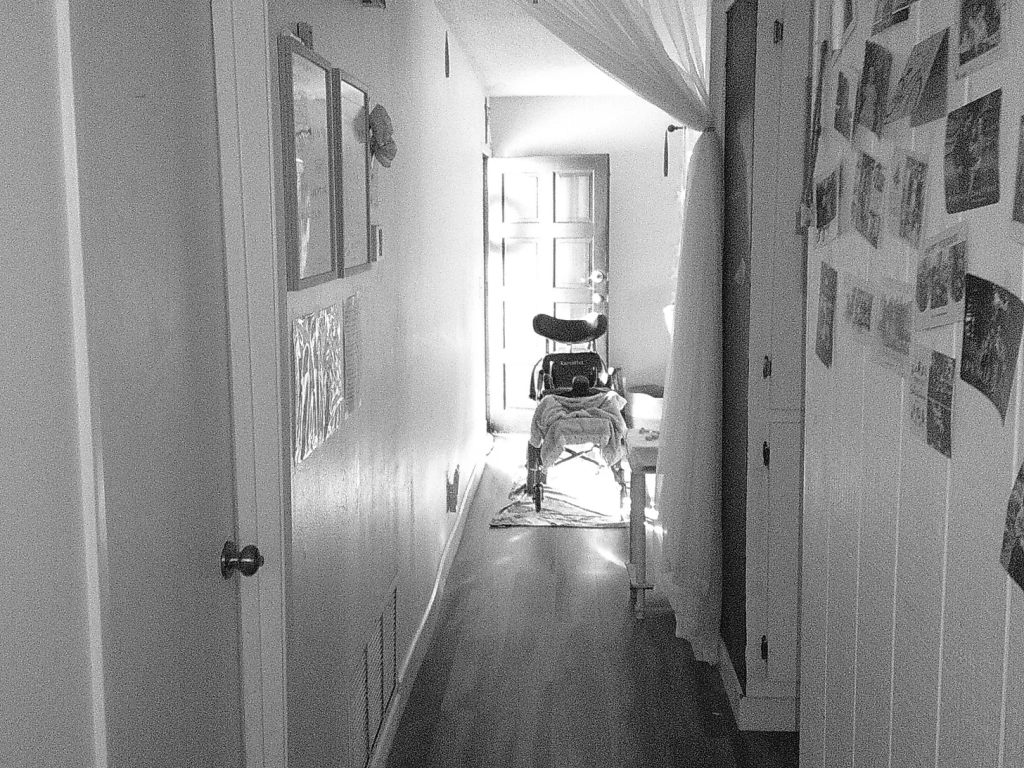
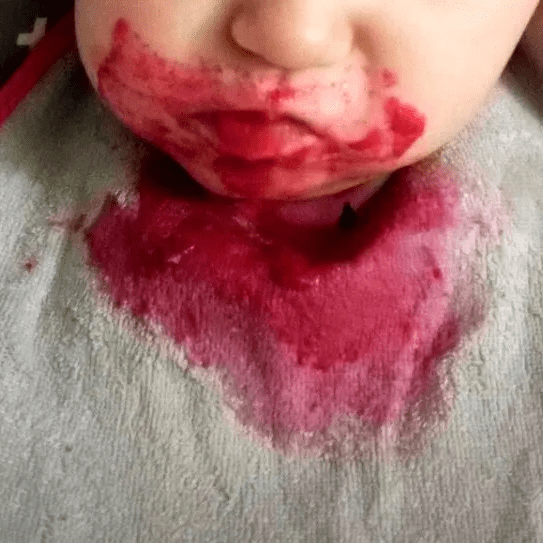


 Our Little Kartoffel