Oh God, If You’re Out There Can’t You Hear Me?
Part III: Chaos
Thank you for coming back, or for finding your way here for the first time. However you arrived—I’m so glad you’re here.
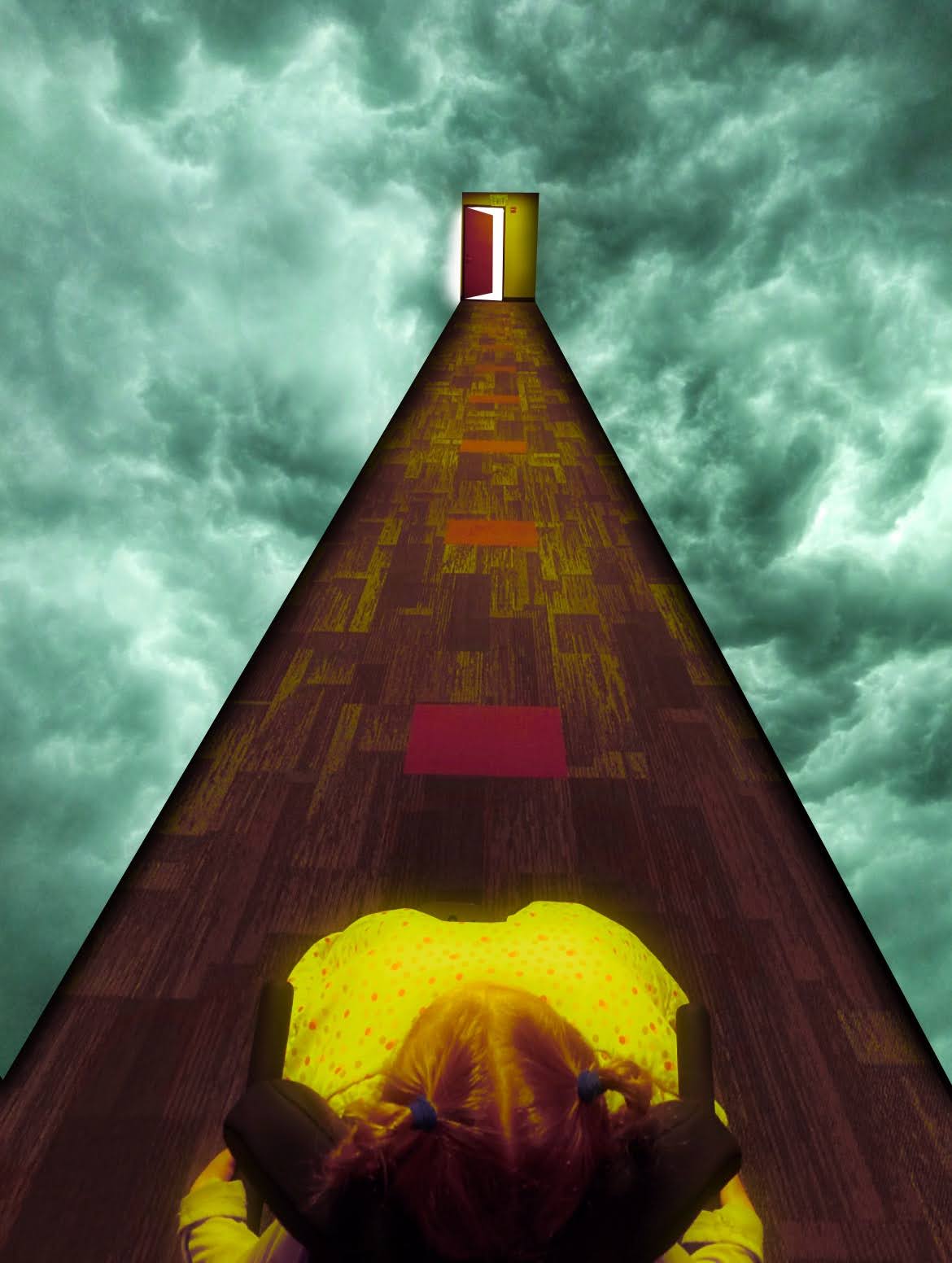
Hallo Kartoffelkumpel,
There are moments when language enters a room and changes everything. Not because the child has changed, but because the words bring with them an entire set of assumptions about who she is, who we will become, and what futures are allowed. We are continuing our story in one such room, a retelling of how certainty arrived dressed as compassion, and how in its wake everything we thought we knew began to unravel.
Initially Lived
The room is blue.1 Not a rich, oceanic blue, but that institutional shade meant to calm the nerves and erase the edges. Under fluorescent light, everything flattens. Depth gives way to surface. The walls constantly hum from the ventilation system, its steady grind both comforting and vaguely oppressive like white noise on the verge of comprehension. Nothing echoes here. Not footsteps. Not voices. Not dreams. The drywall has learned how to absorb things. Laughter, sobs, even silence seemed silenced.
There is a choreography to how medical teams enter. The gathering outside. The furtive glances through the door window. The soft swift double knock. The stolid arrangement of bodies around the room. The small clipboard becoming a pulpit. Someone sits beside us with practiced intimacy; another stands near the sink, arms folded not in tension but in containment. They’ve done this before. The ritual of revelation. I really should have peed before they came in.2
Morning sunlight slants through the blinds at a sharp angle, catching dust in midair. Each mote suspended like a decision unmade. It’s all very Lucretian.3 The rest of the room pretends to be neutral, but here, with this beam of sun spilling over an impossibly small child and parents with impossibly big emotions, it feels like the world trying to remind us of itself. A different world. The one outside all of this categorical speech. And then, the words come. They do not arrive on their own but rather they bring interpretation already stitched into their seams. The name they offer comes with a forecast, a narrowing of horizons. It isn’t presented as possibility, but as path. I don’t mean ‘possibility’ as in we should get a second opinion, or as in ‘there is a possibility this isn’t her diagnosis’ but rather as a wiping out of possibility itself. There is an assumption braided into every syllable: This is what your child is. This is what your life will be.
A packet rustles. Something sterile is unwrapped, too loudly for such a quiet room. She has always hated the sound of the dry, high crackle of plastic peeled from plastic.4 It makes her flinch. It makes me flinch too, now.
Their voices brought me back from the crinkle and a sensation settled in my chest. Not a sharp pain or a flood of chill. You know that feeling you get when a yawn seems to take too long to get out? The endless stretching of your jaw, eyes watering, a pressing at the back of your throat, and the emotional feeling of ‘geez when is this ending’? It was that. My chest yawns open, hollow and wide, a strange stillness caked with unreality. They are so sure. Their voices are calm, even warm. And I am floating somewhere just above the chair, watching our heads nod.
It is a peculiar thing to watch someone interpret your child for you. To feel your own life narrated by people who met her an hour ago. Better yet to want them to interpret your child. Better still to go through hours and days and weeks of pleading with them to interpret your child. We asked for this, desperately, and now that they were here doing the thing everything in me wants them to forever stop telling this story. But they don’t, because we asked them to tell us more. There is politeness to their devastation, a decorum that sharpens the surrealness of it all.
She is quiet in the crib. She’s listening. Same weight, same breath. But everything they say wants to cast her differently, as if what I’ve known until now was just a prologue to this moment of definition.
And still the dust floats in the sunlight. Still the walls absorb the sound.
A Necessary Clearing
There’s a rhythm to our lives in what follows, but it isn’t musical. It’s the sequence of required gestures: the phone calls that must be made to those with their phones off silent, the hesitant relaying of words we’ve only just heard ourselves. I said them slow, like a foreign script. Malformation. Genetic. Developmental delay.
Pachygyria.
I say them slowly, so they don’t collapse in my mouth. The people on the other end seem to know what these words mean. Or at least, how to respond to them. There’s a new vocabulary forming between us, and I’m already behind. They offer condolences, or silence. A change in their breath. A pause long enough for the sound of my own confusion to echo.
Outside our room, the look appears. The one I didn’t yet know how to name. The half-turn of the head. The slacking of the mouth. The encouraging furrow and lipless smile that other parents give seeing your kid wrapped up in a tangle of wires and gauze. That slow blink providers give when they’ve read the chart before seeing the child. A look that positions them above us. A sorrow that looks like kindness but wells up quietly from relief: ‘Thank God it’s not us.’
I do this look now, too. I know which formation of doctors comes for the first destruction. I know the steady walk, the clipped voice, the way one of them always holds a hand against their ID badge. I recognize that tone. And I recognize the look in the parents’ eyes when they pass me in the hallway: uncertain, stunned, searching my face for a clue. Eyes looking at me looking at them with that look of being looked at. I am on this side of the door now, and yes, I am glad. But so much of this side still looks like that side. So much of the known tastes like the unknown when it streams from yours eyes down your cheeks. I want to tell them that. I want to tell them everything. But I haven’t yet found a way. So I furrow my brow, give a lipless smile, and nod.5
Later, I drink the coffee from the family lounge. Bitter. I think at first the taste is from the carafe but no. It lingers long after I’ve thrown out the cup. It settles at the back of my tongue, coats my teeth. It isn’t fear exactly. It’s the aftertaste of someone else’s certainty rubbing against my disintegration.
In the days that follow, I begin the mental inventory. I do not cry so much as list things out. All the futures I thought were waiting for her. For us. Language. Laughter. Independence. Dance class. Birthday parties with deliciously smashed cakes and spilled juice. A backpack chosen for kindergarten. A tiny violin. I mourn them all in sequence, as if they were events we had already lived and now must rewind. But beneath the grief is the recognition that these futures were always mere fancies of mine, not hers. They were projections, not promises.
And once you see that, once the scaffolding collapses, the whole idea of normalcy begins to shimmer. It no longer holds. What is development, anyway? What is parenting, stripped of progress charts and comparison?
The coolness of the hospital sheets startles me. I lie next to her with my hand resting lightly on her belly, rising and falling, and realize how much she already knows. Not about diagnoses or expectations. But about being. About presence. Our bodies breathe in rhythm, and something in me hushes.
She does not need categories to tell her how to exist. She does not need to be interpreted to be here. Her admission to this life of riddles is not contingent on her solving them.
This thing, this diagnosis, that felt so much like an ending, was in reality a dismantling of assumptions.
The Pause
The Notebook began here, in this moment between inherited interpretation and authentic encounter. In a room where words tried to reshape our world. Not with violence, but with certainty. The kind that arrives in printed discharge summaries and bullet points, with boxes checked and acronyms bolded. But what if the reshaping wasn’t destruction? What if it was something else? Not a fire, but a slow unveiling. A clearing, like you find in the woods.
There’s a breath. A pulling back. A moment, small and easy to miss, in which the rush of connate meanings pauses just long enough for something else to flicker in. The fluorescent lights still buzz. The coffee is still bitter. The chart still sits where they left it. But she is also still here.
Same eyes. Same curls hidden and hopefully not damp under the cap of gauze and wire. Same fluttering fingers. The same child I held an hour ago. Nothing essential has changed. Except now the air feels different. Not because she has changed, but because something false has been cleared.
What if we’ve been given the wrong framework entirely?
Not just the wrong name, or the wrong prediction. But the wrong lens. What if the problem isn’t her diagnosis, but the exegetic habits we carry into that moment? The assumptions we inherit, the narrow ways we’ve been taught to read a body, to measure a mind, to count time.
And maybe that shift that I almost missed, buried between chart notes and condolences, was the beginning of something more honest.
She hadn’t changed. The story had.
Until next time stay safe, stay kind, and know that you are appreciated.
Cheers,
[kartoffelvater]
Did this newsletter resonate with you? Reply with your thoughts or share your own story. And if you know someone who might need these words today, please forward this along.
We wouldn’t be here without you. Every bit of support helps and we appreciate it more than words can say!
The neuro floor of our hospital just recently moved and it’s all purple now. Which, if you know, is very fitting. Still not sure if it calms the nerves and erase the edges but I’ll let you know the next time we are inpatient.
Once upon a time I played music publicly. Quite frequently too, even recorded a few albums, ‘toured’ with a band, I was underage in this funky bar, as Paul says. Most of my band name suggestions were discarded but one I always wanted to have announced before we walked out on some smoky stage was ‘You Shoulda Peed First’. Just as a gentle nudge to all the people who would now be stuck listening to a mediocre punk band playing outlawed tunes on outlawed pipes holding their bladders. That never happened but I am constantly reminded in moments like these that I should have peed first.
I will probably talk more about Lucretius in future newsletters because the philosophy he writes about has been influential in how I live as a dad to the Kartoffel. In the meantime there’s a podcast episode you can listen to here for Once Upon a Gene I was on once upon a time ago that was inspired by Lucretius’ writing. I was a guest alongside two other dads who are also advocates for their incredible children.
The very first time we discovered that there was anything in this world the Kartoffel didn’t like she wasn’t even days old. I opened a bag of chips in her presence. It is first on the list of things she has yet to forgive me for.
And write a blog-ish newsletter. Tell your friends.
 Our Little Kartoffel
Leave a comment